Europe’s Quiet Reassessment: Why Global Capital Is Slowly Rethinking the United States
The most consequential backlash against America may not be loud — it may be silent
What if the most dangerous response to U.S. foreign and trade policy isn’t protests, sanctions, or diplomatic outrage, but something far quieter?
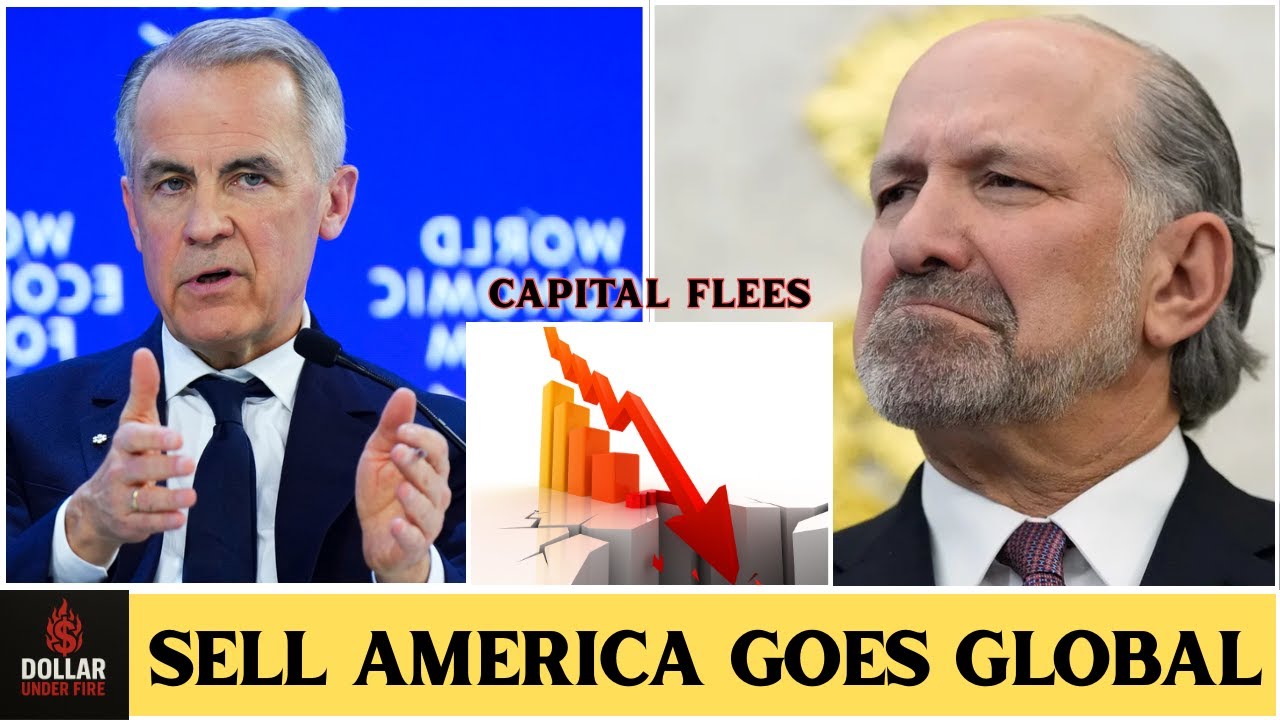
Over the past year, beneath the noise of tariffs, threats, and political theater, global capital has begun doing something subtle but significant: reassessing its exposure to the United States. There have been no emergency summits, no dramatic exits, no official declarations. Instead, money has been quietly moving — or hesitating.
And that hesitation may prove more consequential than any public confrontation.
When Trust Erodes, Markets Speak Softly
For decades, political tensions between allies came and went without lasting financial consequences. Leaders argued, markets shrugged, and capital continued to flow toward the United States as the world’s default safe haven.
This time feels different.
Repeated public disputes with allies, revived tariff threats, unpredictable policy reversals, and even renewed territorial rhetoric have created something markets struggle to price: uncertainty. Not crisis-level instability, but a growing sense that U.S. policy has become harder to model over long time horizons.
Markets can absorb almost anything except unpredictability.
And rather than responding with outrage, Europe has responded the way it always does when risk changes: by observing, recalculating, and adjusting quietly.
The Signal That Broke the Silence
The first clear signal didn’t come from a government. It came from a report that barely made headlines.
An investigation revealed that several large Northern European institutional investors were reassessing their exposure to U.S. assets. That alone was unusual. Pension funds are famously cautious, slow-moving, and apolitical. They are designed to ignore short-term noise.
Which is why what followed mattered.
Senior pension officials in Finland, Sweden, and Denmark publicly acknowledged growing concern about U.S. policy unpredictability, rising federal debt, and increased risk tied to the dollar and U.S. Treasuries.
They were careful with their language. No panic. No ideology. Just one word that changes everything in finance: reassessment.
When Conservative Investors Start Selling
Soon after, two names entered the public conversation.
Denmark’s AkademikerPension and Sweden’s Alecta confirmed they had sold or were actively selling portions of their U.S. Treasury holdings. Both emphasized that these decisions were driven by risk management, currency exposure, and long-term stability concerns — not politics.
A few years ago, such statements would have been unthinkable.
Then attention shifted to the Netherlands.
Europe’s largest pension fund, ABP, disclosed a sharp reduction in its U.S. Treasury exposure — from roughly $29 billion to around $19 billion in a short period. Treasury prices during that time were relatively stable, meaning market fluctuations alone could not explain the drop.
Whether ABP actively sold or simply stopped reinvesting, the implication was clear: assumptions had changed.
And when institutions of that size move, others notice.
Why Europe Matters More Than Anyone Else
This isn’t just another foreign investor trimming exposure.
Europe is the backbone of America’s external financing.
According to Deutsche Bank, European investors collectively hold close to $8 trillion in U.S. equities and bonds — nearly double the combined holdings of the rest of the world. For decades, this worked because the United States was viewed as the most predictable destination for long-term capital.
That assumption is now being quietly questioned.
In a recent research note, Deutsche Bank analysts raised a sensitive point: if geopolitical stability within the Western alliance is weakening, it is no longer obvious why European investors should continue absorbing such a large share of U.S. financing needs.
This wasn’t framed as retaliation. It was framed as risk management.
And that distinction is crucial.
How Risk Repricing Actually Happens
Markets rarely collapse because of a single event. They change because risk is slowly repriced.
Over the past year, several indicators have moved in ways that suggest growing hesitation:
-
The U.S. dollar weakened against major currencies despite strong equity performance
-
Long-term Treasury yields climbed toward levels not seen since before the global financial crisis
-
30-year yields approached 5%, signaling higher compensation demanded for long-dated U.S. debt
This wasn’t driven by recession fears or collapsing growth. It reflected something subtler: uncertainty around policy direction, alliance cohesion, and long-term fiscal credibility.
When investors demand higher yields, borrowing costs rise quietly — and financial conditions tighten without a single headline screaming “crisis.”
Why This Isn’t Panic — Yet
Supporters of the U.S. outlook point to real strengths:
-
The dollar’s reserve currency status
-
Unmatched market liquidity
-
The AI-driven equity boom pushing U.S. stocks to record highs
And they’re not wrong. There is no immediate alternative capable of absorbing trillions of dollars at once.
But even among optimists, the language has shifted.
Instead of confidence, conversations now revolve around diversification, hedging, and exposure limits. Gold has reemerged as a preferred insurance asset. Currency risk is being discussed more openly. Portfolio models that once assumed unquestioned U.S. stability are being quietly rewritten.
Capital doesn’t need to flee to change outcomes. It only needs to hesitate.
Why This Moment Is Different
What makes this shift historically significant isn’t the size of the moves — it’s the direction.
For decades, global capital treated the United States as the anchor of the financial system. Even during crises, money flowed back, not away. Institutional stability and alliance cohesion were assumed.
That assumption is now being re-evaluated.
This isn’t about one administration or one policy. Analysts increasingly describe it as structural: the growing perception that U.S. decision-making has become harder to predict, harder to model, and therefore riskier over long horizons.
And when risk becomes harder to price, investors shorten timelines, spread exposure, and demand higher returns.
The Quiet Vote of Global Capital
Pension funds are built to think in decades, not election cycles. When they adjust assumptions, it signals more than a passing reaction — it signals a recalibration of trust.
There is no dramatic sell-off. No headlines declaring a break. Just careful, methodical adjustments happening behind the scenes.
History shows that the most powerful financial shifts rarely arrive with drama. They unfold quietly, reshaping flows and influence long after political moments pass.
The danger for the United States isn’t a sudden collapse. It’s a slow tightening: higher borrowing costs, a dollar that no longer enjoys unquestioned demand, capital that spreads outward instead of concentrating inward.
Those shifts compound.
And once confidence moves on, it rarely returns the same way again.