As Trump Dismisses Canada, Ottawa Finds Leverage in Beijing
Beijing — As former President Donald Trump told reporters that Canada “doesn’t matter” to him, Prime Minister Mark Carney was stepping onto a red carpet in Beijing, welcomed with full state honors by senior Chinese officials. It was the first visit by a Canadian prime minister to China in eight years, and one that carried symbolism far beyond ceremony.
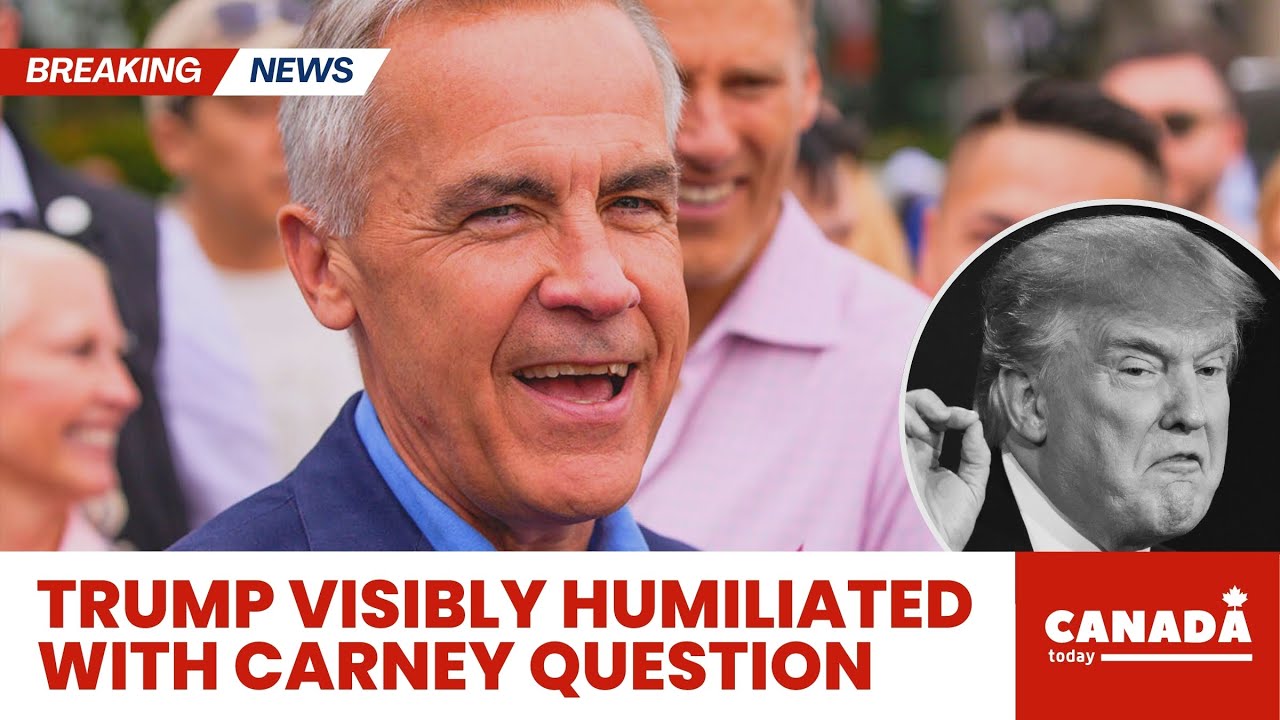
Two images unfolded simultaneously: in Washington, Trump publicly minimizing Canada’s relevance; in Beijing, China elevating Canada’s leader as a strategic guest personally invited by President Xi Jinping. The contrast was not accidental, and it underscored a deeper shift in global economic and political alignment.
For China, the message was clear: Canada matters. For Trump, the moment appeared to strike a nerve.
Speaking to reporters, Trump waved off the importance of the Canada–U.S.–Mexico Agreement, insisting that the United States does not need Canadian products, particularly automobiles, and that manufacturing should be brought entirely onto U.S. soil. “Canada needs it. We don’t,” he said, dismissing the economic relationship that has bound the two countries for generations.
To analysts, the remarks reflected not confidence, but unease.
A Changing Power Dynamic
For years, Trump’s leverage over Canada rested on a simple assumption: that Canada had nowhere else to go. The U.S. market absorbed the majority of Canadian exports, giving Washington enormous influence through tariffs, trade threats, and regulatory pressure. That dynamic allowed Trump to frame economic coercion as inevitability.
Carney’s visit to Beijing challenges that assumption directly.
China is not merely re-engaging with Canada; it is signaling interest in a reset. State-level treatment is reserved for countries Beijing views as strategically valuable. The language surrounding the visit emphasized stability, long-term cooperation, and a willingness to rebuild strained ties.
“China does not invest this level of diplomatic capital casually,” said a former Canadian diplomat. “They see Canada as a serious partner at a time when U.S. policy has become unpredictable.”
Predictability, analysts say, is Carney’s central asset. Unlike Trump, he is viewed as a leader who respects agreements, understands trade-offs, and does not govern through threats. In an era when many countries are seeking to reduce exposure to U.S. volatility, those traits matter.
Trade, Pressure, and Options
Trump’s dismissal of Canada was framed around trade, particularly autos. He argued that American consumers no longer need Canadian-made vehicles and claimed manufacturing is already shifting south. But industry data shows that the North American auto sector remains deeply integrated, with supply chains crossing the border multiple times before a car is completed.
The real issue, analysts suggest, is not trade text but control.
Pressure works only when alternatives are limited. Carney’s strategy appears designed to ensure that Canada is no longer economically isolated or dependent on a single partner. Europe has re-engaged. Asian markets are expanding. And now China—the world’s second-largest economy—is signaling openness not just to trade, but to deeper industrial cooperation.
This is what unsettles Trump. Canada is no longer negotiating from fear.
Electric Vehicles and Strategic Anxiety
One of the most sensitive areas of discussion during Carney’s visit is electric vehicles. China has become the world’s dominant EV producer, and Canadian officials are under pressure domestically to secure relief from Chinese tariffs on agricultural products such as canola, pork, and seafood—sectors that have suffered for years under trade retaliation.
But any agricultural concessions may come with trade-offs. Beijing has long sought greater access to Western EV markets and manufacturing footprints abroad. Canada, with its proximity to the United States, skilled labor force, and access to critical minerals, is an attractive target.
Chinese-built EV factories in Canada would place competitively priced vehicles directly adjacent to the U.S. market. For American automakers already struggling to compete globally, that prospect is alarming.
This is why Trump’s rhetoric escalates, analysts say. It is not because Canada is weak, but because it is no longer captive.
Agriculture and Rebalanced Leverage
Agriculture may ultimately prove even more significant than autos. Canadian farmers have borne the brunt of geopolitical retaliation, with canola exports to China repeatedly disrupted. For years, Ottawa had little leverage to respond without risking escalation.
That balance is shifting.
Even modest stabilization in agricultural trade would signal that retaliation is not permanent and that diversification works. For Canada, it would demonstrate that alternative markets can absorb pressure traditionally exerted by Washington.
For Trump, it represents another erosion of leverage.
“When Canada has options, it can negotiate calmly,” said an economist familiar with the talks. “And when you can say no, threats stop working.”
Not Choosing Sides, Ending Vulnerability
Carney’s visit is not about replacing the United States or choosing China over Washington. It is about eliminating vulnerability.
Canada’s economy has long been exposed to the political mood swings of a single partner. When that partner applied pressure, Ottawa’s room to maneuver was limited. Trump exploited that reality repeatedly.
Carney’s approach is structural rather than rhetorical. Diversification is not framed as defiance, but as insurance. Europe matters. Asia matters. China matters—not as a patron, but as an option.
A country with options can resist coercion. A country without them cannot.
A Global Audience Takes Note
The visit is being closely watched by other middle powers facing similar dilemmas. Allies of the United States are increasingly exploring ways to reduce dependency without abandoning alliances. Canada’s approach offers a model: engage broadly, invest in alternatives, and preserve autonomy.
China, for its part, sees opportunity. Welcoming Carney at the highest level signals openness to rebuilding trust with a country viewed as stable, rules-based, and economically significant.
Trump may insist Canada does not matter. But in Beijing, and increasingly elsewhere, the message is the opposite.
A Canadian prime minister is being received as a consequential actor. A former U.S. president is reacting from the sidelines. And the global economy is quietly adjusting to a reality in which influence is no longer dictated by proximity alone.
Under Mark Carney, Canada is not waiting. It is moving deliberately, expanding its options, and recalibrating its place in a more fragmented world.
That shift—not the ceremony—is what truly matters.