What began as a pointed question from Prime Minister Mark Carney in March 2025 has ignited a strategic pivot that’s leaving American logistics giants on the sidelines and sparking fierce debate about sovereignty, efficiency, and who really controls North America’s food future.
The spark came when Carney challenged Prairie farmers: Why ship vital grain and fertilizer through congested southern routes or American ports when a shorter, cheaper path to Europe exists via the long-overlooked Port of Churchill on Hudson Bay?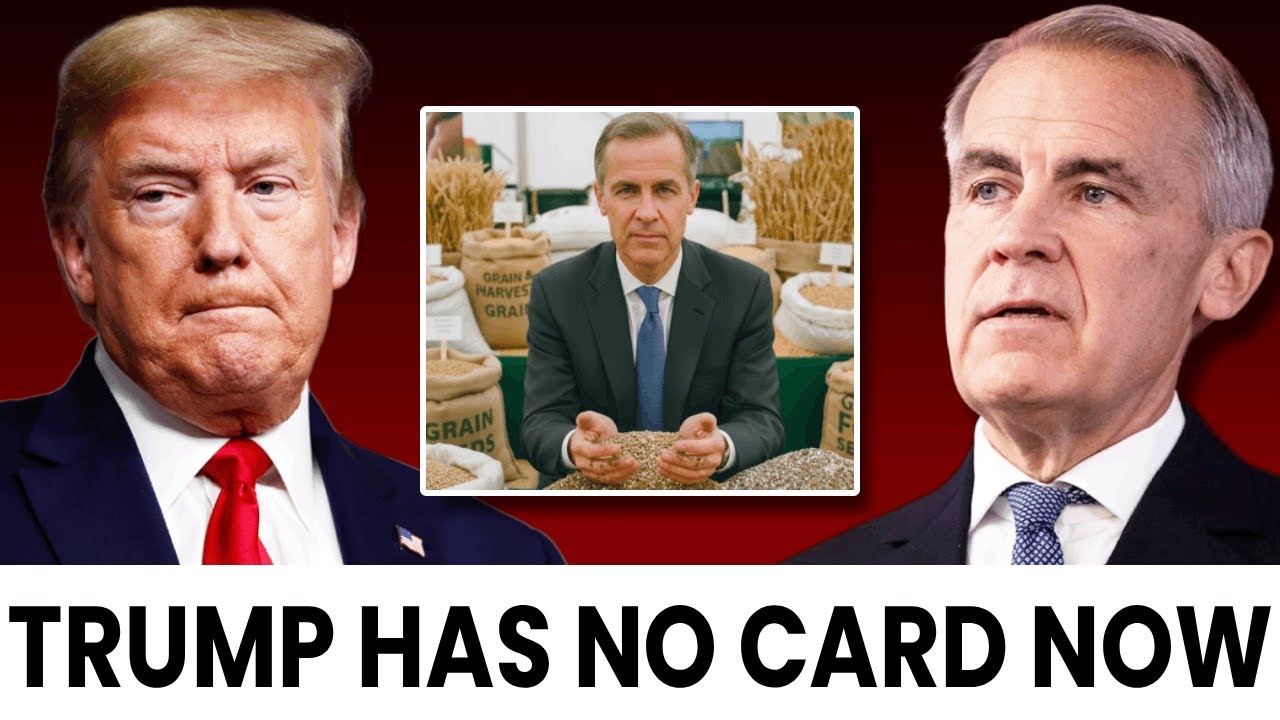
That query exposed a painful truth—Canada dominates global agriculture with world-leading exports in high-protein wheat, canola, lentils, peas, and especially potash, the key ingredient in fertilizers that feeds billions.
Canada produces about 32% of global potash and exports 41%, with vast reserves still untapped, while its grains ship to over 80 countries, raking in billions annually.
Yet for generations, much of this powerhouse flowed south first—through U.S. railways, terminals, and fee structures—before heading overseas. American companies pocketed profits without planting a seed or mining a crystal, as rail charges, port fees, and logistics margins drained Canadian pockets.
Vancouver’s bottlenecks and eastern routes added delays and costs, normalizing the inefficiency until Trump’s tariff threats—up to 25% on Canadian grain and pressure on fertilizers—turned vulnerability into crisis.
Enter the Port of Churchill, a 1930s deep-water Arctic hub designed for exactly this: slashing thousands of kilometers off routes to Europe, cutting shipping times by days, reducing spoilage risks, and keeping control firmly Canadian.
Neglected for decades—sold to a U.S. firm for $1 in 1997, hit by flooding in 2017 that crippled the rail line—it became a symbol of missed opportunity. But climate change is extending navigable seasons, congestion plagues traditional ports, and rising global demand for reliable food and fertilizer supplies has flipped the economics.
The breakthrough hit in March 2025 when Saskatchewan’s Genesis Fertilizers partnered with the Indigenous- and community-owned Arctic Gateway Group, which operates the port and Hudson Bay Railway.
Genesis, planning a massive nitrogen fertilizer plant, will import phosphate and ammonium sulfate directly through Churchill—bypassing U.S. routes entirely—for export of finished products to Europe.
This isn’t ideology; it’s pure efficiency: shorter distances mean lower costs, faster delivery, and zero exposure to foreign political whims.
Fertilizer was the opening salvo, but grain is the real prize. Canada ships nearly 29 million tons annually through Vancouver alone; Churchill aims to capture growing volumes, especially to Europe, with upgrades like new grain handling, storage, modern loading gear, and rail capacity.
Extended seasons via icebreakers could push toward year-round ops. The projected $780 billion? It captures redirected trade—potash, grains, specialty crops, fertilizer flows, even critical minerals and potential LNG—over a decade, assuming realistic shifts of 15-20% from traditional routes amid growth.
This isn’t about cutting off the U.S.—American markets remain vital—but reclaiming leverage. Once chains reroute through Canadian rails, ports, and fees, reversing them becomes expensive and unlikely.
Investments now lock in patterns for decades, turning pressure into diversification. Carney’s government has backed it with $180 million over five years for Churchill infrastructure, while provinces align for upgrades by 2027-2030.
Challenges loom: permafrost-thawed terrain risks washouts, massive upgrades demand hundreds of millions, and a tiny community needs housing and services growth.
Yet alignment is unprecedented—private capital commits, economics favor shorter routes, and trade tensions accelerate the shift. Every ton bypassing American systems proves Canada can thrive independently, feeding the world on its terms.
As global food security tightens and Arctic access grows, Churchill’s revival isn’t just infrastructure—it’s a declaration that Canadian resources move on Canadian rules.
Trump’s threats aimed to extract concessions; instead, they handed Ottawa the blueprint for unbreakable resilience. The question now: How fast will this northern gateway reshape global agriculture—and who wins when leverage shifts north?