Trump’s Greenland Rhetoric Triggers Rare NATO Unity and Sharp European Warning
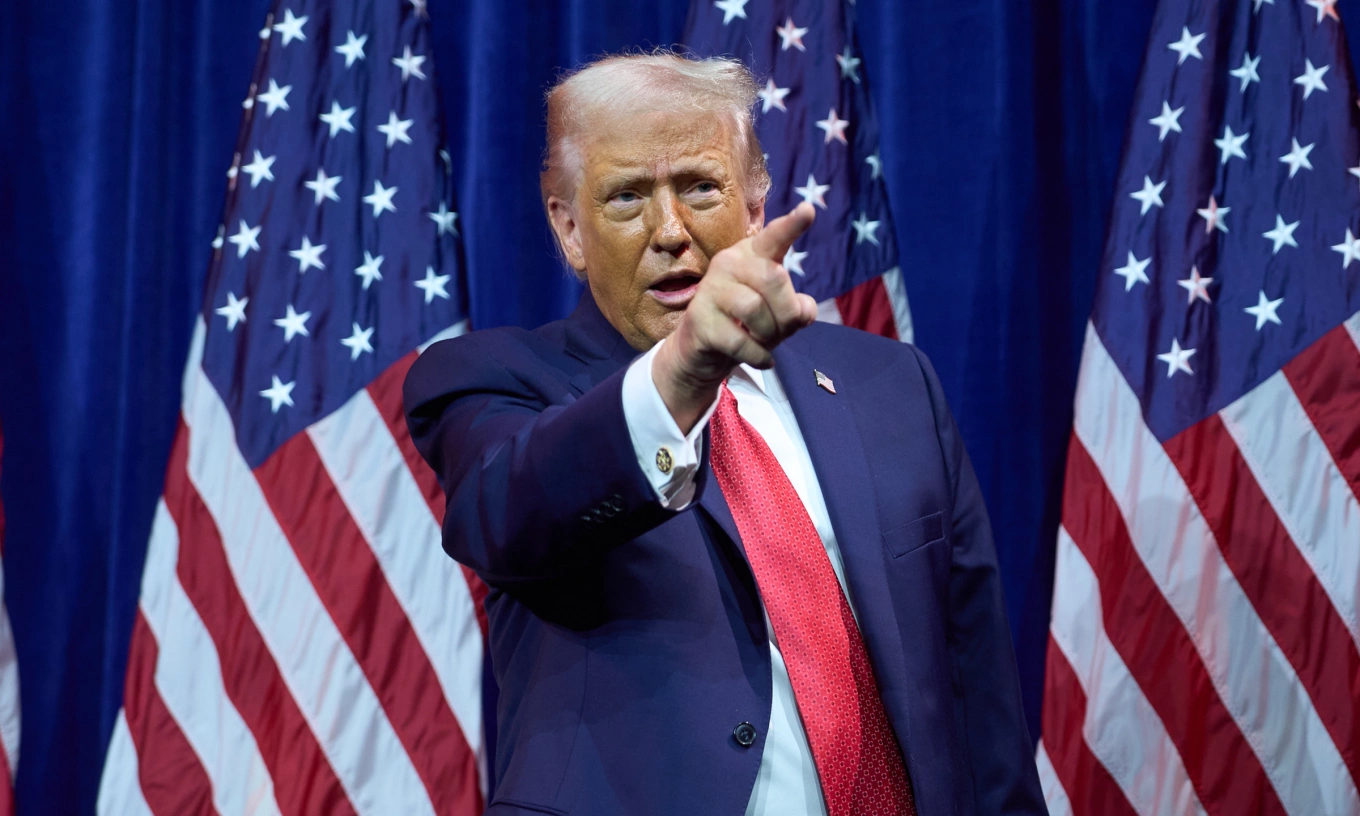
WASHINGTON — President Donald Trump’s renewed public fixation on Greenland — an autonomous territory within the Kingdom of Denmark and a NATO ally — has triggered an unusually blunt and unified response from European leaders, underscoring growing alarm over what they see as an erosion of long-standing norms governing alliances, sovereignty and the use of force.
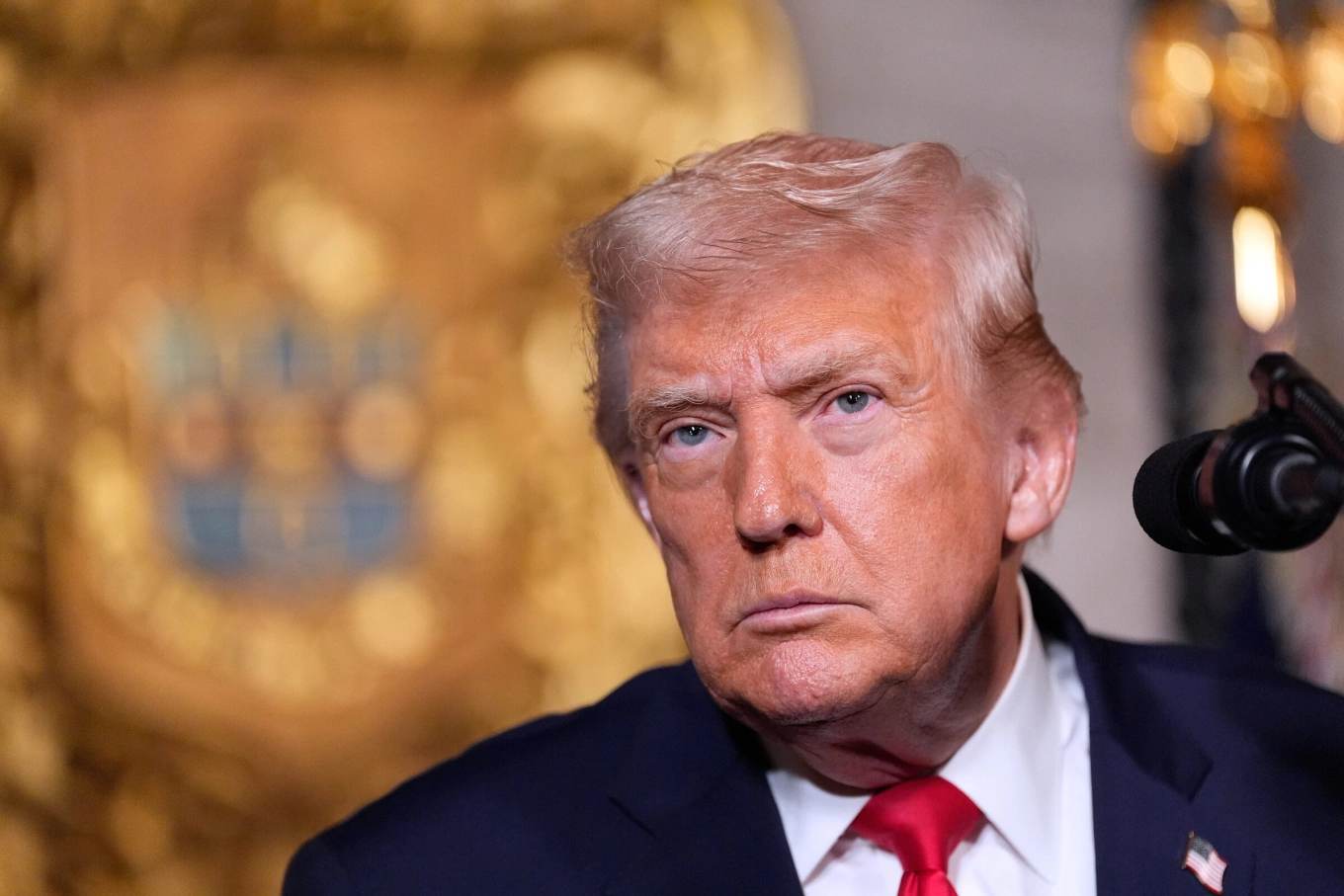
In remarks aboard Air Force One earlier this week, Mr. Trump again raised the prospect of the United States acquiring Greenland, framing the issue as a matter of national security and citing increased Russian and Chinese activity in the Arctic. “We need Greenland from a national security standpoint,” Mr. Trump said, according to footage circulated widely on social media and confirmed by multiple news organizations. “It’s very strategic right now.”
While Mr. Trump has floated the idea before — most notably during his first term — the latest comments came amid heightened geopolitical tension following U.S. military action in Venezuela and growing concerns in Europe about Washington’s commitment to alliance constraints. This time, European leaders did not treat the remarks as idle speculation.
Instead, they responded with an unusually coordinated statement reaffirming Greenland’s status as part of NATO through Denmark and warning that any attempt to alter borders by force would violate the foundational principles of the alliance.
A Rare Joint European Message
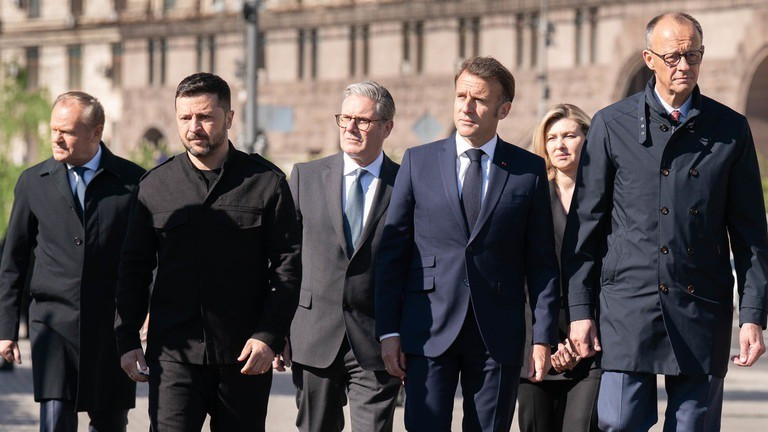
In a joint declaration issued by the leaders of France, Germany, Italy, Poland, Spain, the United Kingdom and Denmark, European governments emphasized that Arctic security must be addressed “collectively” and “in full respect of sovereignty, territorial integrity, and the inviolability of borders.”
“The Kingdom of Denmark, including Greenland, is part of NATO,” the statement said. “Security in the Arctic must therefore be achieved collectively in conjunction with NATO allies, including the United States, by upholding the principles of the UN Charter.”
Such explicit language, analysts noted, is rare in communications among allies — particularly when directed at Washington. The statement stopped short of threatening military action but was widely interpreted by diplomats as a warning that Europe would not acquiesce to unilateral U.S. moves against allied territory.
Danish Prime Minister Mette Frederiksen, who has previously rebuffed Mr. Trump’s interest in Greenland, spoke even more directly. “If the United States chooses to attack another NATO country militarily,” she said in comments reported by Danish and international media, “then everything stops — including NATO cooperation as we know it.”
Canada Steps In
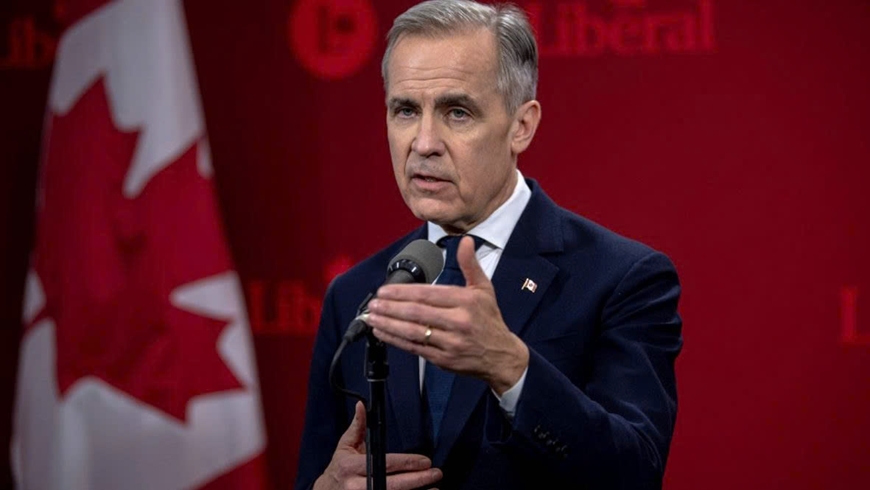
The response was soon broadened beyond Europe. Canadian Prime Minister Mark Carney issued a statement reaffirming Canada’s support for Denmark’s sovereignty over Greenland, calling Arctic security a shared responsibility among allies.
“Canada and Denmark are allies and partners,” Mr. Carney said. “Canada will always support the sovereignty and territorial integrity of Denmark, including Greenland.”
While carefully worded, the statement was interpreted by former NATO officials as a signal that any U.S. military move against Greenland would not be treated as a bilateral dispute but as a challenge to the alliance as a whole.
“This is as close as allies get, in diplomatic language, to saying ‘don’t test this,’” said a former senior NATO diplomat, speaking on condition of anonymity to discuss internal alliance dynamics.
Inside the Administration
The controversy intensified after Stephen Miller, a senior Trump adviser and longtime advocate of expansive executive authority, declined in a televised interview to rule out the use of military force to secure Greenland. His comments, circulated widely on X and replayed on cable news, drew immediate backlash in Europe and among U.S. lawmakers.
Mr. Miller framed the issue as essential to protecting NATO interests in the Arctic but did not address how seizing territory from a NATO ally would square with the alliance’s founding treaty.
Current and former U.S. officials expressed concern privately that such rhetoric risks undermining the credibility of NATO’s Article 5 mutual defense commitment. “If the United States starts talking about using force against allies,” said one former Pentagon official, “the entire structure of deterrence collapses.”
The Arctic Stakes

There is no dispute that the Arctic has become an increasingly contested region. Melting ice has opened new shipping routes, and both Russia and China have expanded their presence through military infrastructure, research stations and commercial investments. The United States already maintains a military presence in Greenland under a 1951 defense agreement with Denmark, including Thule Air Base, a critical component of U.S. missile defense and early warning systems.
But experts note that existing agreements already grant Washington broad access without challenging Danish sovereignty.
“There is no strategic requirement that Greenland become U.S. territory,” said Rebecca Pincus, director of the Polar Institute at the Wilson Center. “What exists now already meets U.S. security needs.”
Domestic Fallout
On Capitol Hill, Democratic lawmakers have begun discussing preemptive measures to constrain presidential authority in the event of unauthorized military action. Several members said privately that any deployment of U.S. troops to Greenland without congressional approval would trigger immediate impeachment proceedings.
“This is not hypothetical,” said one senior Democratic aide. “The risk is real enough that we need to draw bright lines now.”
Republican leaders, meanwhile, have largely avoided commenting directly on the Greenland remarks, focusing instead on broader Arctic competition with Russia and China.
A Test for NATO
For European officials, the episode is less about Greenland itself than about whether the United States still accepts the basic premise that alliances are voluntary partnerships rather than instruments of coercion.
“The concern,” said a senior European diplomat, “is that if borders between allies become negotiable by force, then no alliance is safe.”
As the war in Ukraine continues to test NATO’s unity and Russia watches closely for signs of fracture, many in Europe fear that escalating rhetoric over Greenland could hand Moscow exactly what it wants: doubt, division and paralysis within the Western alliance.
Whether Mr. Trump’s remarks represent a negotiating tactic, a political provocation or a genuine policy objective remains unclear. But the response from allies has been unmistakable.
This time, they are not laughing it off.