Senate Democrats Move to Curb Trump’s Venezuela Action, Reviving a Long-Dormant Debate Over War Powers

Washington — The Senate moved this week to reassert its constitutional authority over the use of military force after President Donald Trump ordered a dramatic operation targeting Venezuelan President Nicolás Maduro, an action that has ignited sharp debate over executive power, international law and the risks of escalation abroad.
At the center of the pushback is Senator Tim Kaine of Virginia, a Democrat and former vice-presidential nominee, who announced plans to introduce a War Powers Resolution that would prohibit the use of U.S. military force against Venezuela absent explicit congressional authorization. The move comes amid growing concern among lawmakers from both parties that the Trump administration acted unilaterally, without presenting evidence that Venezuela posed an imminent threat to the United States.
“The Constitution is very clear,” Mr. Kaine said in a recent television interview. “If the United States is going to engage in military action, Congress has a role. That role doesn’t disappear because a president finds it inconvenient.”
A Controversial Operation
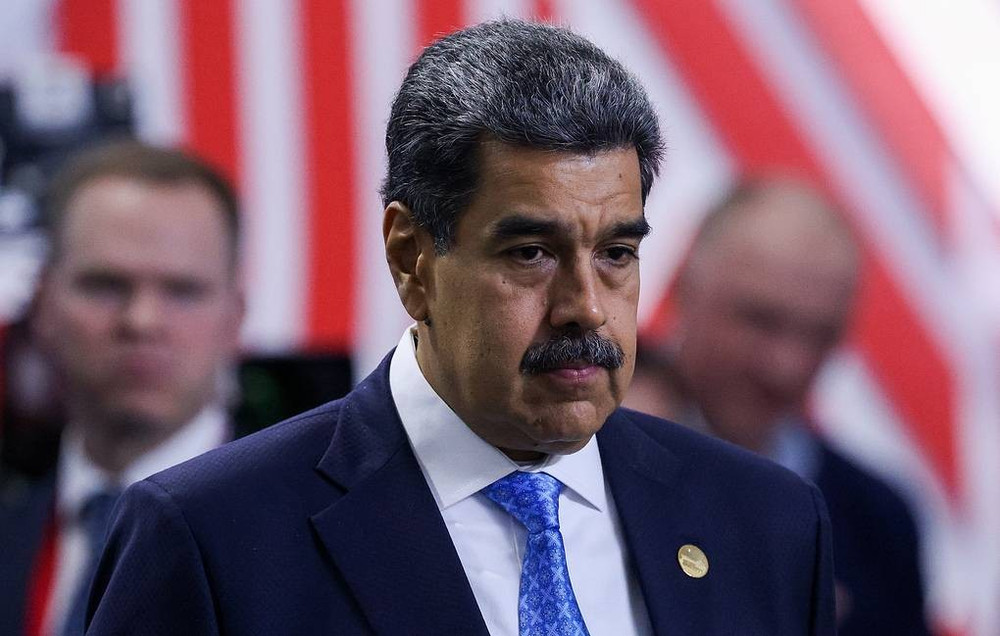
The administration has defended the operation against Mr. Maduro as a law-enforcement action rooted in long-standing indictments accusing the Venezuelan leader and senior officials of narcotics trafficking. Officials have framed the move as both a blow against transnational crime and a step toward restoring democracy in Venezuela.
But critics argue that the distinction between law enforcement and military action has been blurred beyond recognition. The operation followed weeks of heightened U.S. military activity near Venezuelan waters, including the interdiction and destruction of vessels the Pentagon claimed were engaged in drug trafficking — assertions that, so far, have not been supported by publicly released evidence.
Legal scholars and former national security officials have warned that such actions could exceed the president’s authority under the Constitution, which reserves to Congress the power to declare war, except in cases of self-defense against an imminent threat.
“The threshold for unilateral action is extremely high,” said one former Justice Department official in a social-media post that circulated widely among legal commentators. “Simply asserting criminal conduct does not automatically confer wartime powers.”
Rubio Under Pressure
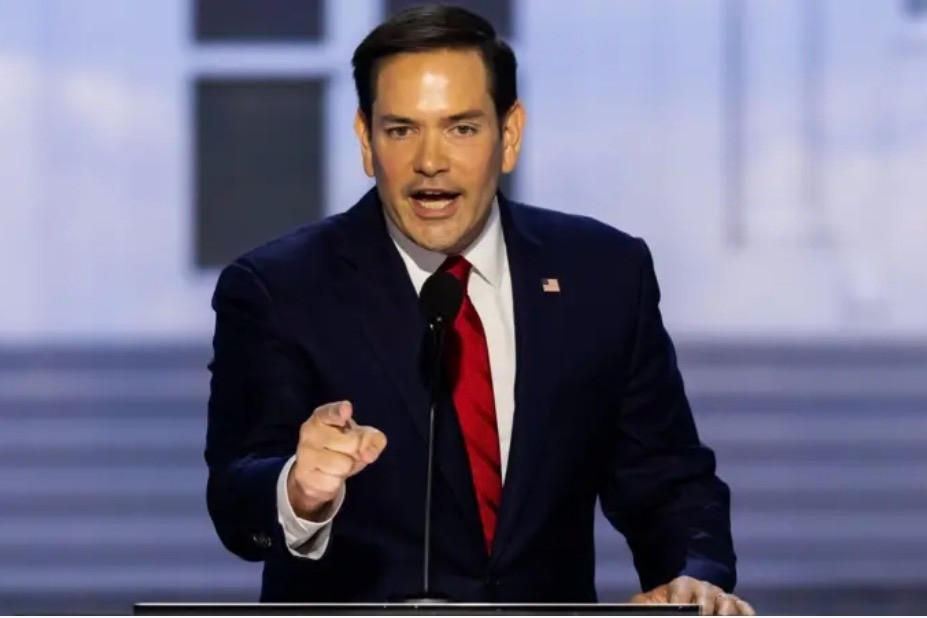
Secretary of State Marco Rubio has become a focal point of the controversy following a tense interview on CBS’s Face the Nation, where he struggled to explain why the operation targeted Mr. Maduro and his wife but left other senior Venezuelan officials, also under U.S. indictment, in power.
Pressed on why figures such as the interior minister and defense minister — both accused by the United States of criminal activity — were not similarly detained, Mr. Rubio argued that the administration had prioritized what it viewed as the most significant target and sought to avoid a prolonged military presence.
The exchange quickly spread across social media, where critics described the justification as inconsistent and evasive. Several prominent political analysts noted that selective enforcement undermined the administration’s claim that the operation was narrowly tailored and legally sound.
War Powers, Revisited

Mr. Kaine’s resolution seeks to revive a mechanism Congress has rarely used successfully in recent decades. Under the War Powers Resolution of 1973, lawmakers can direct the president to terminate military engagements not authorized by Congress. Although such resolutions can be vetoed, proponents argue that they serve a crucial signaling function.
Mr. Kaine pointed to a similar effort during Mr. Trump’s first term, when Congress passed a resolution aimed at limiting military action against Iran. Though Mr. Trump vetoed it, the administration subsequently scaled back certain operations.
“Votes matter,” Mr. Kaine said. “They tell the American people and the world where Congress stands.”
Democrats are also exploring the use of appropriations restrictions to block funding for military activities in or against Venezuela, an approach that could prove more difficult for the administration to circumvent.
International Implications
Beyond the constitutional questions, foreign policy experts warn that the operation risks destabilizing an already volatile region and complicating relations with major powers.
China, Venezuela’s largest oil customer, and Russia, a key political and military ally of the Maduro government, have both expressed alarm in diplomatic channels, according to analysts monitoring state media and official statements. While neither country has signaled an immediate response, experts caution that unilateral actions against a sitting head of state could establish precedents that others might exploit.
“Once you normalize the idea that powerful countries can seize leaders they dislike without international authorization, the entire system becomes weaker,” said a former U.S. ambassador, writing on X. “That cuts against American interests in the long run.”
Historical analogies have also surfaced in public discourse. Commentators have drawn parallels — sometimes controversially — to early 20th-century incidents in which localized actions triggered far broader conflicts, underscoring the unpredictability of escalation.
Public Skepticism
Polling cited by Mr. Kaine suggests that a majority of Americans oppose military action taken without congressional approval, particularly at a time when domestic economic pressures remain acute. Inflation, housing costs and health care affordability continue to dominate voter concerns, making foreign interventions politically fraught.
“People are asking why we’re talking about governing Venezuela when we’re struggling to govern ourselves,” said one Democratic strategist.
Even some Republican lawmakers have privately expressed unease, according to congressional aides, though few have criticized the president publicly.
A Test of Institutions
For Mr. Trump, the episode reflects a broader pattern of expansive assertions of executive authority, a hallmark of both his first term and his current presidency. Supporters argue that decisive action is necessary to confront criminal regimes and project American strength. Critics counter that bypassing Congress erodes democratic norms and increases the risk of unintended conflict.
Whether Mr. Kaine’s resolution ultimately constrains the administration remains uncertain. But the debate it has sparked — over war powers, accountability and America’s role in the world — has reenergized a Congress often accused of surrendering its authority to the executive branch.
“At minimum,” Mr. Kaine said, “this forces a conversation we’ve avoided for too long.”
As that conversation unfolds, the stakes extend well beyond Venezuela, touching on fundamental questions about who decides when the United States goes to war — and at what cost.