U.S. Captures Venezuelan President Maduro in Military Strikes, Sparking Global Condemnation
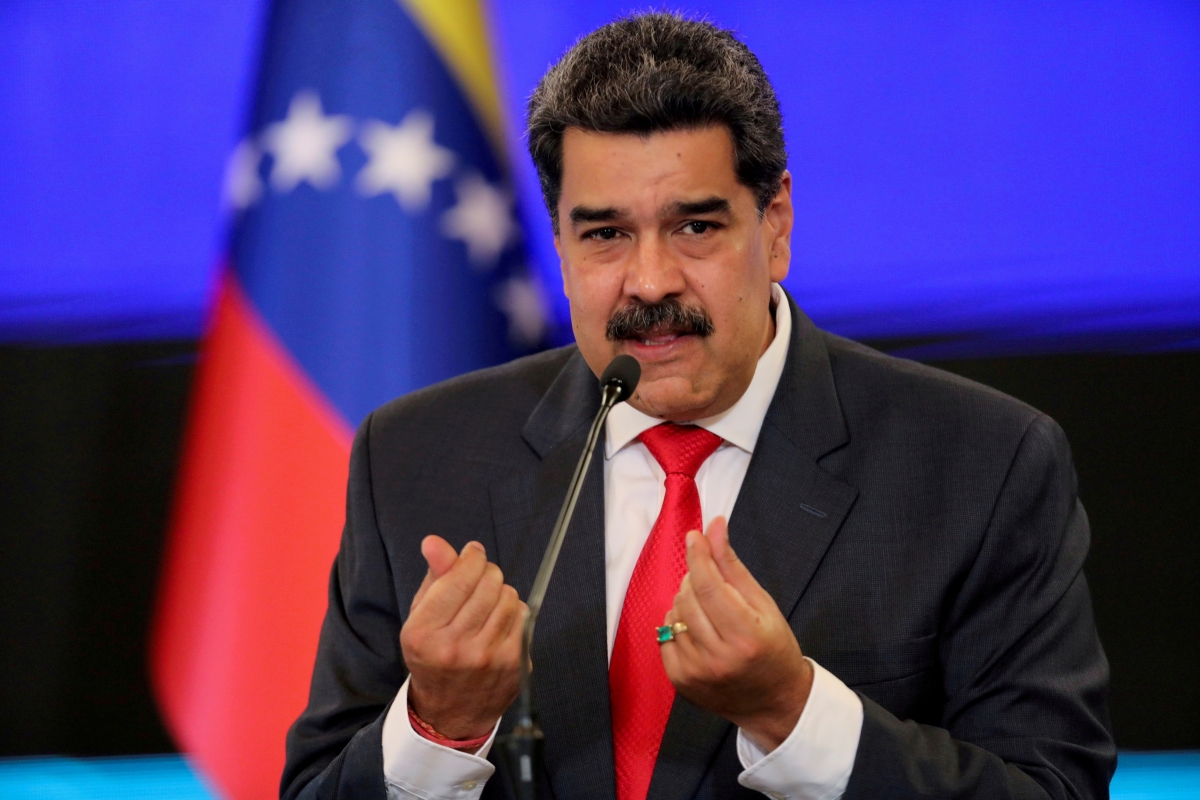
WASHINGTON — In a dramatic escalation of tensions between the United States and Venezuela, President Donald J. Trump announced early Saturday that American forces had conducted a “large-scale strike” on Venezuelan targets, resulting in the capture of President Nicolás Maduro and his wife, Cilia Flores. The operation, which Mr. Trump described as a joint effort with U.S. law enforcement, has plunged the region into chaos, with Venezuelan officials demanding proof of Mr. Maduro’s well-being and international leaders decrying the action as a violation of sovereignty.
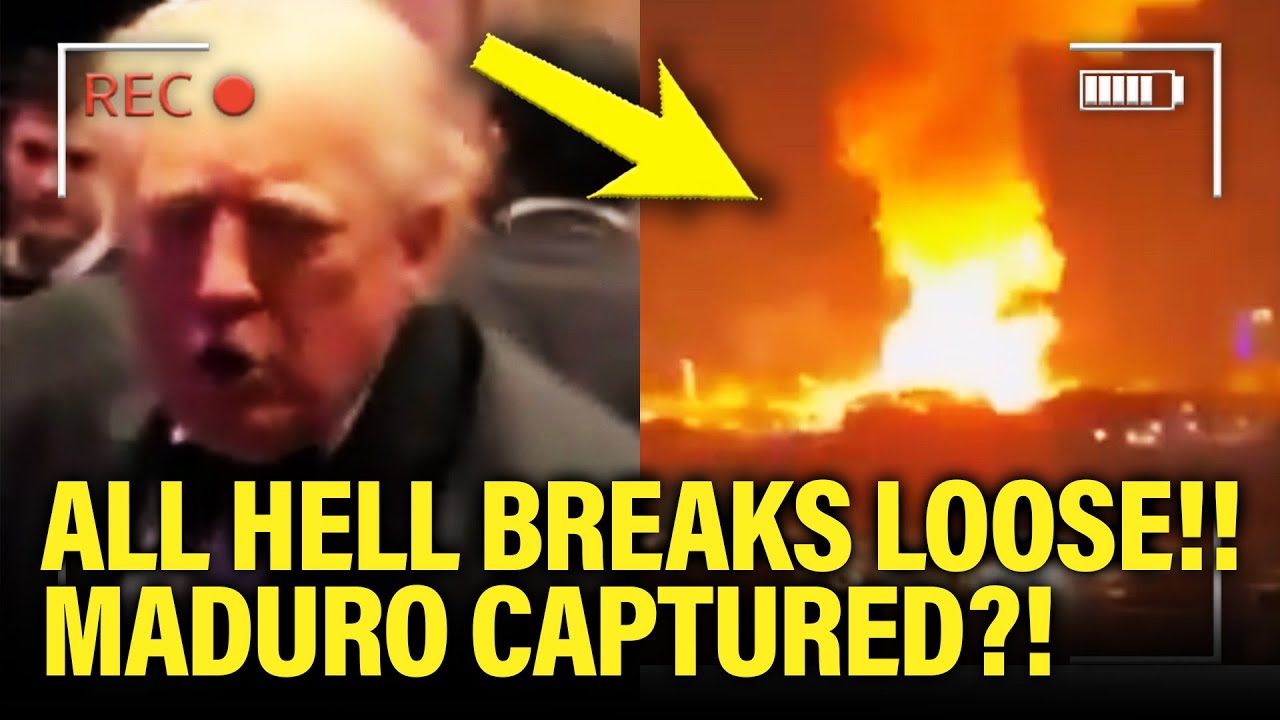
The strikes, which began in the predawn hours, targeted multiple strategic sites across Venezuela, according to U.S. and Venezuelan sources. These included Fuerte Tiuna, the primary military complex in Caracas housing key command elements; La Carlota, a major air base in the capital; El Volcán signal antenna facility; La Guaira Port, the country’s main seaport; Higuerote airport in Miranda State; and the Cuartel de la Montaña, the mausoleum where the remains of former President Hugo Chávez are interred. Venezuelan state media reported explosions and blackouts in Caracas, with unconfirmed accounts of civilian casualties. A statement from Venezuelan authorities indicated that an unspecified number of people were killed or injured, with assessments ongoing.
Mr. Trump, posting on his Truth Social platform shortly after the operation, stated: “The United States of America successfully carried out a large-scale strike against Venezuela and its leader, President Nicolás Maduro, who has been along with his wife captured and flown out of the country. This operation was done in conjunction with US law enforcement. Details to follow.” He scheduled a news conference at his Mar-a-Lago estate in Florida for 11 a.m. Eastern time. Administration officials, speaking on condition of anonymity, said Mr. Maduro would face prosecution in New York on charges related to narcotics trafficking and corruption, accusations the U.S. has leveled against him since 2020.
The announcement came amid conflicting reports from within Venezuela. Vice President Delcy Rodríguez, who would assume the presidency under the Venezuelan Constitution if Mr. Maduro is incapacitated, held a public address demanding “proof of life” for the leader and his wife. She denied knowledge of any negotiated exit, calling the U.S. actions “imperialist aggression” and vowing to rally the nation against the invasion. Defense Minister Vladimir Padrino López, whose residence was reportedly targeted but who escaped unharmed, echoed her sentiments in a press conference, labeling the strikes a “criminal military aggression” and urging international intervention.
Opposition figures in exile, including those aligned with former National Assembly leader Juan Guaidó, suggested that Mr. Maduro may have brokered a secret deal with the Trump administration for safe passage, though no evidence has surfaced to support this claim. The operation’s timing raised questions, as Chinese special envoys had met with Mr. Maduro in Caracas just hours earlier for discussions on economic cooperation. Beijing has not commented publicly, but analysts speculate that the strikes may complicate U.S.-China relations, given Venezuela’s role as a key ally in Latin America for Beijing.

In the United States, the strikes have divided lawmakers along partisan lines. Senator Mike Lee, Republican of Utah, posted on social media that he had spoken with Secretary of State Marco Rubio, who informed him that Mr. Maduro was en route to the U.S. for trial. Mr. Lee defended the action as falling under the president’s Article II authority to protect American personnel. Conversely, Senator Ruben Gallego, Democrat of Arizona, condemned it as “the second unjustified war in my lifetime,” arguing that it lacked congressional authorization and risked turning the U.S. into a “world bully.”
International reaction was swift and largely critical. Colombian President Gustavo Petro, whose country shares a porous border with Venezuela, convened an emergency National Security Council meeting and deployed forces to the frontier in anticipation of refugee flows. In a statement, he rejected the “aggression against the sovereignty of Venezuela and Latin America,” calling for immediate meetings of the Organization of American States and the United Nations Security Council. Russia, a staunch supporter of Mr. Maduro, denounced the operation as “armed aggression,” while Brazilian President Luiz Inácio Lula da Silva described it as crossing an “unacceptable line.” The United Nations Secretary General urged restraint and dialogue, emphasizing the principle of self-determination.
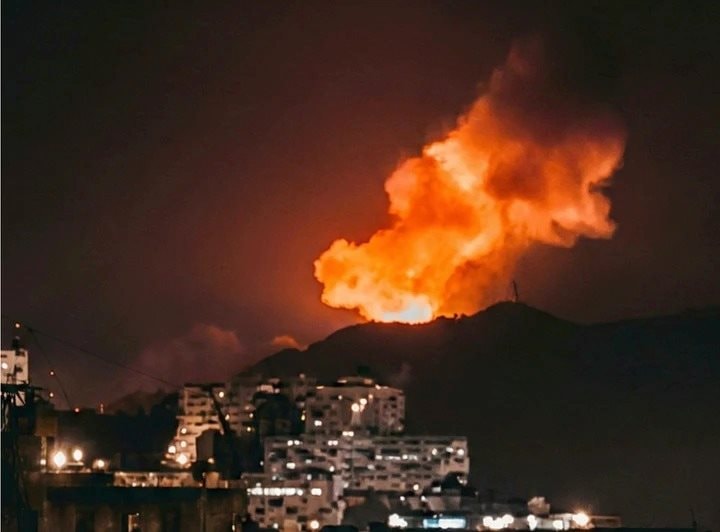
The strikes mark a stark departure from previous U.S. policy under Mr. Trump, who during his first term imposed sanctions but avoided direct military intervention. Critics, including legal experts, argue that the action violates the War Powers Resolution, which requires congressional approval for prolonged hostilities. Supporters point to longstanding U.S. indictments against Mr. Maduro for allegedly facilitating cocaine shipments to the United States, framing the operation as a counter-narcotics effort.
As Venezuela grapples with power outages and disrupted communications, reports of protests and clashes between security forces and civilians have emerged from Caracas and other cities. Humanitarian organizations warn of a potential refugee crisis, with millions already displaced by years of economic collapse under Mr. Maduro’s rule. The capture of Mr. Maduro and his family could reshape Latin American geopolitics, potentially emboldening opposition forces while inviting retaliation from allies like Russia and Iran.

Mr. Trump’s decision comes amid domestic distractions, including his recent social media posts boasting of acing cognitive exams and criticizing wind energy projects with misleading images. Whether this bold move stabilizes or further destabilizes the region remains uncertain, but it has undeniably shattered the fragile post-World War II international order, raising fears of copycat actions by powers like Russia in Ukraine or China toward Taiwan. As details emerge, the world watches warily for the fallout from this high-stakes gambit.