By XAMXAM
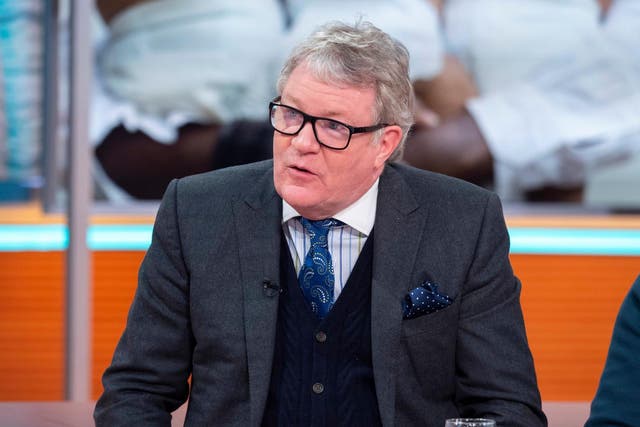
British politics has learned to live with scandal. What it has not yet learned to manage is the speed at which rumor now outruns verification—and the damage that can follow even when claims remain unproven. This week’s online storm, triggered by allegations circulating after comments from Jim Davidson, placed Keir Starmer and his family at the center of a controversy that illustrates the perilous space between public interest and private life.
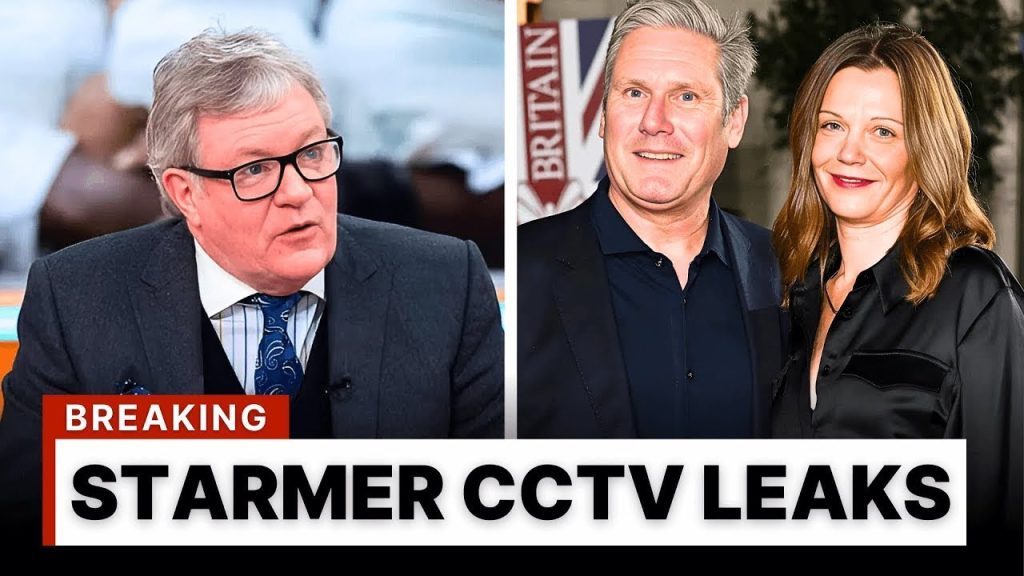
The claims—widely shared in video clips and social posts—asserted the existence of leaked CCTV footage tied to a wealthy donor’s London property and alleged personal fallout within the Starmer household. The prime minister’s office moved quickly to deny the allegations, calling them false and defamatory. No footage has been produced publicly. No corroborating evidence has been verified. Yet the story spread anyway, propelled by insinuation, screenshots, and a familiar refrain: what if something is being hidden?
That question, rather than the claims themselves, proved most combustible.
In an era when trust in institutions is fragile, denials often land as accelerants. Advisers for the prime minister reportedly issued legal warnings to deter repetition of the allegations. Platforms were urged to remove content deemed misleading. Supporters framed these actions as routine safeguards against libel. Critics portrayed them as heavy-handed, arguing that silence from major broadcasters only sharpened suspicion.
The episode exposed a dilemma facing contemporary leadership: how to rebut an allegation that thrives on implication. Address it too forcefully and it gains oxygen; ignore it and it metastasizes. The result is a feedback loop in which the absence of proof becomes, for some audiences, proof of absence—of transparency.
At the center of the swirl sat a set of real, previously reported facts that lent the rumor traction. Starmer had acknowledged accepting hospitality linked to a donor’s property during a period when his son was preparing for exams, and gifts to the family had been registered following advice from parliamentary authorities. Those disclosures were lawful and documented. But the leap from disclosure to impropriety—then to salacious conjecture—was made at internet speed.
Commentators such as Isabel Oakeshott added fuel by arguing, more broadly, that political journalism has grown timid around powerful figures, especially when stories are messy and hard to prove. That critique resonated with viewers who already suspect that elite networks shield their own. Yet it also underscored the ethical tightrope: skepticism about power must coexist with standards of evidence.

The prime minister’s allies stress a simple point: there is a categorical difference between scrutiny of governance and speculation about private conduct. They argue that the latter corrodes public life by lowering the threshold for accusation. If every viral claim demands rebuttal, leaders risk governing in permanent crisis mode—responding to shadows rather than substance.
Still, the episode cannot be dismissed as mere gossip. It reveals how easily public confidence can be unsettled when politics collides with perception. In Britain, recent memory is crowded with genuine failures of transparency—from lobbying scandals to undisclosed hospitality—making voters primed to connect dots even when lines are faint.
Media organizations, for their part, face an unenviable choice. Publish and risk amplifying falsehoods; hold back and be accused of complicity. Many opted for restraint, noting the lack of verifiable material and the potential harm to individuals not holding office. That caution drew criticism from those who equate coverage with courage. But restraint, editors counter, is not endorsement; it is judgment.
What lingered after the viral wave ebbed was not a finding, but a mood. Polling already shows a volatile electorate skeptical of political class promises. In that climate, stories that blend wealth, access, and secrecy—however tenuous—tap into a deeper anxiety about fairness and double standards. The optics of donors, penthouses, and luxury gifts collide with rhetoric about integrity and public service, creating cognitive dissonance that rumor exploits.
There is also a human cost often overlooked. Families of public figures become collateral, dragged into narratives they cannot rebut without amplifying harm. The law recognizes this distinction for a reason: public accountability does not license private defamation.
The lesson of the week is not that allegations should be ignored, nor that leaders deserve immunity from scrutiny. It is that credibility—of politicians and media alike—now depends on demonstrating process as much as outcome: how claims are tested, how decisions are made, and why some stories are covered while others are not.
For Starmer, the task ahead is less about disproving a claim than restoring confidence in the rules that separate fact from fiction. For the media, it is a reminder that skepticism must be paired with verification, and that the loudest story is not always the truest.
In the end, this episode may fade without consequence. Or it may leave a residue—a sense that the ground beneath public discourse is unstable, and that once suspicion takes root, it is remarkably hard to uproot. In a politics already strained by polarization and speed, that may be the most enduring damage of all.