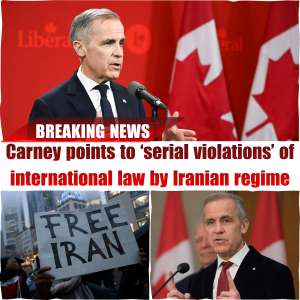
When the Canadian Press named Mark Carney its Newsmaker of the Year, the designation was less a surprise than a recognition of a political reality that has reshaped Ottawa with unusual speed. In a matter of months, Carney accomplished something without precedent in modern Canadian history: he entered electoral politics from the outside, seized leadership of a collapsing governing party, won a national election against long odds, and assumed the premiership amid one of the most volatile geopolitical climates Canada has faced in decades.
The scale of the turnaround is difficult to overstate. Late last year, the Liberal Party appeared exhausted after nearly a decade in power. Polls showed the Conservatives, led by Pierre Poilievre, on track for a commanding victory. Public frustration was deep, caucus unrest was visible, and confidence in leadership had eroded. Few observers imagined that a former central banker—unelected, untested on the campaign trail, and absent from partisan life—would become the party’s answer.
Yet Carney did not ease into politics. He stepped directly into crisis. Winning the Liberal leadership with more than 80 percent of the vote on the first ballot, he replaced Justin Trudeau and promptly called a general election. The move was widely viewed as risky. Instead, it proved decisive. Canadians who appeared ready to turn the page chose stability over disruption, expertise over grievance, and economic credibility over ideological warfare.
What followed cemented Carney’s standing. Almost immediately, he found himself negotiating with Donald Trump, whose trade threats, tariff policy, and rhetorical volatility had placed Canada’s economy under renewed pressure. Rather than escalating tensions, Carney adopted a calibrated approach—firm in substance, restrained in tone—positioning Canada as predictable and reliable in contrast to an increasingly erratic global environment. Analysts noted that his background as former governor of both the Bank of Canada and the Bank of England was not incidental; it was central to his appeal.
Political historians have struggled to find parallels. No Canadian prime minister has entered office without prior electoral experience and then immediately won a national mandate. No leader has transitioned so quickly from political obscurity to global relevance. And few, if any, have faced such a compressed sequence of challenges: party collapse, election combat, trade confrontation, and economic repositioning—all within a single year.
Commentators have therefore been unusually blunt in their assessments. This was not merely a strong debut, they argue, but a redefinition of political possibility. Carney’s ascent suggested that, at moments of institutional fatigue, Canadian voters are willing to suspend traditional expectations in favor of perceived competence. His success also exposed a deeper appetite for leaders who speak less in slogans and more in systems—who frame politics as stewardship rather than spectacle.
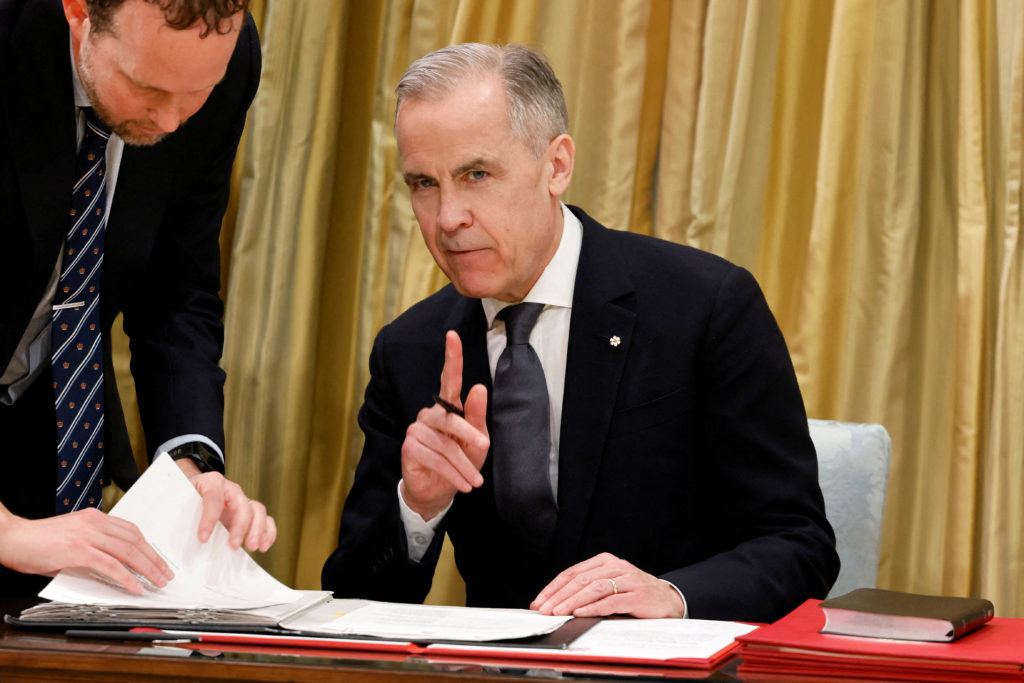
The recognition from the Canadian Press reflects that broader judgment. The Newsmaker of the Year title is not awarded for popularity alone, but for impact. In Carney’s case, the impact has been structural. He altered the trajectory of a party, shifted the assumptions of an election, and recalibrated Canada’s posture on the world stage. In doing so, he challenged the idea that political leadership must be forged exclusively through partisan apprenticeship.
Whether this moment represents a lasting realignment or a singular response to extraordinary conditions remains an open question. Governing, after all, is a longer test than winning. Economic headwinds persist, global uncertainty continues, and expectations—now elevated—will be difficult to manage. But if the first year is any indication, Carney has already achieved something rare: he has made Canadian politics feel consequential again, not because of chaos, but because of competence.
For now, that alone explains why the country’s most seasoned observers have converged on a single conclusion. In a year defined by disruption, Mark Carney did not merely weather the storm. He became its stabilizing force.