A President in a Bubble: New Revelations Suggest Trump Receives Only Curated Economic Data
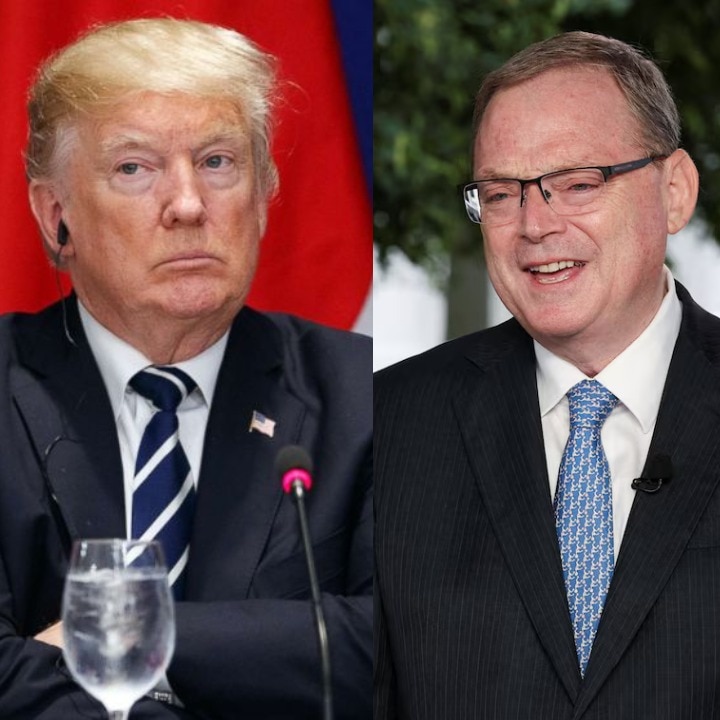
In a quiet moment on a Sunday political program, what began as a routine inquiry into inflation unexpectedly opened a window into something far more consequential: the information pipeline surrounding former President Donald J. Trump. An exchange between Face the Nation host Margaret Brennan and Kevin Hassett, one of Trump’s top economic advisers, revealed what analysts, former officials, and political observers have long suspected — that the President may be operating inside an insulated ecosystem where only selectively positive economic data reaches him.
It was a brief remark, almost incidental. Yet it carried implications far beyond the moment, raising questions about governance, decision-making, and the consequences of surrounding a president with curated optimism during a period of economic strain for millions of Americans.

For months, Trump has insisted that prices are “coming down tremendously,” contradicting official figures from the Bureau of Labor Statistics showing that inflation, while lower than its 2022 peak, has remained positive — meaning prices continue to rise, not fall. When Brennan pressed Hassett to explain what data Trump was referencing, the former adviser offered an answer that was both revealing and unsettling: Trump focuses on “individual items” that have decreased in price, highlighting charts of “specific categories” such as gasoline or eggs, even as overall consumer costs continue their incremental climb.
That explanation, delivered in measured language, aligns with reports from inside Trump’s circle suggesting a pattern — information is pruned, distilled, and strategically shaped before it reaches him. Economic briefings emphasize isolated improvements rather than systemic challenges. Negative indicators are minimized or, in some cases, never presented at all.
This dynamic, according to several former administration officials, is not new. During Trump’s first term, the Presidential Daily Brief (PDB) — historically a dense, nuanced document used to inform presidents of global developments — was repeatedly condensed to accommodate his short attention span. By some accounts, it was eventually whittled down to a single page, featuring charts, simplified bullet points, and limited narrative analysis. More complex or unpleasant intelligence often disappeared from the sessions entirely.
What emerged over time was a culture of filtering: only news perceived as favorable was elevated. Critical information, especially that which might provoke anger or diminish the president’s sense of success, was often avoided. The same trend appeared in domestic policy briefings. Advisers learned, as one former staffer put it, “You don’t bring the president problems — you bring him praise.”

Trump’s sensitivity to negative data created a feedback loop that insulated him from the country’s economic realities, according to multiple aides familiar with internal deliberations. Advisers increasingly presented cherry-picked statistics that confirmed the narrative he preferred — that the economy was strong, voters were satisfied, and his policies were succeeding. The protective bubble was reinforced by political incentives: those who contradicted Trump risked public scolding, diminished influence, or removal.
This dynamic may help explain a widening disconnect between Trump’s messaging and the lived experience of voters. While the president continued to tout booming conditions and “historic success,” polls throughout the past year consistently showed declining Republican performance at state and local levels, erosion among suburban and Latino voters, and rising economic anxiety across demographic groups. The gap between Trump’s assurances and public sentiment has grown so wide that it has become a strategic liability for his party.
Republican underperformance in municipal, gubernatorial, and legislative races throughout the past year has compounded the concern. From Virginia to New Jersey to Georgia, the party has lost ground in constituencies that once formed core components of their electoral coalition. Yet despite these warning signs, Trump’s rhetoric has remained unchanged — insisting that affordability concerns are “a hoax” one moment and “Biden’s fault” the next.
Hassett’s remarks suggest that the president’s understanding of the economy may be shaped by his information environment as much as his political strategy. If Trump is indeed being shown only slivers of data — the price of gasoline, the cost of eggs, fluctuations in specific categories of prescription drugs — then his confident declarations about economic success are built on an incomplete picture. The broader context of rising rents, insurance premiums, consumer goods, and household costs remains obscured.
This, experts warn, could have cascading consequences. A president who is insulated from negative information cannot respond to it effectively. Without acknowledging the problem, course correction becomes impossible.
Some Republican lawmakers, aware of the risks, have privately expressed concern about Trump’s unwillingness to confront economic realities. But few are willing to challenge him directly. According to several strategists, even elected officials fear alienating the president or his supporters, resulting in a culture of silence around the party’s vulnerabilities.
Political analysts argue that the situation is untenable. If Trump enters the final two years of his presidency without addressing voter concerns — particularly on affordability — Republicans could face deeper losses in 2026.
Yet for now, the system persists. Advisers continue to curate. Trump continues to repeat selectively positive data. And a widening divide remains between the information the president receives and the economic struggles shaping voters’ lives.
Whether this revelation marks a turning point, or merely another chapter in an increasingly opaque presidency, is a question officials and voters alike will confront in the months ahead.