In a development that has reignited long-standing questions surrounding the federal government’s handling of the Ghislaine Maxwell case, the Justice Department is facing renewed scrutiny after confirming that Maxwell, who is serving a 20-year federal sentence for sex trafficking minors, was transferred this summer from a medium-security facility in Florida to a lower-security prison camp in Texas. The transfer, which officials described as a “security-driven decision,” has prompted a wave of public speculation, political criticism, and internal concern from former Bureau of Prisons employees who say such moves are atypical for inmates convicted of comparable offenses.
The controversy accelerated following a widely circulated interview clip involving Deputy Attorney General Todd Blanch, who was questioned last week about the rationale behind the transfer. Mr. Blanch, who previously served as personal criminal defense attorney to former President Donald J. Trump, declined to provide specifics, citing “security matters” and emphasizing the Bureau of Prisons’ responsibility not only for inmate management but also for inmate protection.
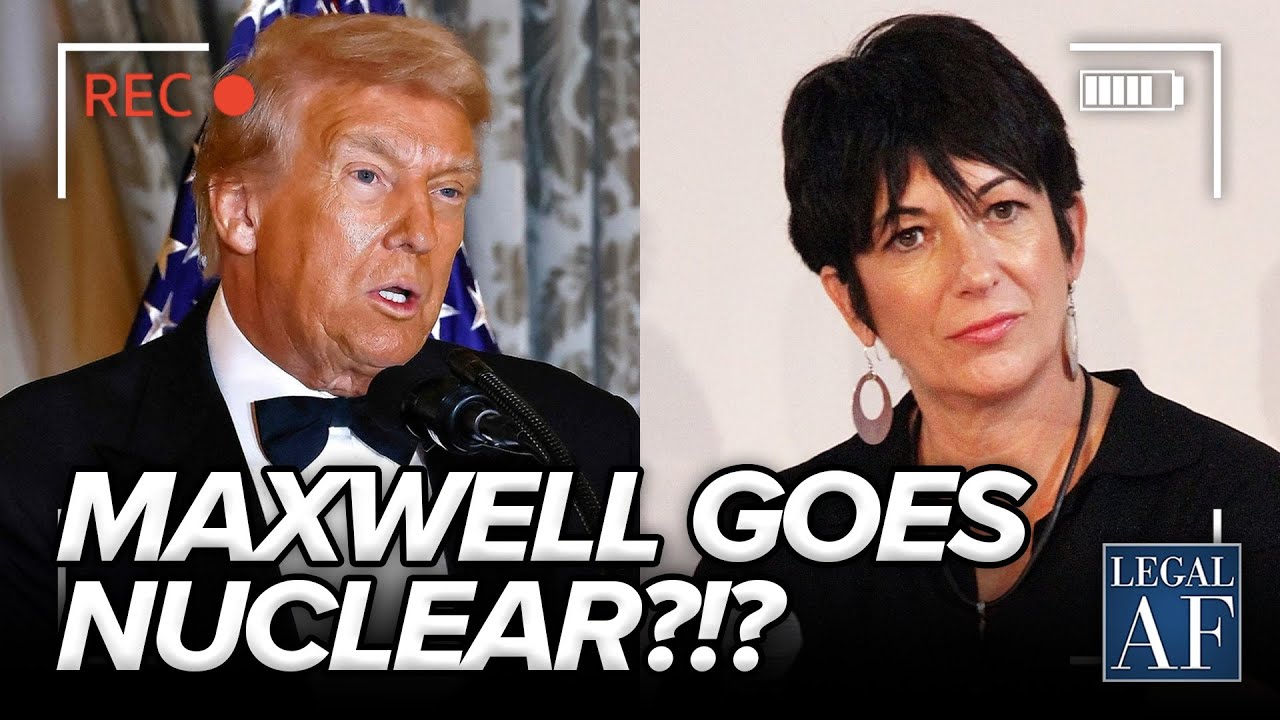
“When I met Ms. Maxwell, there was a tremendous amount of scrutiny, publicity, and credible threats against her life,” Mr. Blanch said during the exchange. “The BOP has to ensure not only that individuals remain in custody but also that they remain safe.”
While such statements align with institutional policy, they did little to quell rising speculation across political circles and online platforms. The transfer occurred mere days after a closed-door meeting between Mr. Blanch and Ms. Maxwell at the Florida facility—an event later confirmed by the Department of Justice. Soon after the meeting, Maxwell gave a public statement in which she asserted that Mr. Trump had “never engaged in inappropriate conduct around her,” a remark that drew immediate attention given the former president’s proximity to both Maxwell and Jeffrey Epstein in past decades.
The timing of the transfer and the content of Maxwell’s statement have fueled widespread theories online and in certain political forums that her move may have been influenced by factors unrelated to security. “This was not a standard classification decision,” said one former senior Bureau of Prisons official, who requested anonymity to discuss internal procedures. “In cases involving crimes of this nature, movement to a minimum-security camp is unusual, and the timing raises questions that should be examined.”
In Washington, several lawmakers called for transparency regarding the circumstances that led to the transfer. Though no official inquiry has been launched, aides to two members of the Senate Judiciary Committee confirmed they have privately requested documentation on the classification review that preceded Maxwell’s relocation.
The controversy intersects with a broader debate over the still-sealed records, logs, and deposition materials tied to the Epstein case—documents that contain the names of prominent business leaders, political figures, and public personalities. Mr. Trump, when asked whether he would consider pardoning Maxwell should he return to office, offered a notably noncommittal answer, stating only that he would “take a look at it” and that he had “not followed the case closely.” His remarks, widely shared on social media, revived longstanding criticism that he has consistently avoided addressing the full extent of his past association with Epstein and Maxwell.
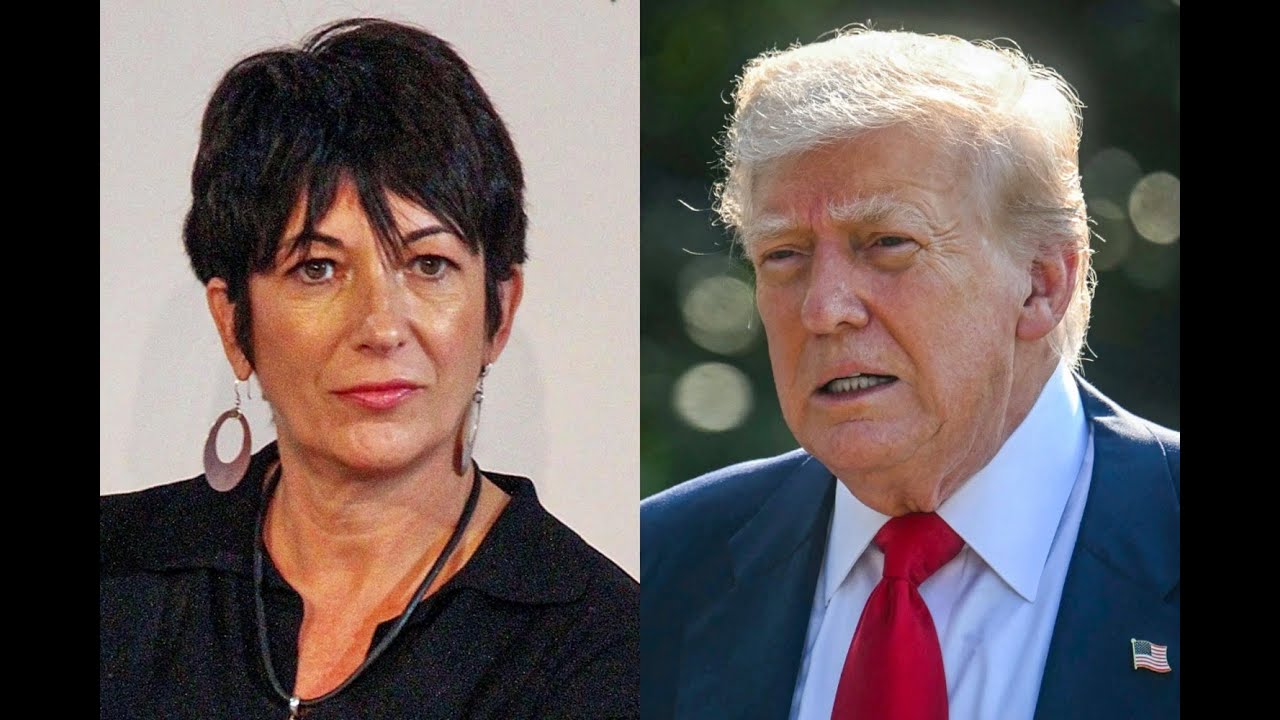
The Justice Department has repeatedly stated that political considerations play no role in inmate transfers. Nonetheless, the absence of a direct explanation has heightened public distrust, particularly given the politically charged environment surrounding the Epstein estate, the federal investigation into his associates, and the persistent questions regarding Epstein’s death while in federal custody in 2019.
Legal analysts note that while inmate transfers are not uncommon, the combination of high public interest, Maxwell’s notoriety, and the lack of detailed communication from the Department fuels perceptions of opacity. “The DOJ may well have followed procedure,” said Caroline Rowe, a professor of criminal justice at Georgetown University. “But when the public is working with partial information and a case is already clouded by extraordinary controversy, the government bears a particular responsibility to communicate clearly and proactively. Silence often produces vacuum, and vacuum invites speculation.”
Meanwhile, the transfer has become a trending topic across major platforms, with hashtags referencing Maxwell’s move generating millions of views. Advocacy groups representing Epstein’s victims expressed concern not only about the optics but about what they described as a “pattern of institutional accommodation.” In a statement, one organization said the decision “adds to a long history of exceptional treatment afforded to individuals with wealth, status, or powerful connections.”
At the Bureau of Prisons, officials have refused to comment beyond the original statement, citing safety concerns for Maxwell and the operational protocols that govern inmate movement. But current and former employees acknowledge privately that the institution has struggled to maintain public confidence following high-profile lapses and internal reports of staffing shortages, inconsistent oversight, and chronic underfunding.
For now, Maxwell remains housed at the federal prison camp in Bryan, Texas, a facility typically reserved for non-violent offenders. Whether additional details will emerge to clarify the circumstances of her transfer remains uncertain. In the absence of further explanation, speculation—ranging from the plausible to the conspiratorial—continues to intensify.
And with the Epstein files still sealed, political tensions rising, and online commentary accelerating at a pace federal officials cannot control, the drama surrounding Maxwell’s move shows no signs of fading. Public interest has only grown, and demands for transparency are likely to increase as the story continues to unfold.
As of this week, the clip of Mr. Blanch’s interview continues to circulate widely, attracting millions of views. Analysts anticipate that the pressure on the Justice Department will escalate unless further details are made public. For now, officials are offering no indication that such clarification is forthcoming.
The internet, however, is unlikely to let the matter rest.