A volatile mix of allegations, political rhetoric, and unresolved investigations has once again thrust Minnesota into the national spotlight. The latest flashpoint came after Donald Trump reacted publicly to a wave of claims involving Ilhan Omar and Tim Walz, amplifying an already heated debate over fraud oversight, political intimidation, and the boundaries between verified facts and unproven accusations.
The controversy centers on long-running federal investigations into pandemic-era aid programs in Minnesota, most notably those tied to food and social services. Prosecutors have already secured convictions against dozens of defendants for defrauding public programs, with court records documenting hundreds of millions of dollars in confirmed losses. Those cases—adjudicated in federal court—form the factual backbone of the issue. What has changed is the political framing around them.
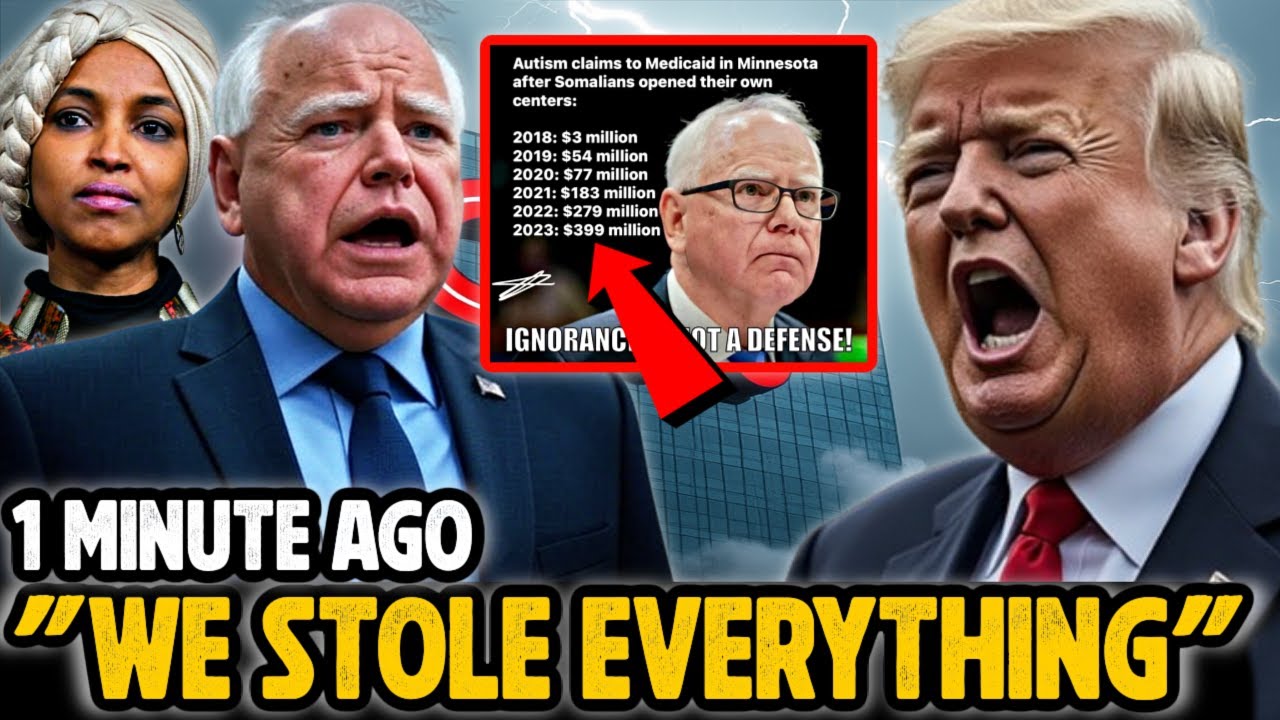
In recent days, critics and advocacy groups have circulated claims that potential losses could be far higher, sometimes citing figures in the billions. Officials familiar with the investigations caution that such numbers often conflate confirmed fraud with broader estimates of program exposure and pending audits. “There is a difference between money proven to be stolen and money under review,” said one former federal investigator, who emphasized that audits do not equate to criminal findings.
Layered onto the financial debate are allegations of intimidation and threats. Online posts and political commentary have referenced reports of death threats and witness fear, claims that have fueled calls for stronger protections and greater transparency. Law enforcement agencies have not publicly confirmed details of such threats tied to the fraud cases, and legal experts urge restraint. “Threat allegations are serious, but they must be substantiated,” said a constitutional law scholar. “Public officials and commentators have a responsibility not to outrun the evidence.”

Governor Walz’s administration has responded by reiterating that Minnesota moved quickly during the pandemic to deliver aid amid unprecedented need, and that once credible evidence of fraud emerged, payments were halted and investigations expanded. The state has since enacted tighter controls, increased auditing authority, and enhanced compliance requirements for nonprofit contractors. Officials argue that reforms—rather than retroactive blame—are the appropriate response.
Representative Omar has denied any wrongdoing and rejected suggestions that her office was aware of criminal conduct. Her aides have noted that campaign donations cited by critics were legal at the time they were made and reported in accordance with federal law. No charges have been filed against Omar, Walz, or other elected state leaders in connection with the fraud cases.

Still, the political pressure is intensifying. Trump’s comments, delivered in unusually blunt terms, have energized critics who argue that the scale of the scandal reflects systemic failure. Supporters of the governor and the congresswoman counter that the rhetoric risks undermining due process and conflating criminal convictions with political responsibility.
Behind the scenes, federal scrutiny appears to be widening. Investigators have acknowledged ongoing reviews across multiple assistance programs, including SNAP, Medicaid, housing aid, and disability services. Such reviews, officials say, are designed to identify vulnerabilities exposed during the rapid expansion of aid—not to pre-judge outcomes. “Oversight is iterative,” said a former Justice Department official. “You strengthen systems by finding where they broke.”
Public reaction has been swift and polarized. Clips and claims have exploded online, trending across platforms as voters demand clarity. Some Minnesotans are calling for resignations and firings; others warn against what they see as a rush to judgment fueled by national politics.
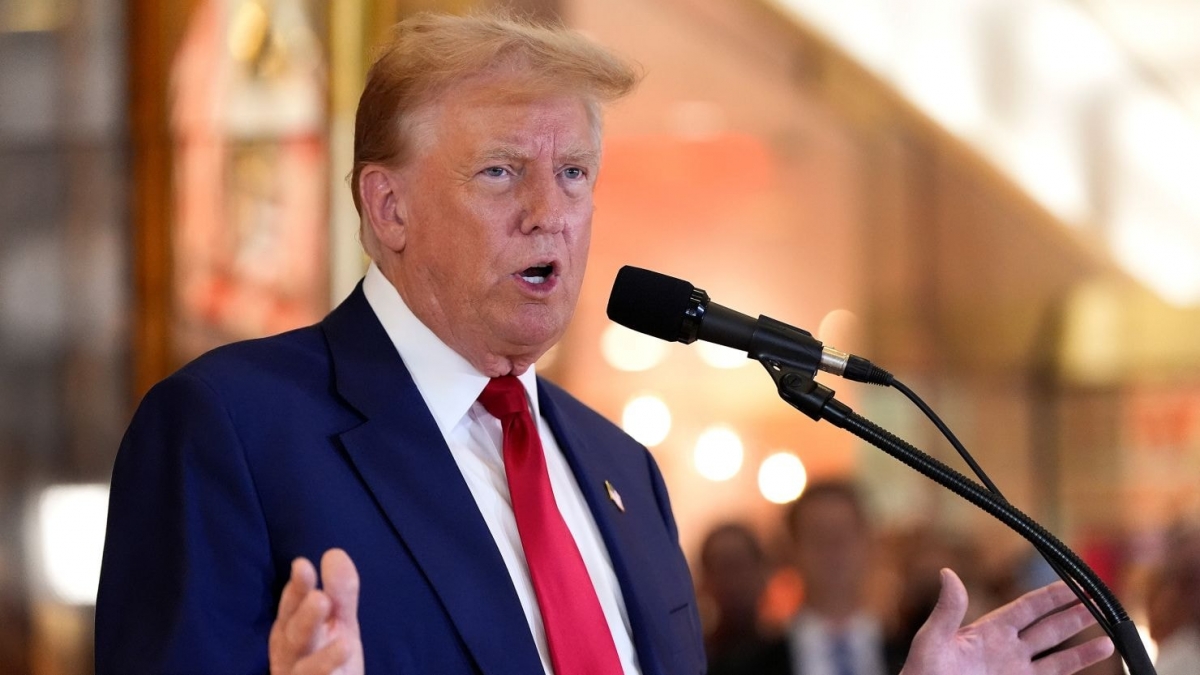
Analysts say the episode underscores a familiar tension in American governance: how to balance speed and safeguards during emergencies, and how to separate legal accountability from political blame once the crisis passes. Whether the latest claims result in new charges, further reforms, or simply harden partisan lines remains uncertain.
What is clear is that Minnesota’s fraud cases have entered a new phase—one less defined by courtroom verdicts than by perception, trust, and the high stakes of an election cycle. As investigators continue their work, the challenge for leaders will be to address legitimate concerns without allowing unproven allegations to eclipse established facts.