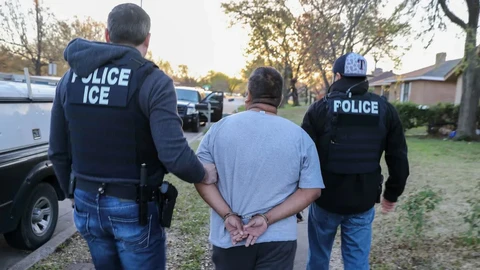
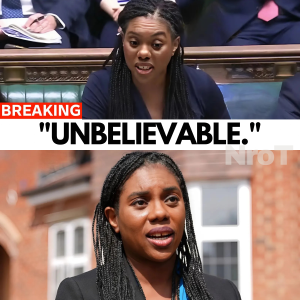
Washington — A live interview on CNN this week became a focal point of political debate after a host read an official statement on air that disputed a claim made by Representative Ilhan Omar involving Immigration and Customs Enforcement and a reported encounter with her son. The moment underscored how quickly a routine television appearance can pivot when competing accounts collide in real time.
The segment began as a standard discussion of current events before the host introduced a statement attributed to the Department of Homeland Security, which said the department could find no record corroborating the alleged ICE encounter. As the statement was read aloud, the tone of the interview shifted. Ms. Omar responded that her account had been misunderstood and that she was seeking clarification, adding that agency records are not always comprehensive.
The exchange did not introduce new evidence, but it did juxtapose an elected official’s personal account with an official denial, a contrast that quickly drew attention online. Clips circulated widely, with viewers parsing pauses, wording and follow-up questions, often reading significance into the dynamics of the moment as much as its substance.

Federal officials have said publicly that their review found no record of such a stop by Immigration and Customs Enforcement. They emphasized that enforcement actions are typically logged and reviewable, while noting that internal checks can take time. No investigation or charges have been announced, and the department declined to elaborate beyond the statement read during the interview.
Ms. Omar’s office has disputed the characterization, saying the account should not be dismissed and that it is pressing for additional clarity. The office has not released documentation publicly. Supporters argue that discrepancies between lived experiences and bureaucratic records are not uncommon and warrant careful verification. Critics counter that serious claims require substantiation and that unresolved inconsistencies undermine confidence.
Media analysts say the exchange resonated because it made the process of verification visible. “Live television collapses timelines,” said a former network producer. “Journalists are asking questions at the same time agencies are checking records. When an official statement enters the conversation mid-interview, the story naturally reframes.”
Inside broadcast newsrooms, producers often relay updated information to hosts during live segments, prompting sharper follow-ups. Such adjustments are routine, but when isolated into short clips and shared widely, they can appear dramatic. CNN did not issue a correction or follow-up regarding the interview, suggesting the segment reflected the information available at the time.
:max_bytes(150000):strip_icc():focal(727x376:729x378)/Ilhan-Omar-121625-0ed3db368e6d4bf6ac69fe4bf8f6fe9f.jpg)
The episode illustrates a broader challenge for both journalists and public officials. Agencies move deliberately to verify facts; audiences expect immediacy. When those rhythms clash, uncertainty can become the headline. “This is a credibility moment,” said a media ethicist at Columbia University. “Not because the facts are settled, but because the process is on display.”
Ms. Omar has long been a polarizing figure, particularly on immigration-related issues, which shapes how viewers interpret such exchanges. Analysts note that reactions often reinforce prior beliefs rather than resolve disputes. For DHS, lingering discrepancies can carry reputational risk if left unexplained, even when no wrongdoing is alleged.
Historically, disputes over records are typically resolved quietly through documentation rather than on-air debate. Former officials say most end with clarifications or confirmations that draw little public notice. In this case, however, the visibility of the exchange amplified interest, keeping attention focused on what records do — and do not — show.
Political strategists caution against overreading a single interview. “Television moments can feel decisive,” said a former communications adviser, “but credibility questions are settled by evidence, not optics.” Whether additional documentation emerges will likely determine how long the story persists.
For viewers, the interview offered a rare look at how live journalism responds when new information arrives mid-conversation. For the media, it highlighted the balance between accountability and amplification — pressing for answers without overstating certainty.
As of now, the factual dispute remains narrow. DHS maintains it has found no corroborating record; Ms. Omar disputes that assessment and seeks clarification. No further disclosures have been made. Analysts expect that if the matter is resolved, it will be through records or a formal statement, not additional on-air exchanges.
The moment’s impact, then, lies less in a conclusion than in a demonstration: how quickly narratives can shift when official statements meet personal accounts on live television. In a fragmented media landscape, that visibility alone can sustain attention — even as institutions continue their work off camera.