As the Epstein Files Near Release, New Questions Emerge About What the Government Pursued — and What It Left Untouched
As the Justice Department approaches a court-ordered deadline to release a sweeping trove of records related to Jeffrey Epstein, a familiar tension has returned to American public life: the uneasy gap between what the government knows, what it reveals, and what it chooses not to pursue.
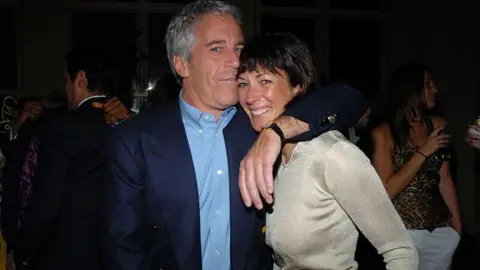
The latest unease centers on Ghislaine Maxwell, Epstein’s longtime associate and the only person criminally convicted in connection with his sex-trafficking operation. For years, Maxwell has been widely perceived as the central gatekeeper of Epstein’s secrets — a woman whose knowledge, selectively deployed, could shape narratives, reputations, and political fortunes. Now, as judges in New York have authorized the disclosure of grand jury materials, sealed filings, and records previously subject to protective orders, that perception appears to be shifting.
At issue is not simply what the documents may contain, but what they reveal about the government’s investigation itself — its scope, its blind spots, and its apparent omissions. Legal experts reviewing the unfolding disclosures have raised pointed questions about investigative decisions that now seem difficult to justify. Among the most striking is the acknowledgment by senior Justice Department officials that certain materials released in recent days originated not from federal investigators, but from the Epstein estate itself.
That admission has raised eyebrows among former prosecutors. In ordinary cases, documents of that relevance would have been seized or subpoenaed early. Their apparent absence has fueled skepticism about how thoroughly Epstein’s network was examined — and who, exactly, was questioned.
One question has lingered most persistently: whether prominent figures who maintained social relationships with Epstein were ever interviewed as witnesses. Reporting has suggested that Donald J. Trump, who has acknowledged attending social gatherings hosted by Epstein in the 1990s and early 2000s, may never have been formally questioned. Mr. Trump has denied any wrongdoing and has said he severed ties with Epstein long before his arrest. No accuser has alleged abuse by him.
Still, to critics, the absence of such interviews underscores a larger concern — that the investigation prioritized procedural containment over comprehensive accountability.
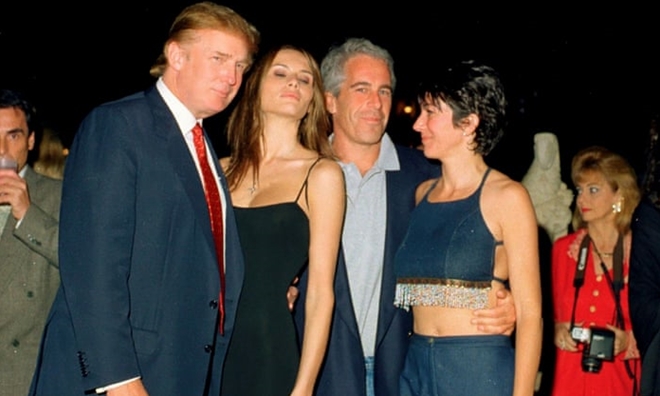
Those concerns have been amplified by new reporting from The New York Times, based on more than 30 interviews with Epstein employees, survivors, and associates. The reporting describes a relationship between Epstein and Mr. Trump that was closer, and more socially intertwined, than Mr. Trump has publicly acknowledged. According to multiple accounts, Epstein and his partner, Ms. Maxwell, introduced at least six women who later accused them of grooming or abuse to Mr. Trump. One was a minor at the time. None have accused Mr. Trump of sexual misconduct.
One woman, speaking anonymously, told the Times that Epstein coerced her into attending four parties at his Manhattan home — gatherings Mr. Trump attended. At two of those parties, she said, Epstein directed her to have sex with other male guests. She recalled Mr. Trump’s presence distinctly, describing him as both a status symbol Epstein bragged about and a rival in what she characterized as a contest of ego and dominance.
The Times found no evidence implicating Mr. Trump in Epstein’s criminal conduct. But the reporting suggests a social proximity that complicates efforts to neatly compartmentalize Epstein as a lone predator operating on the margins of elite society.
As the records release approaches, attention has increasingly turned to what may be missing. Survivors and transparency advocates are watching closely for redactions, withheld exhibits, and unexplained gaps. Prosecutorial memoranda, immunity discussions, plea negotiations — materials almost never made public — may soon be visible, albeit imperfectly.
For survivors, the stakes are deeply personal. Danielle Bensky, one of several women who have publicly shared their experiences, has described the release as both anticipated and emotionally destabilizing. Years of advocacy have built momentum toward disclosure, but uncertainty about timing and completeness has taken a toll.
“This is the hardest part,” Ms. Bensky said in a recent interview. “Waiting to see what will come out — and what won’t.”
The survivor community, she emphasized, is not monolithic. Women with different backgrounds and experiences have come together around a shared demand for accountability, forming bonds forged in litigation and public scrutiny. Yet as the release nears, many are retreating inward, bracing for revelations that may reopen wounds.
Politically, the moment is delicate. Mr. Trump, now president again, has faced mounting pressure from both critics and members of his own party to support full transparency. While he possesses broad executive authority to declassify or disclose materials, the administration has largely deferred to court timelines and institutional processes — a restraint that has only intensified skepticism among detractors.
What emerges in the coming days may not deliver the catharsis many expect. The documents are likely to be fragmentary, context-poor, and heavily redacted. Photographs without provenance. Testimony without corroboration. Names without conclusions.
Yet even incomplete disclosures can shift the ground. They can illuminate patterns of power, proximity, and protection — and expose the limits of an investigation that, for all its notoriety, may never have been designed to follow every lead.
In the Epstein case, the question has never been whether the truth is explosive. It is whether the public will ever be permitted to see it whole.