When Spectacle Replaces Substance
For years, Donald Trump’s presidency—and post-presidency—has blurred the line between governance and performance. But over the past several weeks, that line appears to have all but disappeared, replaced by a series of events so erratic and self-referential that they have raised fresh questions about priorities, power, and truth in American public life.
Consider the United States Institute of Peace, a congressionally funded, nonpartisan agency established in 1984 to prevent and resolve violent conflicts. Earlier this year, the Trump administration sharply reduced its funding and threatened to seize its headquarters. Now, in what the White House has framed as a compromise, the building bears a new name: the Donald J. Trump United States Institute of Peace and Casino. Administration officials defended the move by disparaging the institute as a bloated organization that spent millions “delivering no peace.” Critics were quick to note the irony of attaching Trump’s name—long associated with failed casinos and self-promotion—to an institution devoted to diplomacy.
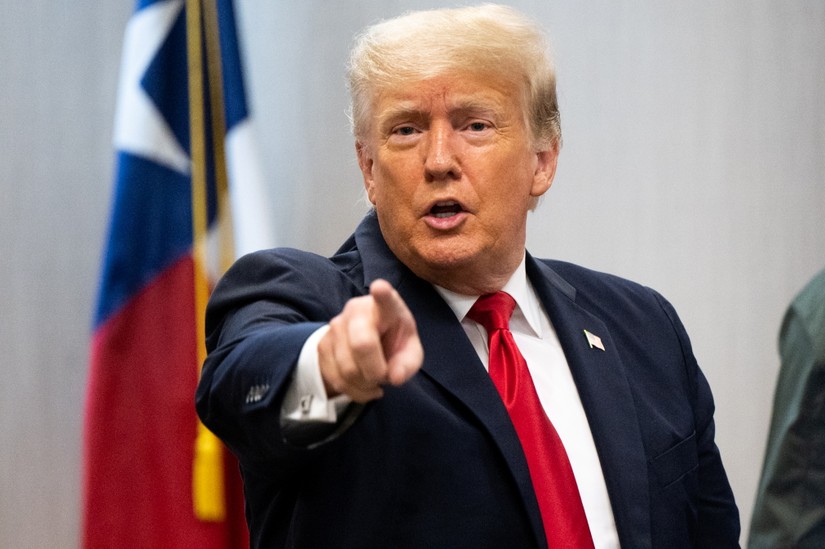
That irony only deepened when Mr. Trump visited the building to claim credit for easing tensions between Rwanda and the Democratic Republic of Congo, a conflict that has spanned decades and claimed millions of lives. At a press appearance, he spoke casually of leaders who had “spent a lot of time killing each other” and suggested they were now ready to “hug and hold hands.” The remarks drew applause from supporters and disbelief from diplomats familiar with the region’s complexities.
The same press conference, held late at night and for unclear reasons at the State Department, quickly veered into the surreal. Mr. Trump made repetitive noises—“ping, ping, ping”—before launching into an extended monologue about tile work at the White House. He criticized renovations completed during the Truman administration, praising his own replacement of “cheap green tile” with “paradesial marble,” describing the process as an act of heritage preservation. He later explained that construction work provided him “relaxation,” prompting him to wonder aloud whether he was a better politician or real-estate developer.
The appearance was not an outlier. At the Kennedy Center Honors, where Mr. Trump presided over an awards ceremony featuring figures such as Sylvester Stallone, he repeatedly diverted attention from the honorees to himself. He praised the newly installed board of trustees as “the hottest board,” comparing it favorably to the Supreme Court, the U.S. Senate, and even the NFL. Attendance at the Kennedy Center, according to public reports, has declined sharply in recent months, though the president claimed the opposite, asserting—without evidence—that 40 percent of Washington’s restaurants had closed last year and were now thriving again.
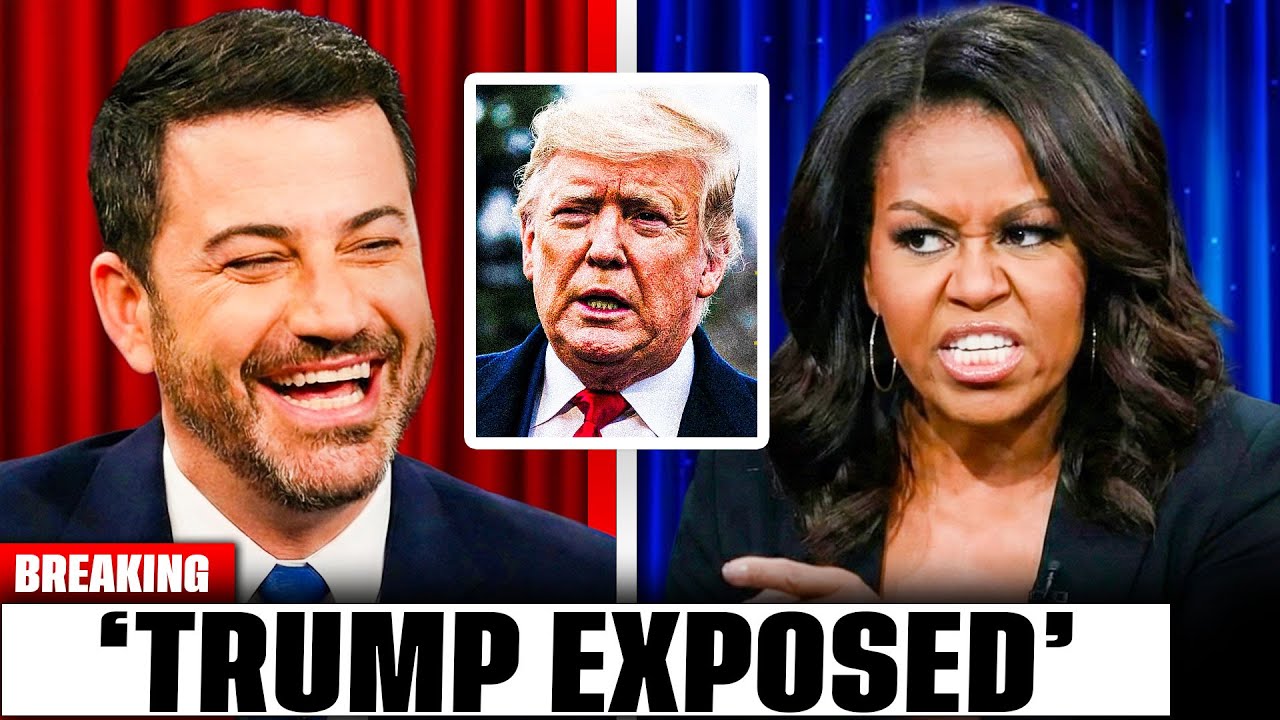
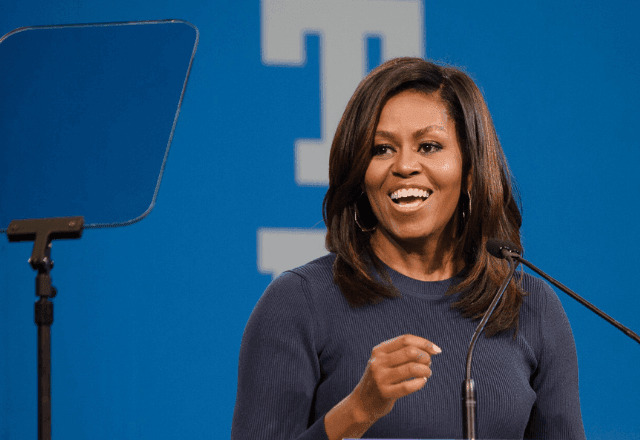
At the same time, misinformation continues to circulate at an extraordinary pace. A viral post recently claimed that Michelle Obama and Jimmy Kimmel had “destroyed” Mr. Trump in a live television confrontation in November 2025. The story was entirely fabricated. Fact-checkers found no record of such an appearance: no broadcast listings, no video, no credible news coverage. Michelle Obama has not appeared on “Jimmy Kimmel Live!” since December 2022.

The real, documented moments, however, require no embellishment. In a 2018 appearance, Mrs. Obama described Mr. Trump’s promotion of the birther conspiracy as reckless and dangerous, saying it put her family at risk and was “crazy and mean-spirited.” In 2022, she returned to the show and, with humor and precision, highlighted the double standard in American justice, noting that if Barack Obama had committed even a fraction of Mr. Trump’s documented misconduct, “he’d be in jail by now.” These moments, archived and widely reported, resonated precisely because they were grounded in fact.
The proliferation of fake viral stories serves a purpose. By flooding the public sphere with exaggerated or false confrontations, disinformation campaigns blur the line between reality and fiction, making verified evidence seem no more reliable than rumor. In that environment, spectacle thrives.
What emerges from the recent spate of appearances, claims, and false narratives is not merely eccentricity but a pattern: a presidency preoccupied with praise, image, and personal grievance, even as pressing issues—health care affordability, housing costs, press freedom—remain largely unaddressed.
Truth, unlike viral hype, does not vanish overnight. It is dated, recorded, archived. And in the long run, it is the record—not the performance—that endures.