🚨 DHS Chief Accused of Lawlessness: Explosive Hearing Sparks Impeachment Threat and Constitutional Alarm
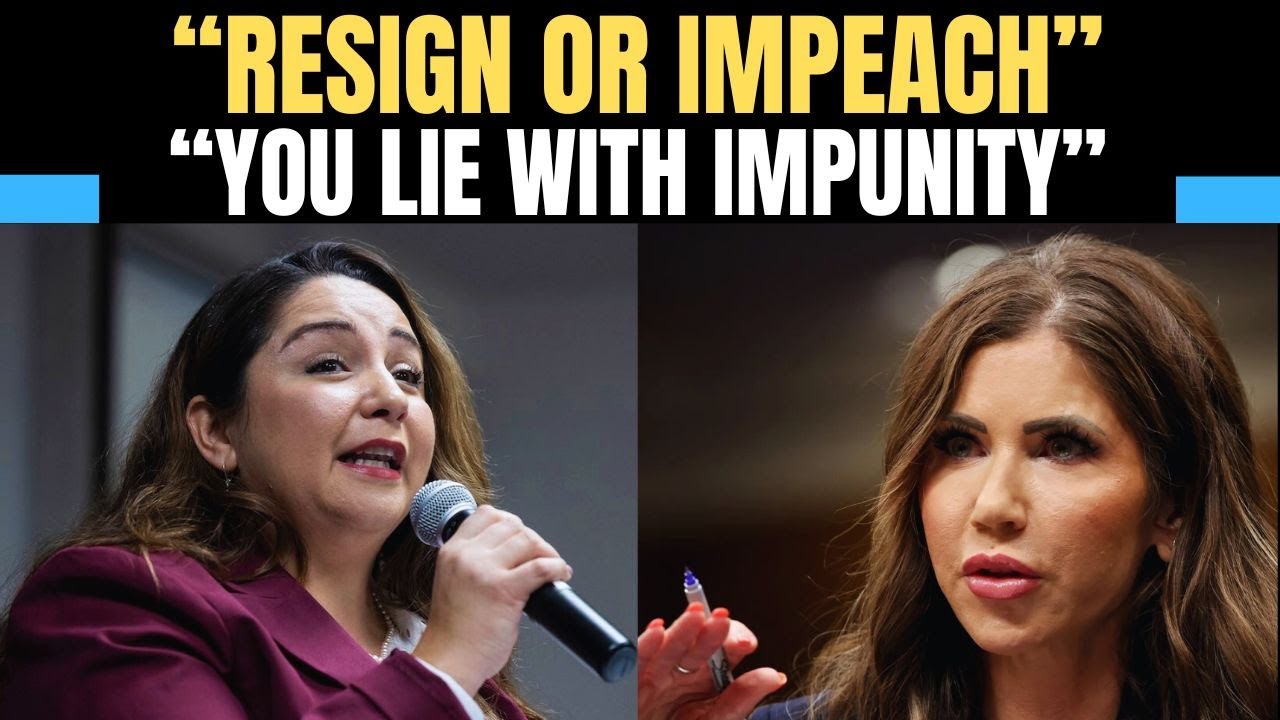
A dramatic congressional confrontation has thrust the Department of Homeland Security into the center of a growing constitutional crisis. In a blistering exchange, a sitting member of Congress accused Secretary Kristi Noem of lying under oath, defying federal court orders, and operating DHS as if the law no longer applies.
The lawmaker cited investigative reporting showing that more than 170 U.S. citizens have been wrongfully detained by immigration agents, directly contradicting repeated claims by DHS leadership that enforcement only targets “the worst of the worst.” According to the evidence entered into the record, citizens were kicked, dragged, and held for days despite having committed no crimes.
Data from NBC News further undercut DHS talking points, revealing that nearly 75,000 people arrested by ICE had no criminal records at all. The exchange underscored a widening gap between official rhetoric and documented reality, raising urgent questions about accuracy, transparency, and truthfulness in sworn testimony to Congress.

The hearing escalated sharply when deportation flights to El Salvador were raised. Despite court orders instructing DHS to halt the flights, the secretary confirmed that deportation decisions were hers and suggested she would continue enforcement regardless of what she called “radical judges.” Legal experts warn that ignoring injunctions while appealing them is not toughness—it is a violation of separation of powers.
Further allegations included the use of chemical agents and aggressive crowd-control tactics in major U.S. cities despite judicial prohibitions. Lawmakers accused DHS of conducting warrantless arrests, deploying militarized force, and engaging in surveillance that impacts not only immigrants but entire communities, including U.S. citizens.
Oversight itself became a central issue. The congresswoman detailed repeated attempts to meet with DHS and ICE leadership that were ignored or rejected, describing a pattern of deliberate stonewalling. Blocking oversight, she argued, prevents Congress from ensuring taxpayer funds are used lawfully and agencies remain accountable.

The confrontation culminated in a direct ultimatum: resign, be fired, or face impeachment. The lawmaker formally called on the Judiciary Committee to open an investigation, emphasizing that impeachment exists precisely for moments when executive officials are accused of defying courts, misleading Congress, and abusing power.
Beyond immigration policy, the hearing exposed a deeper question facing American democracy. When those tasked with enforcing the law are accused of breaking it—and face no immediate consequences—the rule of law itself is at risk. This clash was not political theater. It was a warning that accountability, once ignored, erodes the foundations of constitutional government.