WASHINGTON — What began as a routine week on Capitol Hill has quickly escalated into one of the most precarious moments of Mike Johnson’s speakership, according to several congressional aides and Republican insiders familiar with the matter. In recent days, Johnson has confronted a surge of private discontent within his own conference, raising questions about whether he can maintain control of a caucus increasingly fractured by ideological divides and election-year strategy disputes.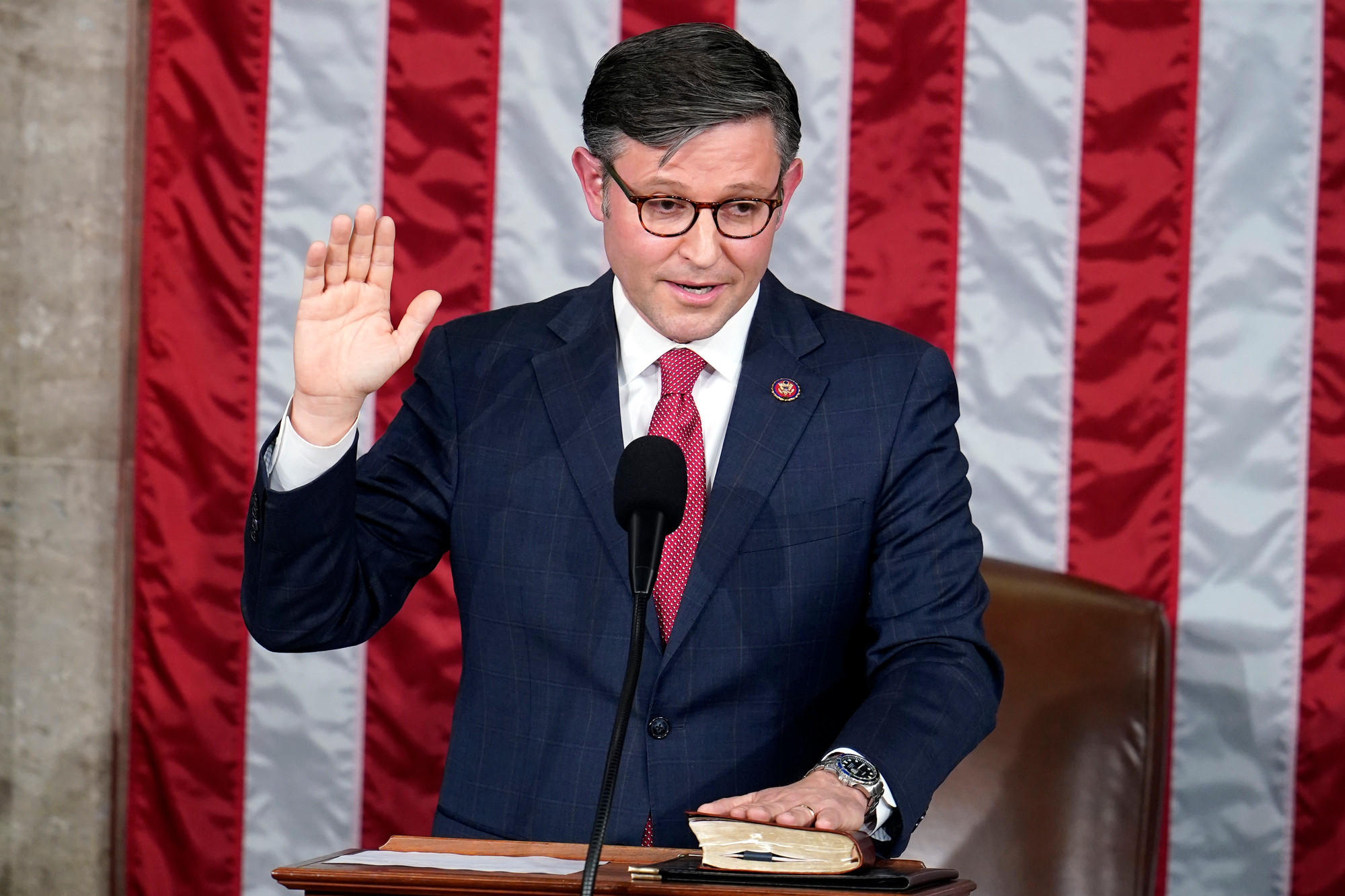
Multiple Republican lawmakers, speaking on the condition of anonymity to discuss internal deliberations, said Johnson appeared “caught off-guard” by the sudden escalation in tensions. While low-level grumbling about his leadership has been present for months, several members described the mood this week as markedly different — more organized, more vocal, and more openly focused on the question of whether Johnson can remain speaker through the end of the current Congress.
The pressure follows a series of legislative standoffs in which Johnson relied heavily on Democratic votes to keep the government open and advance national-security funding measures. Those decisions, though broadly supported by the Senate and the White House, have alienated influential hard-right factions in the House who argue that Johnson has strayed from core conservative demands.
One senior Republican aide described the situation as “a turning point that many had been expecting, but not this soon.” The aide added that several members who previously defended Johnson’s pragmatic approach are now privately expressing doubts about his long-term viability in the position.
Johnson, a Louisiana Republican who assumed the speakership last year amid similar turmoil, has dismissed suggestions that his role is in jeopardy. “The conference is united in its mission and focused on delivering results for the American people,” he told reporters earlier this week. But that assurance appears increasingly at odds with the sentiment expressed behind closed doors.
According to people familiar with internal discussions, the latest strain was triggered by newly surfaced information related to private negotiations Johnson held regarding upcoming spending deadlines. Some members viewed those discussions as insufficiently transparent, fueling a wave of frustration that quickly spread through conservative circles and onto social media platforms.
While the details of those negotiations have not been publicly released, the mere suggestion of undisclosed concessions has heightened suspicion among lawmakers already skeptical of the speaker’s approach. One ultraconservative member described the revelation as “the last straw” for colleagues who feel Johnson has repeatedly prioritized compromise over confrontation.
Even some moderate Republicans — long considered Johnson’s most reliable allies — acknowledged that the conference is wrestling with “real questions” about its leadership structure. Though few have openly called for Johnson’s removal, several lawmakers and aides indicated that such discussions are happening more frequently in private conversations.
The speaker’s opponents have not yet coalesced around a unified strategy. But the memory of former Speaker Kevin McCarthy’s ouster still looms large over the chamber, and lawmakers from both parties noted how swiftly similar unrest can transform into a full-fledged leadership crisis. Under current House rules, a single member may force a vote to remove the speaker, a vulnerability that continues to shape nearly every major decision Johnson makes.
Democrats, for their part, have remained largely silent on the emerging tensions. Several Democratic aides suggested that while the party is not inclined to intervene in internal Republican disputes, they are closely monitoring developments that could affect upcoming legislative deadlines.
For now, Johnson continues to project confidence in public, even as many within his caucus brace for further turmoil. Whether the most recent burst of dissent represents a fleeting flare-up or the start of a deeper unraveling remains unclear. But as Congress heads into a pivotal stretch of the legislative calendar, one reality is increasingly difficult to ignore: the stability of Johnson’s speakership is no longer taken for granted, even among those who once considered him a compromise candidate capable of uniting a fractured Republican Party.