Reports of Canada–Sweden Gripen Talks Stir Strategic Questions in Washington
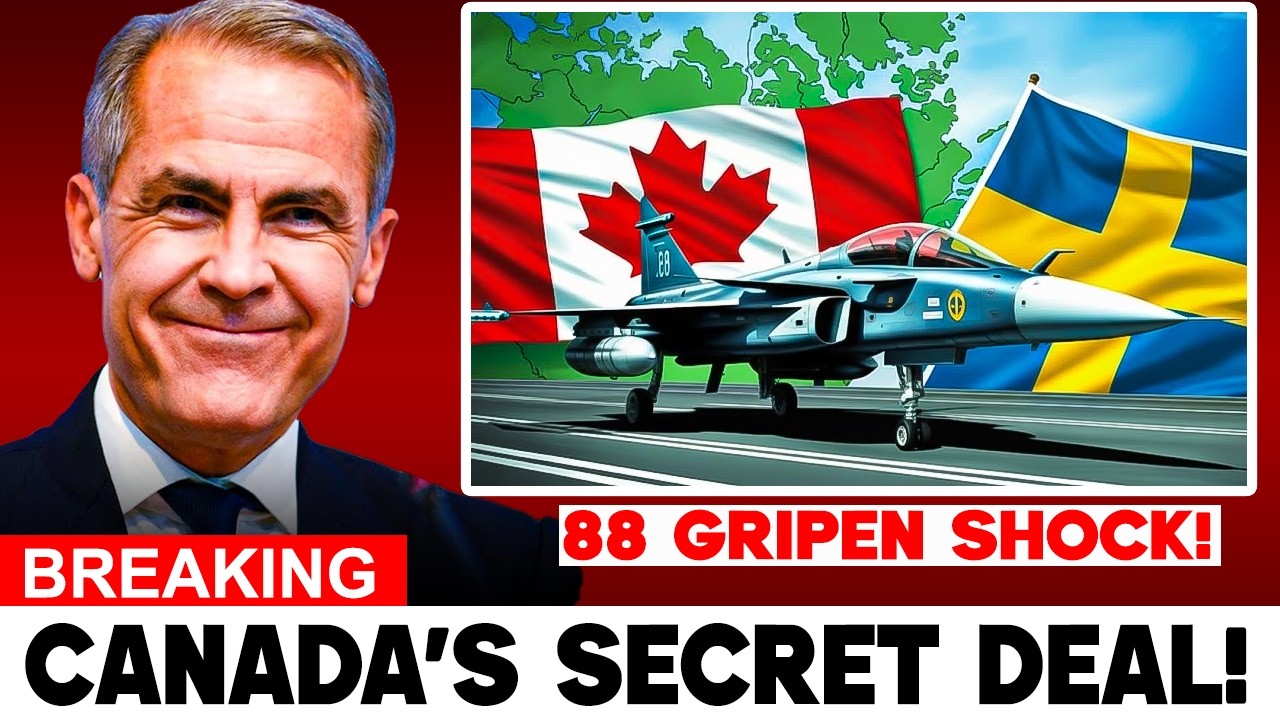
Ottawa — Quiet discussions between Canadian and Swedish defense officials about a potential fleet of Saab Gripen fighter jets have drawn heightened attention among defense analysts, raising questions about Canada’s long-term airpower strategy and the implications for its closest allies, particularly the United States.
The reports, first circulating among European defense circles, suggest Canada may have explored the possibility of acquiring up to 88 Gripen aircraft as part of a broader reassessment of its fighter capabilities. Canadian officials have not confirmed the existence of a formal agreement, and both Ottawa and Stockholm declined to comment on specific procurement figures. Still, the mere prospect of such talks has triggered careful scrutiny in Washington, where officials are accustomed to Canada aligning closely with U.S. defense-industrial priorities.
A Strategic Signal, Not a Signed Contract
Defense experts caution that exploratory talks do not necessarily signal a finalized deal. Large-scale fighter procurement typically unfolds over years, involving feasibility studies, interoperability assessments and political approval at multiple levels.
“This should be understood as strategic signaling rather than a fait accompli,” said Michael Horowitz, a defense analyst at the Center for Strategic and International Studies. “Canada periodically reviews alternatives to ensure leverage, cost control and operational fit.”
The Gripen, a multirole fighter developed by Sweden’s Saab, is known for relatively low operating costs, strong electronic warfare capabilities and adaptability to dispersed basing — features attractive to countries with large territories and limited forward infrastructure. Canada’s vast geography and Arctic responsibilities have long driven debate about whether lighter, more flexible aircraft could complement or replace heavier fifth-generation fighters.
Why Gripen Draws Attention

The Gripen has been marketed aggressively to NATO and partner nations as a cost-effective alternative to American-made fighters. Saab emphasizes its open-architecture avionics, which allow customers greater control over software upgrades and weapons integration.
For Canada, analysts say, such flexibility could be appealing. “Ottawa has consistently emphasized sovereignty and control over its defense assets,” said Elin Andersson, a Swedish defense policy researcher. “Gripen is often pitched as giving buyers more autonomy.”
At the same time, critics note that Canada’s defense posture is deeply integrated with the United States through NORAD and NATO. Any major shift in aircraft choice would raise interoperability questions, particularly regarding data fusion, secure communications and joint operations with U.S. forces.
Washington’s Quiet Concern
U.S. officials have not publicly criticized the reported discussions, but defense observers say the issue is being watched closely. The United States has historically expected Canada to procure systems that align closely with American platforms, reinforcing shared logistics, training and intelligence frameworks.
“A Canadian pivot toward a European fighter — even a NATO-compatible one — would be symbolically significant,” said a former Pentagon official who requested anonymity to discuss allied dynamics. “It wouldn’t break the alliance, but it would signal a willingness to diversify away from U.S. defense suppliers.”
Such diversification, analysts note, is increasingly common among middle powers seeking to hedge against supply-chain disruptions and political constraints.
Sweden’s Broader Defense Outreach

For Sweden, discussions with Canada would fit into a broader push to expand Gripen’s footprint among Western allies. Stockholm has emphasized industrial partnerships, local assembly and technology transfer as selling points — elements that resonate with countries seeking domestic economic benefits from defense spending.
Sweden’s recent integration into NATO has further increased the Gripen’s credibility as an alliance-compatible platform, though it still lacks the stealth characteristics of fifth-generation aircraft favored by the United States.
Canada’s Procurement Dilemma
Canada’s fighter-replacement debate has been contentious for more than a decade, shaped by cost overruns, political changes and evolving threat assessments. Arctic surveillance, Russian air activity and the need for rapid response across long distances all factor into procurement decisions.
“Canada is balancing three things: alliance commitments, budget realities and sovereignty concerns,” said Horowitz. “Any serious discussion of Gripen would reflect that balancing act.”
Opposition lawmakers in Canada have urged transparency, arguing that even exploratory talks should be disclosed to Parliament. Government officials have responded that defense planning requires confidentiality, particularly during early-stage assessments.
No Evidence of a “Hidden Pact”

Despite online speculation, defense experts stress there is no evidence of a secret military pact or finalized purchase. Large fighter acquisitions typically involve public competitions, industrial-offset negotiations and parliamentary oversight.
“Calling this a hidden deal overstates what we know,” Andersson said. “What we’re seeing is the normal churn of defense planning, magnified by geopolitical tension.”
Implications Going Forward
If Canada were to seriously pursue Gripen, the move would likely trigger extensive consultations with Washington to ensure interoperability and NORAD compatibility. It could also influence how other U.S. allies approach their own procurement choices.
For now, the reports serve as a reminder that defense relationships, even among close allies, are not static. As security environments evolve, so do procurement calculations — sometimes quietly, sometimes contentiously.
What remains clear is that any decision affecting Canada’s fighter fleet would carry strategic weight far beyond Ottawa and Stockholm, touching the core of North American and transatlantic defense cooperation.