Inside a Late-Night Flashpoint: How a Bill Maher Segment Became a Political Moment
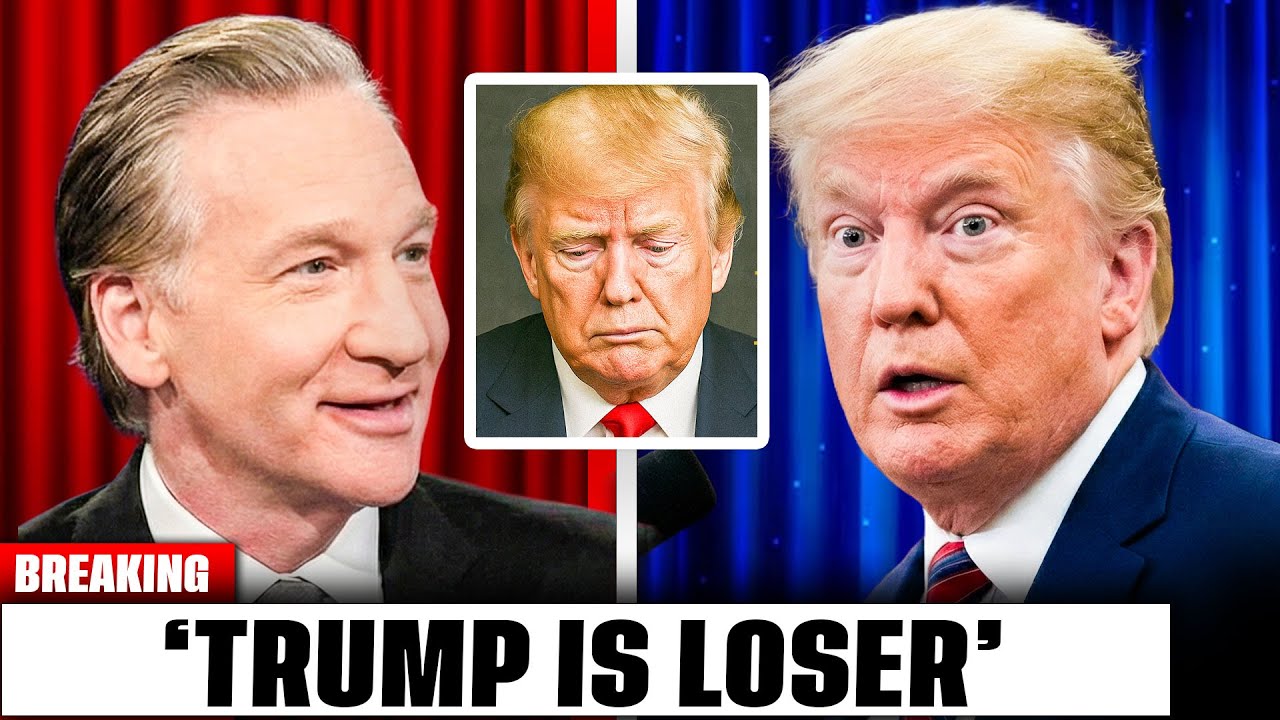
Los Angeles — For the production team behind Bill Maher’s late-night program, Friday’s broadcast began like many others: a finalized rundown by late afternoon, a monologue polished through multiple drafts, and a live studio audience settling into familiar rhythms of applause and laughter. What followed, however, would quickly outgrow the boundaries of entertainment, becoming a case study in how a few editorial decisions can turn a television segment into a national political moment.
According to people involved in the production, the show’s opening monologue had been largely set hours before airtime. But as is customary on live programs, the final script remained flexible. Maher, known for revising material until the last possible minute, requested a sharper emphasis in one section—an adjustment that reframed the monologue from general political satire to a more pointed critique of former President Donald J. Trump’s media responses.
“No one walked in expecting a viral event,” said one staff member, who spoke on the condition of anonymity to discuss internal deliberations. “But there was a sense that the timing felt right. The news cycle had created an opening.”
A Calculated Risk in Live Television
Late-night television thrives on immediacy. Unlike scripted dramas, these shows are built to respond to the moment, and their producers accept that risk as part of the format. Still, there is a difference between topical humor and material that could reverberate far beyond the studio.
As Maher delivered the revised lines, producers in the control room noticed a shift in audience energy. Laughter gave way briefly to silence, then returned louder and more sustained—a signal that the segment had crossed into unfamiliar territory.
“When the room reacts like that, you know the clip will travel,” said a director who monitored the broadcast. “At that point, the question becomes how far.”
The Clip Economy Takes Over

Within minutes of the broadcast ending, unofficial clips began circulating on social media platforms, often stripped of context and paired with provocative captions. By the time the production team left the studio, the segment was already trending.
This rapid dissemination reflects a reality that late-night producers now anticipate. Segments are no longer judged solely by overnight ratings but by how they perform in what industry insiders call the “clip economy”—short excerpts designed to circulate independently of the full show.
“You can’t control how people will slice it,” said a senior producer. “Once it’s out, it belongs to the internet.”
Internal Reactions: Pride and Caution
Inside the production offices, reactions were mixed. Some staff members expressed pride in what they saw as a moment of cultural relevance. Others worried about backlash—not just political criticism, but pressure on the network and advertisers.
Executives at the network did not issue immediate guidance, but according to people familiar with the process, legal and communications teams reviewed the segment overnight, a routine step when content intersects directly with high-profile political figures.
“This is the part viewers never see,” said a former network executive. “A joke airs, and suddenly dozens of people are thinking about risk, reputation, and response.”
When Comedy Becomes Commentary
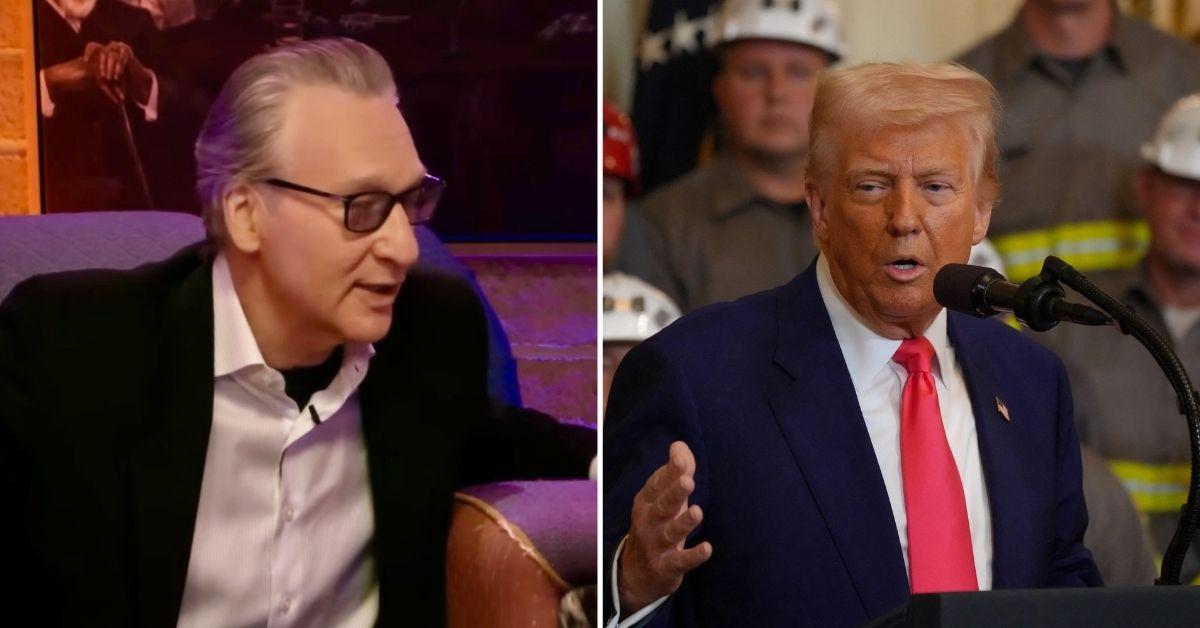
Media scholars say moments like this illustrate how late-night shows have evolved into hybrid platforms—part entertainment, part political commentary. While hosts like Maher insist they are not journalists, their reach and influence increasingly mirror those of opinion writers or cable-news commentators.
“Late-night hosts occupy a unique space,” said Laura Bennett, a professor of media studies at UCLA. “They can say things that politicians and journalists cannot, but that freedom comes with consequences.”
Those consequences often include becoming part of the story. As political figures and commentators reacted—some praising the segment, others condemning it—the original monologue faded into the background, replaced by debate about its impact.
Backstage Lessons for the Industry

For producers, the episode reinforced a familiar lesson: the smallest editorial choices can have outsized effects. A rewritten paragraph, a pause held a second longer than usual, a camera angle lingering on audience reaction—all contribute to how a moment is perceived once it leaves the studio.
“There’s no switch you flip to create this,” the director said. “It’s a convergence of timing, tone, and audience readiness.”
The staff also faced a practical question common after viral moments: whether to follow up. Should the show address the reaction in the next episode, or pivot back to routine programming? According to producers, that decision involves weighing creative integrity against the risk of being defined by a single confrontation.
A Moment That Outlived the Broadcast
By the following morning, cable news shows were replaying the clip, social media platforms were awash in reaction videos, and political operatives were using the segment to advance their own narratives. The show itself had moved on to preparing the next episode.
“That’s the irony,” said one writer. “For us, it was one night. For everyone else, it became a symbol.”
In the current media environment, that transformation is increasingly common. A few minutes of live television can take on a life of its own, shaped less by intent than by amplification.
For the team behind Maher’s show, the episode served as another reminder of late-night television’s evolving role—not just as a source of laughs, but as a catalyst in the ongoing conversation between politics, media, and culture.