A swirl of allegations surrounding Representative Ilhan Omar has prompted renewed scrutiny of her campaign finances and political relationships, fueling one of the most turbulent news cycles Minnesota has experienced in recent years. What began as a low-profile online dispute quickly escalated after a series of leaked claims — some documented, others unverified — circulated widely across social media, drawing attention from watchdog groups and raising questions inside the congresswoman’s own party about how the situation may evolve.
The latest controversy emerged after a collection of documents, circulated anonymously and without clear provenance, appeared to suggest irregularities in the timing of donation inflows and personal financial disclosures. While none of the materials have been independently authenticated, the speed at which they spread prompted several nonpartisan ethics organizations to publicly call for a careful review. The groups emphasized that the presence of leaked allegations does not establish wrongdoing but that transparency, in an era of heightened public distrust, remains essential.
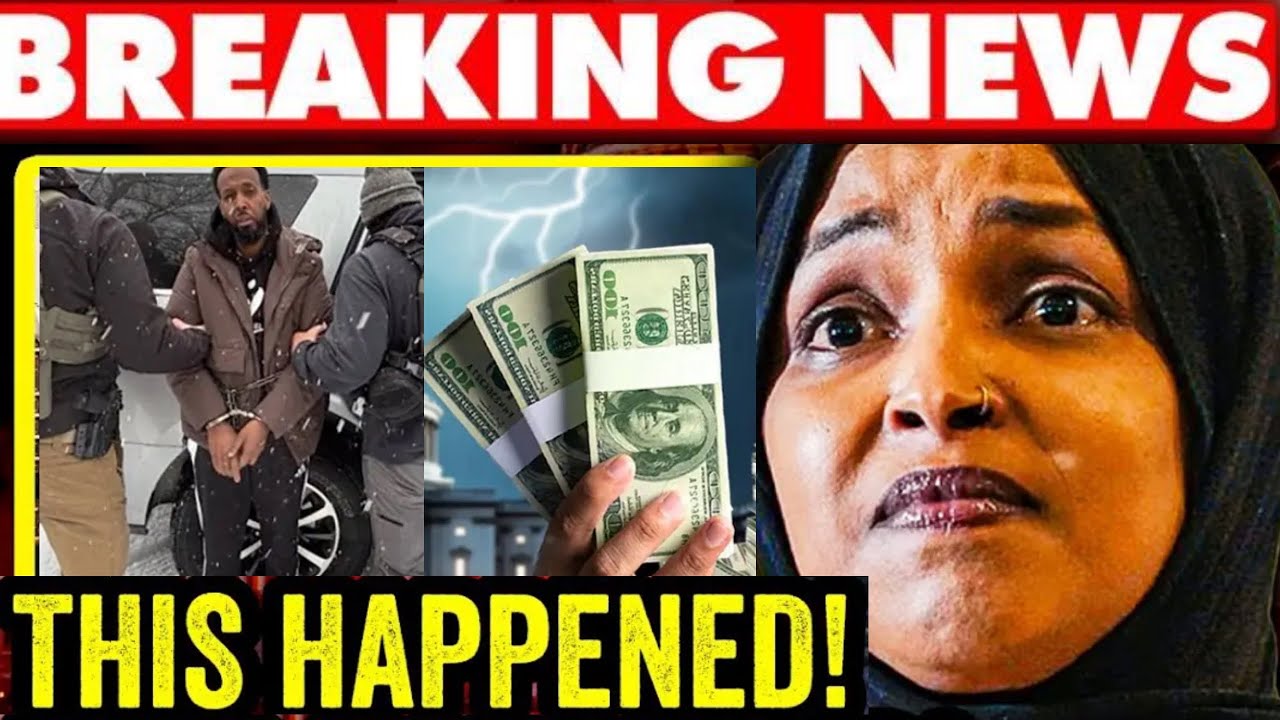
Omar, who has long been the target of both legitimate policy critique and politically motivated misinformation, responded to the claims during a tense televised appearance. Analysts noted that her tone was sharper than usual, reflecting both her frustration with what she viewed as recycled attacks and her awareness of the political stakes. Clips of the exchange, posted widely by commentators across the ideological spectrum, quickly became one of the most viewed political videos of the week.
Behind the scenes, several Democratic strategists said that the episode had triggered urgent internal conversations. According to aides familiar with the matter, the immediate concern was not the substance of the allegations — which remain vague — but the political optics of a prolonged story fueled more by speculation than confirmed fact. “The problem is the vacuum,” one strategist said. “When the evidence is unclear, the narrative tends to fill itself in.” The strategist added that the party’s priority was to ensure that all public-facing responses remained measured and rooted in existing disclosure rules, rather than falling into partisan escalation.
Republicans, for their part, seized on the moment to reiterate longstanding criticisms of Omar’s political alliances and fundraising operations. Several conservative lawmakers called for formal inquiries, pointing to what they described as “patterns” in her financial filings — though none provided detailed evidence beyond the claims circulating online. Ethics experts noted that such demands often blur the line between legitimate oversight and political theater, especially when the allegations themselves originate in unofficial, anonymous leaks.

Political scientists say the dynamic reflects a broader national trend in which unverified documents or fragments of information can shape political perceptions long before they undergo formal review. “The acceleration of these cycles is the real story,” one scholar of digital politics observed. “A document without context becomes a catalyst for public debate, and the debate itself becomes the story.” In Omar’s case, the scholar noted, her national profile and polarizing political identity make her particularly vulnerable to narratives that thrive on ambiguity.
The congresswoman’s supporters argue that the firestorm is less about financial records and more about the accumulation of grievances that have trailed her since her early days in office. They point to her status as a refugee, her outspoken progressive positions, and her role in contentious policy debates as factors that have made her a frequent target of partisan attacks. Several local officials in Minnesota warned that the latest controversy risked reinforcing misinformation within immigrant communities already wary of federal politics.
Still, the episode underscores the vulnerability of public servants to reputational crises in an era of instantaneous circulation. Campaign finance specialists say that even the appearance of inconsistency can generate scrutiny, regardless of context. “Financial disclosures are complex, but public interpretation is not,” one expert said. “If something looks unusual, even if it has a standard explanation, people tend to assume the worst.”
For now, it remains unclear whether any formal inquiry will result from the leaks, and no oversight body has yet announced a review. Omar’s office has insisted that her filings meet all federal requirements and described the online allegations as “mischaracterizations built on selective and misleading information.” Yet advisers privately acknowledge that the story is unlikely to fade quickly, given the political environment and Omar’s prominence within both state and national politics.
As the week closes, the broader implications remain unsettled. The controversy highlights how fragile the boundary has become between documented ethics concerns and rumor-driven cycles — and how swiftly a member of Congress can find themselves at the center of a storm that formed largely outside official channels. Whether the episode ultimately becomes a footnote or a defining moment will depend on what, if anything, emerges from formal review processes now quietly being discussed.