Canada at a Crossroads as Washington Quietly Rewrites the Rules
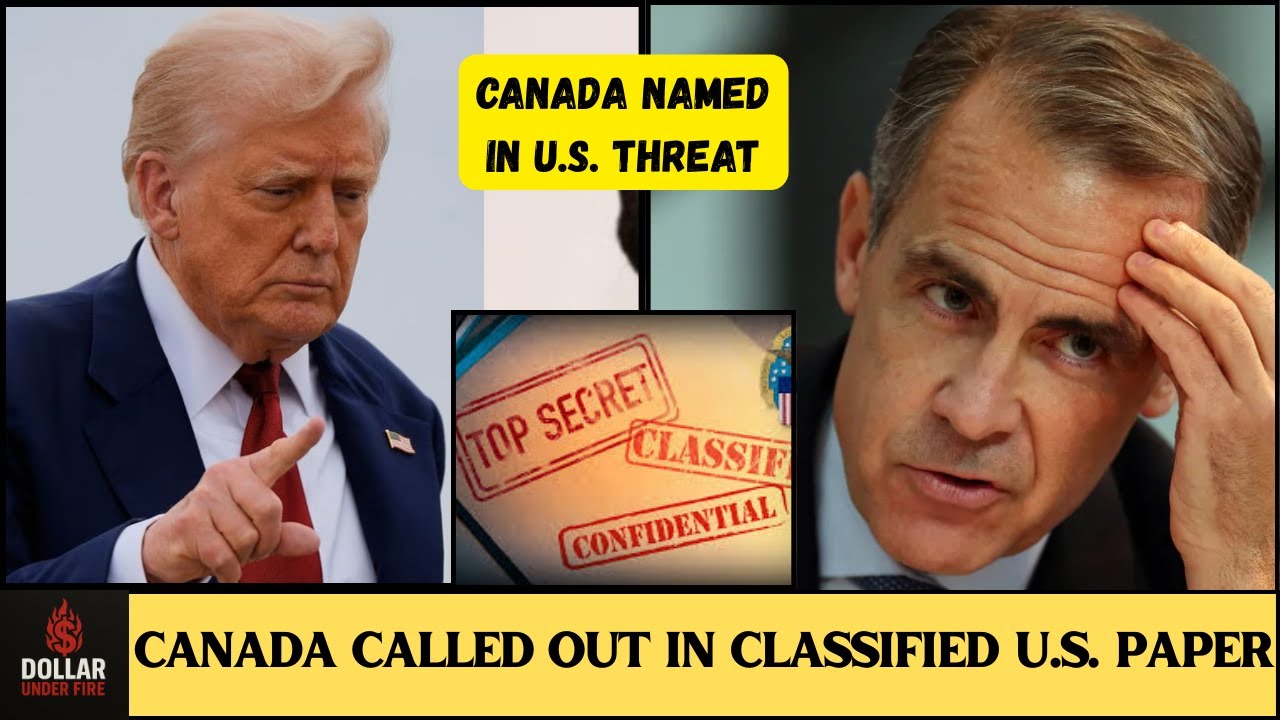
When Washington released its newest National Security Strategy this winter, the document drew little public attention. Thirty pages, written in the usual bureaucratic cadence, rarely inspire headlines. Yet between the familiar warnings about China and references to global instability, a single sentence offered a startling glimpse into how the United States now sees the world — and its northern neighbour.
The line was brief, almost easy to miss: the United States, it argued, should encourage countries like Canada to adopt trade policies that “rebalance” China’s economy. On its surface, it sounded benign. But in the diplomatic lexicon, “encourage” is not a partnership term. It is a directive. And it signals that Washington is willing to frame Canadian economic decisions as tools within its struggle with Beijing.
For a country long treated as America’s closest and most trusted ally, the shift in tone is jarring.
The U.S. is no longer simply attempting to coordinate global trade rules. It is positioning itself as the architect of a new hierarchy — one in which allies are expected to align first and negotiate later. Europe, Japan, South Korea, Australia and Mexico all appear in the same list. But for Canada, whose economy remains tethered to the world’s largest market, the implications are uniquely consequential.
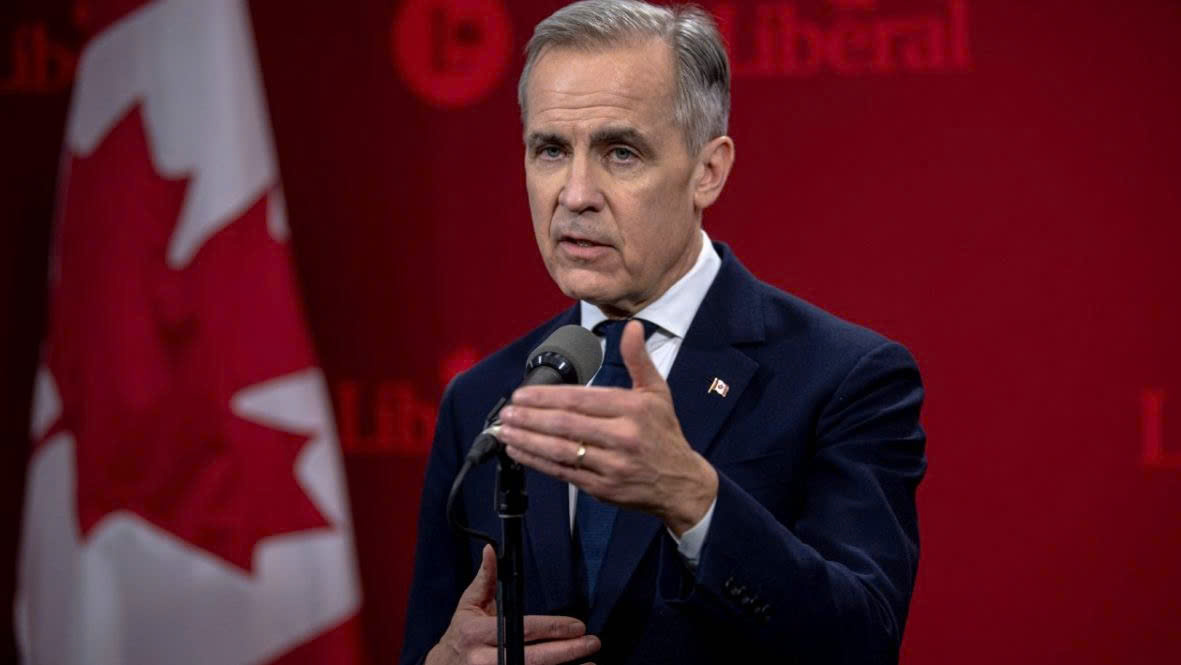
What Washington may not have anticipated is that Ottawa — under Prime Minister Mark Carney — had already begun preparing for this moment.
When Carney took office in early 2025, he did not speak the usual language of diplomatic optimism. Instead, he declared an end to the era of open global trade once championed by the United States. Even to many Canadian observers, that sounded hyperbolic. But events have since made his warnings look more like foresight than flourish.
Canada’s diversification strategy, initiated under previous governments, accelerated sharply. Ottawa intensified trade missions to Japan, South Korea, Vietnam and Singapore. It pursued mineral agreements in East Asia and invested in port and rail infrastructure designed to carry Canadian goods not only south, but west across the Pacific. The quiet intent was unmistakable: reduce dependence on the United States before the United States demands dependence in return.
The new American strategy document affirms why that calculation may not have been misplaced.
One section focuses on protecting U.S. access to critical minerals — an unsurprising priority amid global competition for rare earth elements. But the subtext is more troubling. Canada is one of America’s primary sources of these materials. If Canadian firms sign long-term contracts with Asian partners or redirect shipments through Pacific routes, Washington hints that such choices could be viewed as national security concerns.
In other words, Canadian resources matter — but not necessarily as Canadian property.
The document’s elasticity is even broader. Alongside economic directives, it warns of “propaganda, influence operations and cultural subversion,” terms traditionally reserved for adversaries. Yet the definitions are so sweeping that American officials, under this framework, could challenge almost any foreign initiative they deem strategically inconvenient. A tourism campaign, an investment mission, even a policy announcement could be construed as interference, given the right political circumstances.
That breadth should trouble Canadians. But the sharpest signal may lie in Washington’s remarks about Europe. Some European nations, the document suggests, may no longer be “worthy” of alliance status. Worthy — a word that upends decades of shared democratic norms and mutual security commitments. If Germany or France can be characterized as unreliable, what does that imply for a mid-sized power whose economic future increasingly diverges from American priorities?
Canada, by pursuing independent trade routes, strengthening ties across the Indo-Pacific and defending its resource sovereignty, risks being cast in a similar light. Not because it has acted irresponsibly, but because it has acted independently.
That, perhaps, is the real tension underlying the strategy. The United States, for the first time in generations, appears animated not just by external competition but by a deeper fear: a world slowly becoming multipolar, where its influence is no longer guaranteed and its allies no longer automatically compliant. A confident superpower does not need to remind its partners of their obligations. A secure one does not frame divergence as disloyalty.
Canada now stands at a decisive juncture. One path leads toward continued alignment with Washington’s demands — a familiar, stable, but increasingly constraining arrangement. The other leads toward a more autonomous economic identity, built on diversified markets and strategic resilience, but carrying the risks that come with asserting independence in an age of geopolitical anxiety.
A nation cannot be sovereign and subordinate at the same time. The choice facing Canada is not whether to pick sides in a new great-power rivalry, but whether it will decide for itself what those sides even mean.
And that, more than anything, may determine the country’s place in the world for decades to come.