A Growing Storm Over the “Boat Strikes”: Military Accountability, Political Pressure, and the Shadow of Presidential Immunity
In the days since the controversial “boat strikes” entered the national conversation, the political and military fallout has steadily intensified. What began as a single televised discussion has widened into a broader reflection on accountability, the laws of war, and the legal exposure of service members operating under contentious orders. A recent MSNBC segment brought these tensions to the forefront, featuring retired U.S. Army Lieutenant General Mark Hertling and political analyst Susan Del Percio, both of whom offered pointed concerns about shifting narratives and the evolving chain of command.
General Hertling, referencing newly emerging evidence and congressional inquiries, argued that a second strike—described by lawmakers as a follow‑up attack—may qualify as a violation of the laws of war. He emphasized that the public should expect further disclosures: documents, recordings, and sworn testimonies that will eventually clarify the operational timeline. “We’re at the very beginning of this,” he noted. “And this is going to go on for a long time.”
One central point of contention involves the “fog of war,” a term invoked repeatedly by senior officials defending the operation. Hertling cautioned that the concept has been misapplied, and that its use risks obscuring otherwise avoidable errors. He contrasted the notion of a “restrike”—as described by lawmakers—with a “double tap,” a tactic he explained in a recent article, underscoring that the two carry different legal and operational implications.
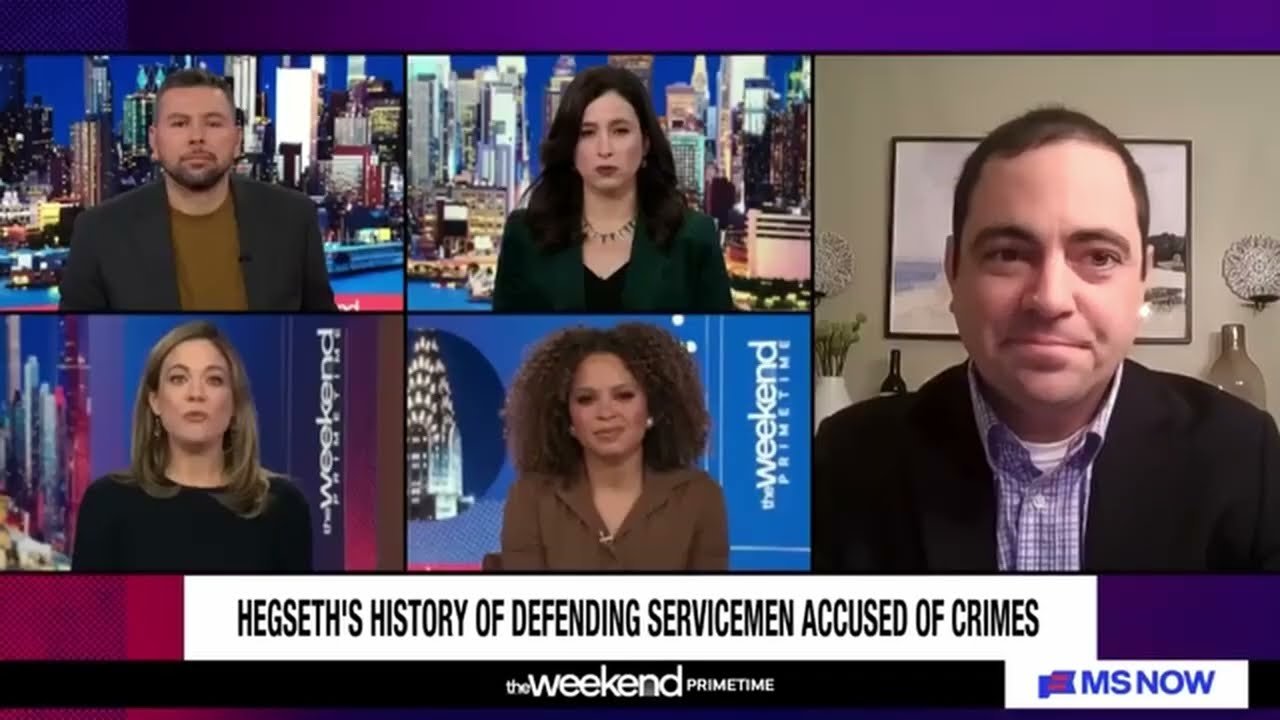
Political strategist Susan Del Percio expanded the conversation to include the administration’s shifting explanations. While the president publicly expressed confidence in senior defense officials, Del Percio noted that political loyalty under this administration has historically been inconsistent. “They are behind someone—until they’re not,” she said, suggesting that the evolving narrative may place certain officials at greater risk of bearing the political fallout alone.
Her remarks also highlighted a broader concern: that a slow release of contradictory details may confuse the public and deepen partisan divides. “We’re going to see information come out piece by piece,” she said, cautioning that such fragmentation can lead citizens to retreat further into political camps, particularly when the military—an institution traditionally held apart from politics—appears drawn into partisan conflict.
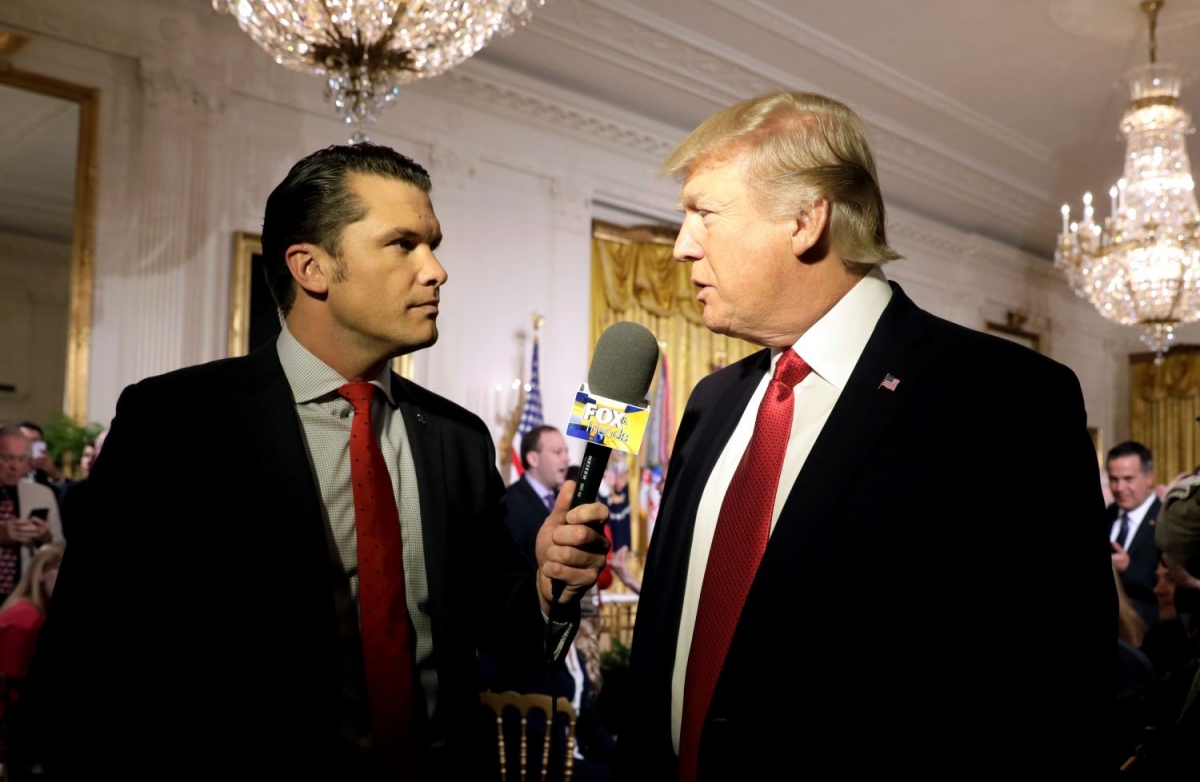
Questions of chain of command and responsibility have also taken center stage. Traditionally, presidents and secretaries of defense accept public accountability when military missions falter. Yet several observers have noted a departure from that norm, pointing instead to a recurring pattern of distancing responsibility downward, toward field commanders. Hertling remarked that service members who testify will likely provide records—videos, documents, internal communications—that paint a clearer picture of decision‑making at each level.
A separate segment featuring Army veteran Steve Kennedy brought the conversation to a more ground‑level perspective. Kennedy emphasized that regardless of whether the United States is formally at war, attacking individuals who are out of combat is prohibited. “If we’re not in a war,” he said, “that’s just murder.” Even within combat operations, he explained, soldiers are repeatedly trained that firing on incapacitated individuals is illegal and could lead to criminal prosecution.
Kennedy also warned that while administration officials might claim broad justifications for lethal force, service members executing those orders remain legally vulnerable—today and in future administrations. He pointed out that presidential immunity doctrines do not extend to personnel who follow unlawful orders. “If someone’s going to go down for this,” he said, “it’s the lower‑ranked people who actually pulled the trigger.”
Legal analysts observing the situation have echoed this concern. While recent Supreme Court decisions expanded protections for presidents acting in an official capacity, those protections do not shield subordinates carrying out potentially unlawful commands. That asymmetry, critics argue, creates a scenario wherein political leaders may be insulated from consequences while those beneath them face significant legal risk—domestically or internationally.

As investigations continue, the central questions remain unresolved: Were the strikes justified? Were the orders lawful? And who, ultimately, will be held accountable? What is already clear, however, is that the incident has reignited longstanding debates about military conduct, political leadership, and a legal structure still grappling with modern conflict’s complexities.
In the coming weeks, new disclosures, testimonies, and documents are expected to surface, shaping a debate that has already expanded far beyond the initial event. The converging pressures of politics, military ethics, and legal accountability suggest that this controversy is unlikely to fade soon—and that its implications may reach well beyond the individuals currently under scrutiny.