Kimmel–Obama Segment Criticizing J.D. Vance Sparks Political Firestorm and Renewed Debate Over Media Influence
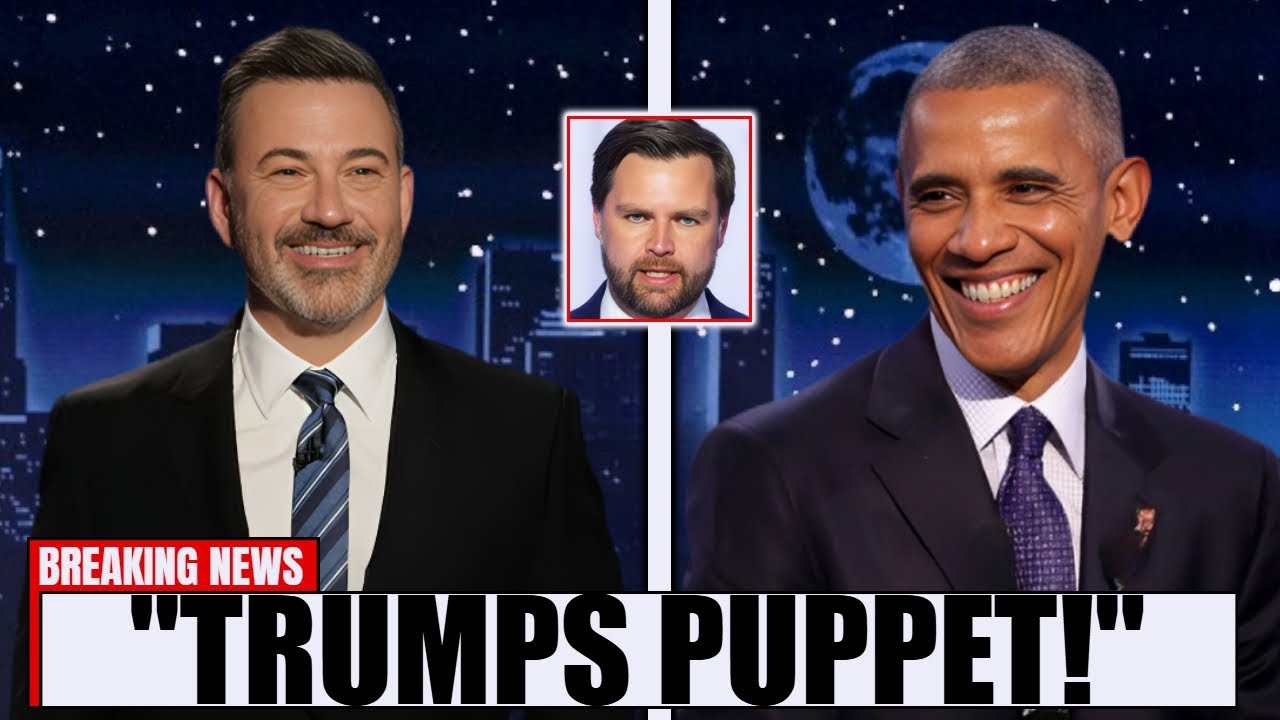
Los Angeles — A pointed late-night television exchange involving Jimmy Kimmel, former President Barack Obama and Senator J.D. Vance set off a wave of political controversy on Tuesday night, intensifying partisan tensions and prompting fresh scrutiny of how entertainment platforms shape national political narratives.
The moment unfolded during a special episode of Jimmy Kimmel Live! featuring Mr. Obama as a guest. What began as a light discussion about civic participation evolved into a sharper conversation about disinformation, populist rhetoric and the role of political surrogates in shaping public discourse. Mr. Kimmel, known for blending comedy with pointed political commentary, referenced recent statements by Senator Vance, the Ohio Republican whose rising national profile has made him a frequent target of both praise and criticism.
Mr. Obama, responding with a mixture of humor and directness, challenged several of Mr. Vance’s assertions, arguing that “the loudest voices aren’t always the most constructive ones” and that political figures should aim to “elevate public debate rather than inflame it.” The comments, delivered with the former president’s characteristic deadpan cadence, drew emphatic applause from the studio audience.
The segment took on new intensity when Mr. Kimmel played a montage of Mr. Vance’s recent televised remarks—some questioning federal institutions, others attacking political opponents—and asked Mr. Obama whether he believed such commentary contributed to public cynicism. Mr. Obama stopped short of naming Mr. Vance directly but described the broader tone as “performative grievance” that “substitutes heat for light.”
Immediate Reaction from Vance and His Allies

Within minutes of the segment airing, Mr. Vance posted an extended response on social media criticizing both Mr. Obama and Mr. Kimmel. He accused the former president of “looking down on millions of working-class voters” and dismissed the program as “another example of Hollywood lecturing the rest of the country.”
Several Republican strategists said the senator’s reaction reflected his broader political strategy: positioning himself as an outsider confronting elite critics. “Vance thrives on contrast,” said Liam Donovan, a Republican consultant. “An exchange like this gives him a platform to rally supporters who believe cultural institutions are aligned against them.”
Yet privately, some GOP aides expressed concern that Mr. Vance’s escalating rhetoric could overshadow legislative priorities or alienate moderate voters heading into an election cycle.
Democrats Seize the Moment
Democratic lawmakers quickly circulated clips of the exchange, describing it as a rare moment when a public figure challenged what they view as Mr. Vance’s increasingly combative rhetoric.
One senior Democratic aide said the segment resonated because “Obama’s critique was less about personality and more about tone and responsibility,” adding that the former president rarely engages directly with individual Republican lawmakers.
Political analysts said the appearance allowed Democrats to contrast their messaging with that of a party still closely associated with former President Donald J. Trump.
Media Landscape and the Power of Late-Night Television
:max_bytes(150000):strip_icc():focal(756x500:758x502)/Jimmy-Kimmel-JD-Vance-093025-4c052eff4e26473d8c8fe83dd51c7f4b.jpg)
The episode highlighted the increasingly significant role late-night programs play in shaping political narratives. Although traditionally seen as entertainment rather than journalism, these shows often reach audiences that are disengaged from traditional political news.
“Late-night television functions as an important gateway to political information, especially for younger viewers,” said Kathleen Hall Jamieson, director of the Annenberg Public Policy Center. “When a former president appears and engages in substantive critique, it becomes more than a comedy bit—it becomes a political moment.”
The reaction online underscored this dynamic. Within hours, clips of the exchange had been viewed millions of times across social platforms. Supporters praised the segment as a clarifying rebuttal to what they see as inflammatory rhetoric from Mr. Vance. Critics, including prominent conservative media hosts, accused the network of staging a coordinated attack.
Questions About Polarization and Public Trust
Scholars said the episode speaks to the broader challenge facing American democracy: a media environment in which political meaning is increasingly drawn from entertainment platforms.
“Whether or not one agrees with Obama or Vance, the fact that these exchanges resonate so deeply reflects a nation struggling with trust and polarization,” said Nicole Hemmer, a historian of political media at Vanderbilt University. “People now interpret late-night comedy through the same partisan filters they apply to news.”
Some Republicans argued that the incident illustrates what they view as a cultural bias in mainstream entertainment. Democrats countered that criticism of public officials is fair game, especially when framed in civic terms.
What Comes Next for Vance
For Mr. Vance, the moment may prove a double-edged sword. His combative response could energize core supporters who distrust establishment institutions, but it could also invite deeper scrutiny from independent voters who are less receptive to sharp-edged rhetoric.
According to two individuals familiar with the senator’s thinking, Mr. Vance is expected to continue addressing the exchange in upcoming media appearances, framing it as evidence that “cultural elites feel threatened by populist movements.”
A Cultural Flashpoint With Political Implications
Whether the Kimmel–Obama exchange will linger in the political consciousness remains uncertain. But for now, it has added a new dimension to the debate over how political figures are portrayed—and challenged—on entertainment platforms.
As Mr. Obama said near the end of the segment, speaking broadly about political discourse: “If we’re going to solve problems, we have to reduce the temperature. Not raise it just to get attention.”
The reaction to that remark, perhaps more than any punchline, may shape how the episode is remembered.