Legal Turmoil and Political Fallout: Two Crises Testing Trump’s Approach to Power
Two developments unfolding in Washington — a surge of emergency appeals to the Supreme Court and a controversy surrounding a presidential pardon — are offering a revealing look at the pressures confronting former President Donald J. Trump’s political and legal strategy. Viewed together, they illuminate a governing philosophy in which institutional boundaries, judicial resistance and political expectations collide in consequential ways.
A Surge of Emergency Appeals to the Supreme Court
The Justice Department under Mr. Trump has relied heavily on emergency requests to the Supreme Court, a practice that has drawn scrutiny from legal scholars and former officials. Emergency applications, traditionally reserved for rare and urgent circumstances, have become a routine tool for the administration as it confronts a series of setbacks in federal district and appellate courts across the country.
The most recent filing asked the justices to halt a decision by the U.S. Court of Appeals for the Fourth Circuit involving the free-speech rights of federal immigration judges. Those judges, who adjudicate thousands of deportation cases each year, have publicly voiced concerns about how certain immigration directives were being implemented. Lower courts found that restrictions placed on the judges’ speech exceeded the government’s authority.
Solicitor General D. John Sauer petitioned the Supreme Court to pause the ruling, arguing that without intervention the government would face “rapidly spreading uncertainty” across the immigration system. Chief Justice John G. Roberts Jr. granted a temporary stay, giving the administration time to prepare its broader argument.
Yet legal analysts warn that the frequency of these filings reflects deeper structural strain. Few modern administrations have submitted such a volume of emergency applications, and the Supreme Court — even with a conservative majority — has signaled discomfort with becoming a perpetual arbiter of fast-moving political disputes. While the justices can grant relief in urgent cases, the pattern of repeated petitions raises questions about the administration’s ability to defend its policies through ordinary judicial channels.
The broader context is significant: federal judges have repeatedly questioned the procedural foundations of several Trump-era initiatives, including changes to civil service protections and adjustments to immigration adjudication. Critics say the pattern represents a clash between expansive executive actions and a judiciary wary of shortcuts that bypass established administrative processes.
A Pardon That Sparked Political Backlash
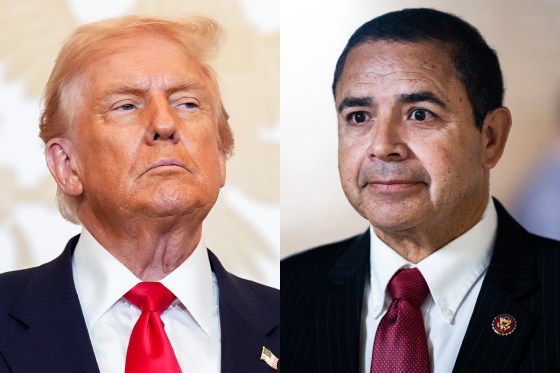
At the same time, a separate political firestorm has erupted over Mr. Trump’s decision to pardon Representative Henry Cuéllar of Texas, a Democrat who had faced federal corruption charges. The pardon, unusual given the partisan divide, immediately drew national attention.
Following the pardon, Mr. Trump publicly expressed frustration that Mr. Cuéllar did not switch parties — a decision the congressman reaffirmed while announcing his intention to seek re-election as a Democrat. While Mr. Trump did not claim there was any explicit agreement, his comments suggested an expectation of political alignment after the act of clemency.
Presidential pardons are among the broadest powers granted by the Constitution, designed to correct injustices or show mercy in exceptional cases. But they have long carried political implications, especially when granted to allies or figures whose cases touch on partisan tensions. Analysts say the Cuéllar episode highlights the delicate boundary between legitimate presidential discretion and the perception of political motivation.
For Mr. Cuéllar, the pardon removes a cloud of legal uncertainty ahead of a competitive campaign in South Texas, a region where shifting party dynamics have already drawn national interest. For Mr. Trump, the episode has intensified debate over how he uses presidential authority — both in legal matters and in shaping political alliances.
Institutional Pressure Points
Together, these two developments underscore a moment of institutional stress. The Justice Department’s repeated reliance on extraordinary Supreme Court intervention points to an administration struggling to sustain its policy agenda through conventional legal pathways. Meanwhile, the controversy surrounding a high-profile pardon highlights the political risks inherent in the exercise of executive clemency.
They also raise larger questions about the balance of power inside the U.S. government. The courts, particularly the lower federal courts, have emerged as a significant check on Trump-era initiatives, narrowing or blocking actions that judges determined lacked sufficient procedural grounding. At the same time, the White House’s use of constitutional authorities — including the pardon power — continues to provoke debate over the proper limits of presidential influence.
A Defining Test of Presidential Power

The two unfolding stories are more than parallel headlines; they form a portrait of a governing style defined by confrontation with legal constraints and a transactional approach to political relationships. As the nation watches for further rulings from the Supreme Court and monitors the political implications of Mr. Cuéllar’s re-election bid, these disputes will continue shaping public debate about presidential authority, institutional norms and the resilience of American democratic structures.
Both matters remain in motion. But they have already sharpened the central question that has defined much of Mr. Trump’s political tenure: where, exactly, are the limits of presidential power — and who decides?