Canada’s Strategic Maneuver Startles Stellantis and the Trump White House
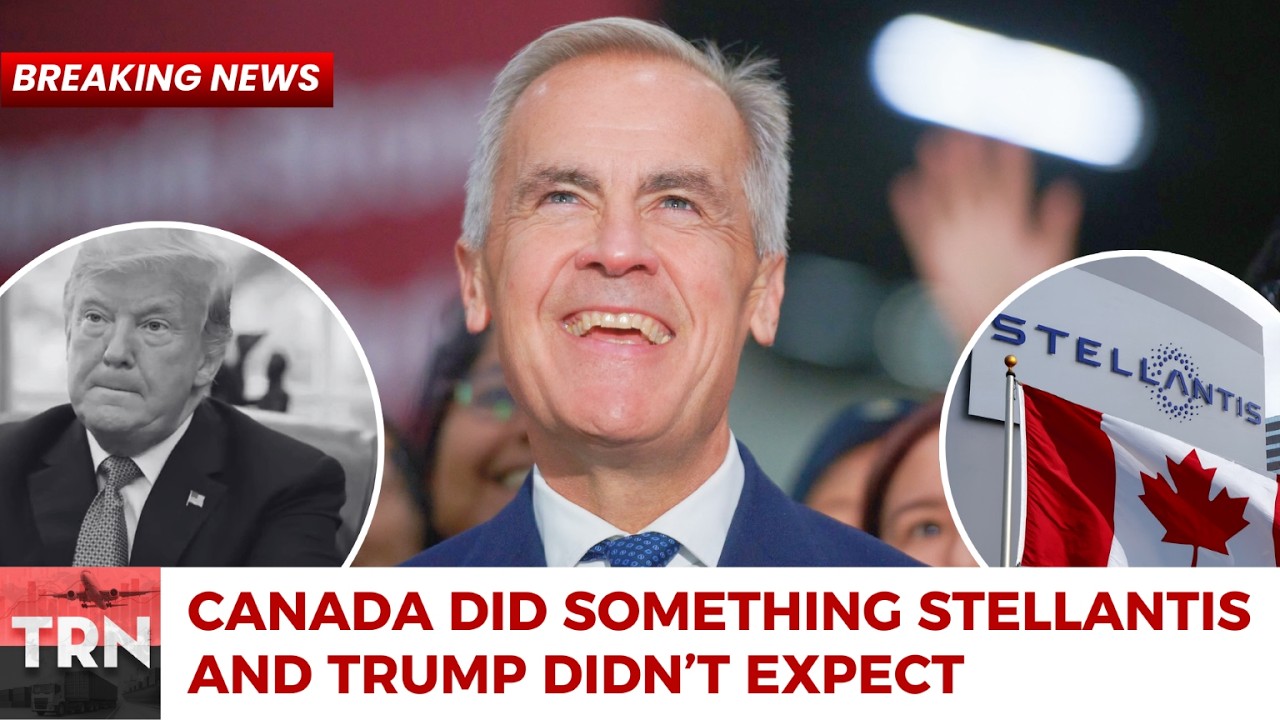
In a move that analysts say reveals a sharper, more assertive side of Ottawa’s economic statecraft, Canada executed a policy shift this week that caught both Stellantis and the Trump administration off guard. What initially appeared to be an incremental administrative adjustment quickly grew into a geopolitical flashpoint, underscoring the fragile alignment that has defined North American industrial cooperation in recent years.

According to senior officials familiar with the matter, the episode began quietly: a reclassification of targeted industrial incentives, coupled with a recalibration of cross-border production requirements. These measures, taken individually, would normally draw minimal attention. But taken together, they altered the financial assumptions behind Stellantis’s North American investment commitments—calculations that had been negotiated with significant input from the White House.
The reaction was swift. Executives at Stellantis, one of the world’s largest automakers, reportedly convened an emergency internal meeting late Tuesday, seeking clarity on how the revised framework would affect ongoing commitments in Ontario and Michigan. At the same time, a senior U.S. official described the Trump administration as “surprised and irritated,” noting that the move was interpreted as a challenge to Washington’s attempts to consolidate influence over continental supply chains.
Canadian officials, however, present a different narrative. In interviews, they characterized the decision as a defensive recalibration, prompted by months of mounting uncertainty surrounding U.S. tariff policy. “We cannot operate in a holding pattern while American industrial direction swings unpredictably,” said one government adviser, who requested anonymity to discuss sensitive policy discussions. “This was not a provocation. It was a safeguard.”
Still, the timing raised questions. The White House had spent weeks promoting a new round of incentives designed to attract electric vehicle production back to the United States. Experts note that Canada’s maneuver, however modest on paper, shifts the underlying cost structure of EV investments—potentially advantaging Canadian facilities at the very moment Washington was preparing its announcement.
“The symbolism matters as much as the economic effect,” said Marcy Bennett, a trade economist at the University of Toronto. “By acting preemptively, Canada signaled that it will not merely react to U.S. policy; it will shape its own environment with or without American coordination.”
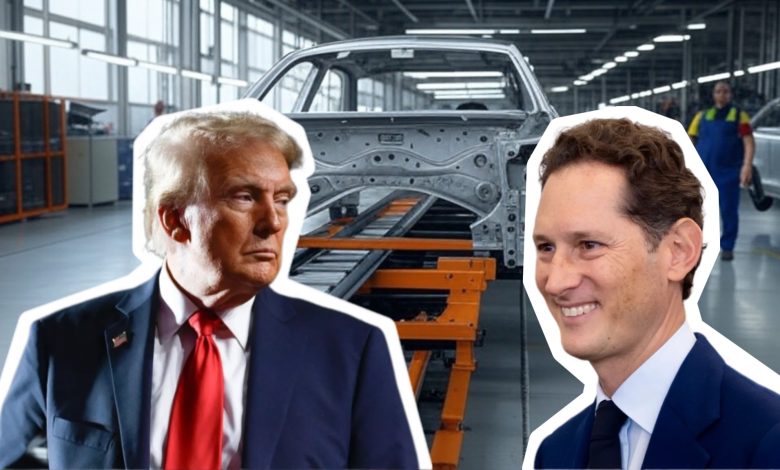
What intensified the public scrutiny, however, was the emergence of behind-the-scenes tensions. Two individuals familiar with the discussions described a series of private calls between Stellantis and officials in both capitals. On one call, a Canadian negotiator reportedly pushed back against a request to delay implementation until U.S. agencies could review the changes. On another, White House staff expressed concern that the move would embolden other American partners—particularly in Europe—to adopt similar unilateral measures.
In Ottawa, the view was more pragmatic. Policymakers believe the current administration in Washington has repeatedly shifted economic expectations without warning, particularly in the technology and automotive sectors. They cite abrupt tariff announcements, sudden revisions to procurement rules and inconsistent interagency communication as patterns Canada can no longer afford to absorb without preparation. “We waited, we coordinated, we consulted,” said one official. “But waiting became a strategic liability.”
Public reaction, meanwhile, has become a story of its own. The minister’s announcement, posted in full on social media, quickly spread across platforms, drawing millions of views within hours. Commenters expressed a mix of surprise and admiration, while opposition legislators in Canada accused the government of “unnecessary brinkmanship.” In the United States, reaction was more subdued but no less pointed: several industry groups warned that discord within North America could ultimately delay EV production timelines across the continent.
Despite the online fervor, the longer-term implications remain uncertain. Canada’s maneuver, analysts say, is unlikely to derail the major investment plans already underway. But it could force a reexamination of U.S.–Canadian economic coordination at a moment when both countries face pressure to strengthen domestic manufacturing. Some speculate that the incident could even prompt Stellantis to seek additional guarantees from Washington, particularly if cross-border incentives begin to diverge more sharply.
For now, both sides have adopted a posture of cautious reassurance. Canada insists it remains committed to continental cooperation; the U.S. emphasizes ongoing dialogue. Stellantis, for its part, has issued a measured statement noting it is “reviewing the evolving policy landscape.”
But beneath the diplomatic language lies a tension that trade experts say may define the next chapter of North American industrial strategy. “This is no longer the quiet, predictable partnership it once was,” said Bennett. “Each government is recalculating in real time—and the space for misinterpretation is growing.”
As the political and economic consequences continue to unfold, one thing seems certain: the maneuver, however technical, has forced both Washington and Stellantis to reconsider long-held assumptions about Canada’s role on the continental stage. And it has opened a debate—one that may stretch far beyond this week’s headlines—over how the three North American powers will navigate an increasingly turbulent era for global manufacturing.