A pair of high-profile broadcasts — one from CBS’s “The Late Show With Stephen Colbert” and another from ABC’s “The View,” featuring Whoopi Goldberg — ignited an unusually intense media and political firestorm this week, after both hosts delivered pointed critiques of former President Donald J. Trump. The two segments, which aired only hours apart, quickly spread across social platforms and prompted a swift and forceful reaction from Mr. Trump’s advisers, according to people familiar with the communications inside his political operation.
Mr. Colbert, whose show has frequently served as a forum for sharp satire directed at the former president, opened his monologue by dissecting a series of recent statements Mr. Trump made about immigration, crime and the ongoing government funding standoff. His commentary, more direct than usual, focused on inconsistencies in Mr. Trump’s claims and the way those assertions have shaped Republican messaging during a period of heightened political tension. Viewers in the studio reacted audibly, and clips of the segment were being widely circulated online within minutes.

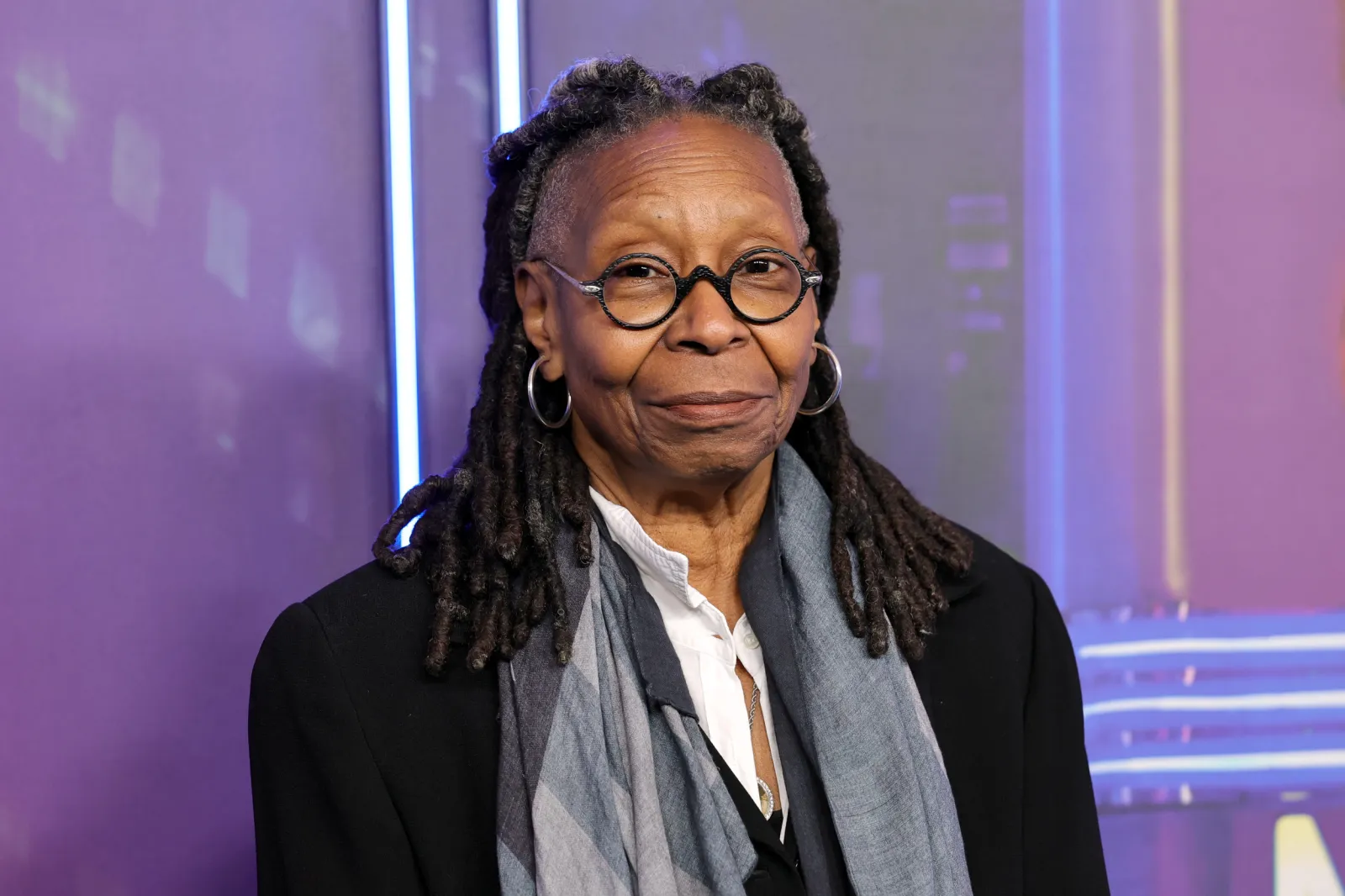
The response intensified later in the day when Ms. Goldberg, speaking during a panel discussion on “The View,” addressed Mr. Trump’s renewed criticism of her following a rally in which he referenced several entertainers who have spoken out against him. Ms. Goldberg, who has a long working history with Mr. Trump from his years in the entertainment industry, reminded viewers that he had hired her repeatedly for television events — a detail she used to frame her broader critique of contemporary political rhetoric. Her remarks, which blended personal recollection with pointed political commentary, quickly gained traction among audiences and drew significant online engagement.
Together, the two segments created what some media researchers described as a rare convergence of late-night satire and daytime commentary — two influential but distinct corners of American broadcast culture — amplifying a single political message across diverse audiences. The rapid spread of both clips reflects, in part, the immediacy of digital circulation but also the enduring role entertainers play in shaping public debate around national politics.
Inside Mr. Trump’s team, the reaction was swift. Several aides, speaking on the condition of anonymity because they were not authorized to discuss internal deliberations, said the former president was angered by the attention the segments received. According to these individuals, advisers spent much of the evening assessing how to respond and monitoring the extensive online commentary that followed. One person described the atmosphere as “frustrated and reactive,” noting that staff members were concerned about losing control of the narrative at a moment when they are attempting to centralize campaign messaging.
The broader political impact of such televised critiques remains difficult to measure. Commentators across the ideological spectrum have long debated whether pointed commentary from entertainers meaningfully shifts voter sentiment. Yet scholars who study political communication say these moments often serve as cultural touchpoints, reinforcing perceptions — positive or negative — that audiences already hold. They are also instances in which long-running narratives about a public figure can be reshaped, resurfaced or reinterpreted by millions in a single broadcast cycle.
Ms. Goldberg’s remarks, in particular, echoed earlier discussions from the mid-2000s, when her professional interactions with Mr. Trump were more frequent. Her decision to reference that history on air prompted renewed debate about how celebrities engage with political power and how their personal recollections can influence public interpretation of a political figure’s conduct. Several analysts noted that her comments touched on a recurring pattern: the tension between Mr. Trump’s longstanding visibility in entertainment culture and his more recent posture as a political outsider.

For Mr. Colbert, the moment underscored the increasingly blurred line between satire and political analysis. His show has leaned into that hybrid role for several years, particularly during periods of national conflict or legislative stalemate. In this case, his monologue drew attention not only for its content but for its tone — measured, data-driven in portions, and framed as a rebuttal to Mr. Trump’s public-facing arguments rather than a purely comedic routine.
As the two segments continued circulating online, the reaction showcased the fragmented nature of the modern media environment: supporters of Ms. Goldberg and Mr. Colbert praised their willingness to challenge political rhetoric; critics accused them of overreach or of contributing to what they see as an increasingly polarized entertainment landscape. Meanwhile, strategists in both major parties studied the exchange closely, aware that televised commentary — particularly when amplified through social networks — can influence fundraising, volunteer enthusiasm and public perception even if it does not directly shift electoral outcomes.
Whether the moment has a lasting effect on the broader political climate remains uncertain. But it underscores a dynamic that has shaped American politics since Mr. Trump first emerged as a national candidate: the persistent interplay between entertainment culture and electoral discourse. As long as Mr. Trump remains a central figure in national politics, analysts say, televised critiques of his record and persona are likely to continue generating strong reactions from both his supporters and his detractors.