FIFA’s Reported Restructuring Sparks Anxiety in U.S. Soccer as Canada and Mexico Rise
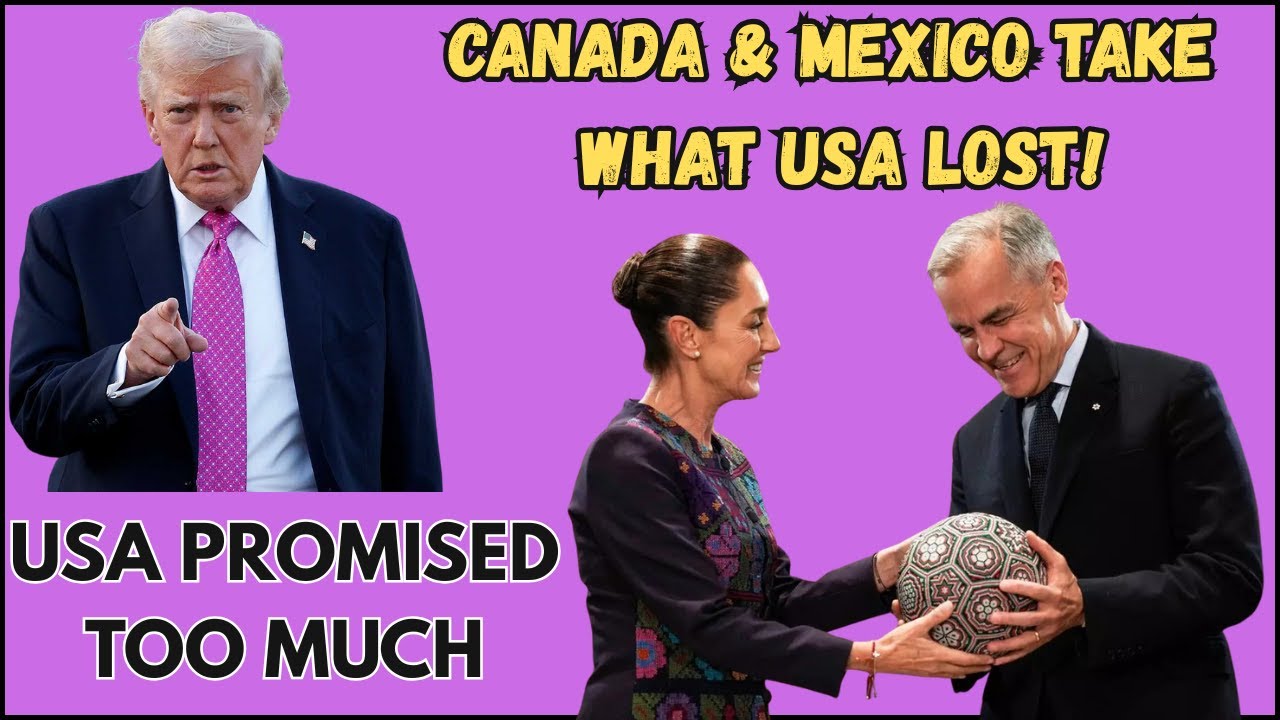
In a development that has sent ripples through the North American sports landscape, reports of a quiet FIFA-backed restructuring have ignited concerns that the United States could lose significant competitive and administrative influence in the region ahead of the 2026 World Cup. While formal confirmation remains elusive, the circulating claims suggest that Canada and Mexico may be positioned to take on a more prominent regional role — a shift that experts say would represent one of the most consequential reshuffles in modern CONCACAF dynamics.
The speculation alone has triggered a wide range of reactions across the continent. Canadian and Mexican officials, according to early industry chatter, are expressing cautious optimism at the prospect of expanded authority. Meanwhile, analysts in the United States warn that any realignment disadvantaging the country could have sweeping consequences, both politically and economically, at a time when the sport is experiencing unprecedented domestic momentum.
A Potential Break from Convention
For decades, the United States has served as a stabilizing anchor in North American soccer, contributing outsized financial resources, commercial infrastructure, and viewership that drives much of the region’s appeal to international governing bodies. A restructuring that sidelines the U.S., even marginally, could challenge deeply entrenched norms.
Experts suggest that FIFA may be considering ways to rebalance influence to strengthen competitive parity. Canada’s resurging national program — buoyed by a young talent core and renewed federation investment — paired with Mexico’s enduring soccer culture and loyal fan base, could form the foundation of a new regional hierarchy.
Still, analysts emphasize that any decision that materially diminishes U.S. involvement would be unusual. “You don’t elevate North American football by weakening the country generating most of the revenue,” one international sports economist noted. “If the rumors are true, the strategic rationale isn’t immediately clear.”
Billions Potentially at Stake
The United States has invested heavily in the sport in recent years. MLS expansion, grassroots development programs, broadcast contracts, youth academies, and the fast-growing women’s game together form an ecosystem that represents billions of dollars in long-term commitments. Those investments are closely tied to expectations of consistent prominence in global football.
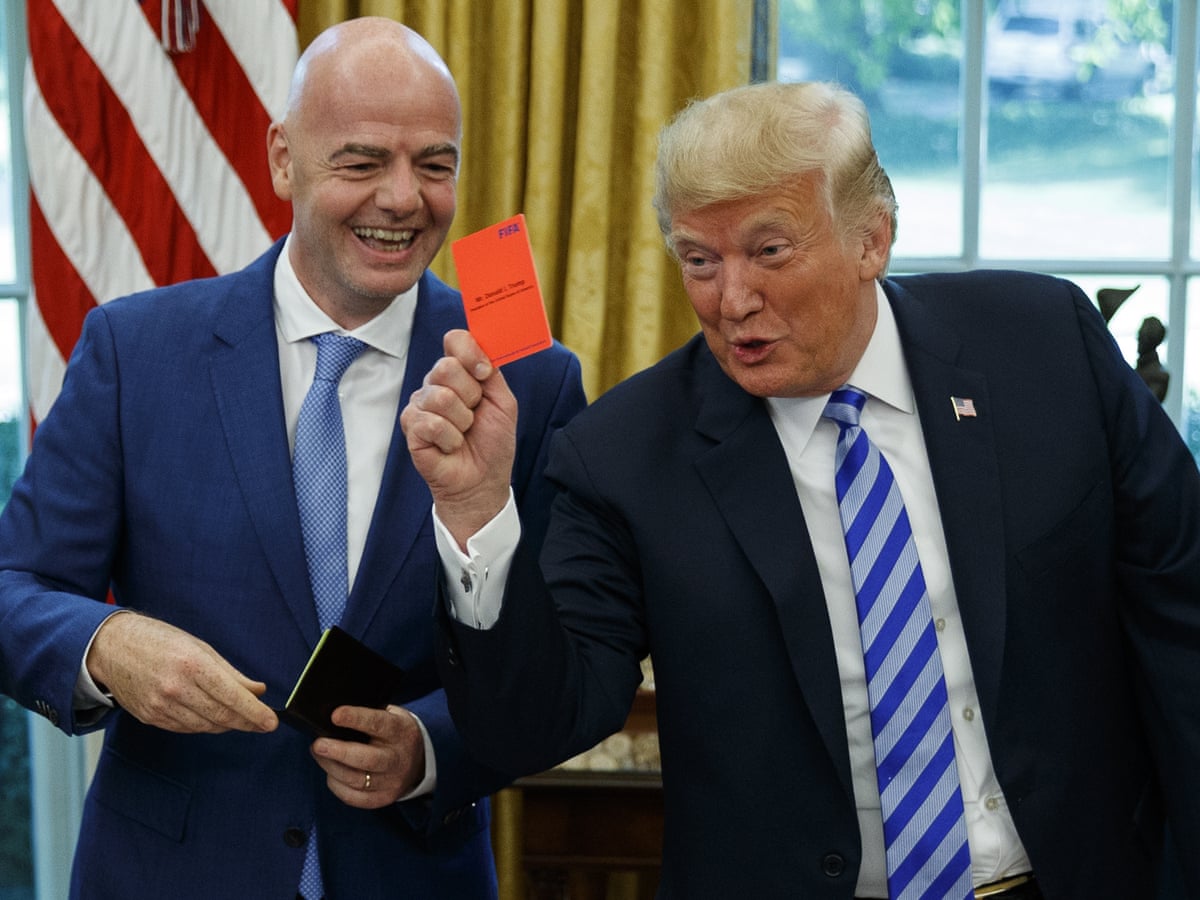
Should FIFA move forward with a structure that reduces U.S. influence or alters qualification pathways for the 2026 World Cup — co-hosted by the United States, Canada, and Mexico — the economic reverberations could be substantial. Corporate partners could reconsider sponsorship strategies. Broadcasters could renegotiate terms. And emerging development programs, especially those aimed at preparing the U.S. men’s team for 2026, may face new pressures.
Some analysts warn that the shift could exacerbate political tensions as well, particularly if lawmakers perceive the decision as undermining national interests. Sports analysts note that “soft-power friction” between the U.S. and FIFA is not unprecedented, but a reshuffle at this scale could elevate the issue to a diplomatic concern.
Canada and Mexico Eye Opportunities
For Canada and Mexico, the reported restructuring represents something very different: an opportunity. Both countries have argued for years that they contribute disproportionately to regional competitiveness, yet receive limited structural influence at the highest administrative levels.
Mexico, with its massive domestic league and historically strong men’s national team, has long sought greater international leverage. Canada, meanwhile, is undergoing a renaissance. The men’s program has reached heights not seen in decades, while the women’s team continues to be a global force.
The prospect of enhanced authority — whether in match hosting priorities, administrative decisions, or qualification structuring — could accelerate both countries’ long-term ambitions.
Uncertainty Ahead of 2026
The timing of the reports adds an additional layer of complexity. With the 2026 World Cup approaching and all three nations preparing to host matches, stakeholders expected stability, not disruption. Any reconfiguration of power, even if symbolic, risks introducing logistical challenges mere months before major tournament preparations enter their most sensitive stage.
Some insiders emphasize that the biggest unknown is not whether the restructuring will happen — but what form it might take. Could it involve administrative committees? Qualification reforms? Distribution of competitive authority? Until FIFA issues a formal statement, these questions remain unanswered.
A Region at a Crossroads
If the United States is indeed being pushed to the margins, the long-term implications could reshape not just North American soccer but global tournament politics. Yet experts caution that dramatic outcomes are far from guaranteed. The three nations remain deeply interconnected through shared hosting duties, commercial alliances, and FIFA-mandated coordination.
For now, what the region faces is uncertainty — and the possibility of a historic shift in balance.
As North America prepares for 2026, the world’s attention will remain fixed on whether these early reports signal a new era in continental soccer or simply a momentary tremor in a sport undergoing constant evolution.