A Subtle Signal From the Supreme Court Places Trump and Newsom on a Collision Course
In a week dominated by legal maneuvering and political recalculations, the Supreme Court issued an unsigned, late-evening order that has already begun reshaping the national conversation around redistricting. While the ruling dealt directly with Texas’s newly drawn congressional map — reinstating it for the upcoming election after a lower court deemed it unconstitutional — the implications extend far beyond the Lone Star State. For former President Donald Trump and California Governor Gavin Newsom, two figures whose political trajectories increasingly intersect, the decision may mark the quiet opening of a new phase in their ongoing rivalry over voting power and electoral rules.

The Court’s conservative majority offered Texas Republicans a significant procedural win, allowing the state to move forward with a map projected to create up to five additional Republican seats in the House. The decision arrived with little explanation, a hallmark of the Court’s emergency docket. Yet it included a concurrence by Justice Samuel A. Alito, joined by Justices Clarence Thomas and Neil Gorsuch, that has drawn outsized attention — not for what it concluded about Texas, but for what it seemed to foreshadow about California.
California recently enacted its own dramatic redistricting overhaul, one widely interpreted as a direct response to Texas. The map, approved by voters under Proposition 50, eliminates five Republican-held districts and creates five new Democratic-leaning ones. Trump-aligned Republican groups have challenged the plan, arguing that the state used racial considerations in a way that violates constitutional protections. The legal battle is ongoing, but Justice Alito’s carefully worded concurrence hinted that the Court may view California’s partisan maneuver as no different in principle from Texas’s — and therefore likely permissible.
“It is indisputable that the impetus for the adoption of the Texas map, like the map subsequently adopted in California, was partisan advantage, pure and simple,” Alito wrote. The line, brief but pointed, landed with unusual force in political and legal circles. If partisan gerrymandering remains constitutional — as the Court reaffirmed in its 2019 Rucho v. Common Cause decision — then California’s assertive mapmaking may survive the very legal challenge Trump allies believe could overturn it.

For Democrats, that possibility represents an unexpected counterweight to what they view as a decade-long Republican effort to use redistricting to cement minority rule in swing states. For Republicans, it is a warning that aggressive tactics deployed in Texas may now be met with equally aggressive responses from some of the nation’s largest blue states. For Trump, whose political strategy depends heavily on ensuring Republican dominance in the House, the idea that California may freely pursue a map designed to erode GOP representation presents an unwelcome complication.
Newsom, who has positioned himself as a national foil to Trump and an ideological counterpoint to the Republican movement reshaping state policies, now finds himself at the center of a broader national strategy. While he has publicly framed the California map as a correction to Republican excesses, allies describe him as acutely aware of the symbolic significance. “What happens in California will resonate far beyond its borders,” one Democratic strategist said. “This isn’t just about seats; it’s about signaling that Democrats are prepared to match Republican tactics when necessary.”
The reaction from conservatives has been predictably sharp. Trump-aligned commentators have accused California of engaging in “retaliatory redistricting,” while some Republican lawmakers warn that the arms race in gerrymandering could dismantle remaining restraints on partisan mapmaking altogether. But strategically, the party may now face a difficult choice: challenge California’s approach and risk a broader Supreme Court ruling that affirms the legality of partisan gerrymanders everywhere, or tolerate the state’s aggressive shifts to preserve the advantages secured elsewhere.
Justice Elena Kagan’s dissent, joined by Justices Sonia Sotomayor and Ketanji Brown Jackson, offered a different kind of warning — one aimed at the institutional stability of the judiciary. She criticized the majority’s willingness to overturn a lower court’s detailed fact-finding after what she described as a “perusal over a holiday weekend.” Her dissent emphasized the real-world consequences for millions of Texas voters who may find themselves placed in districts shaped partly by considerations of race, even if the Court ultimately concluded otherwise.
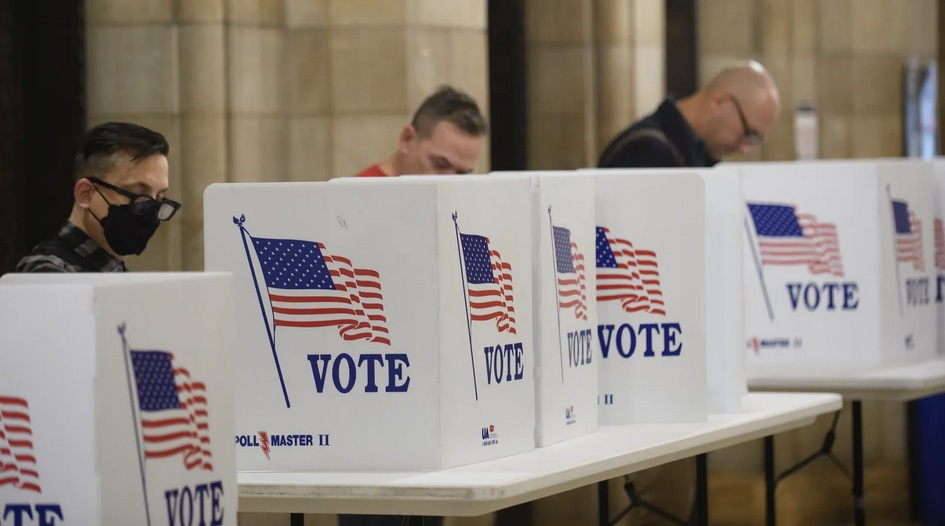
As the 2026 midterms approach, the political stakes will continue to escalate. Texas’s map, now reinstated, could help secure Republican control of the House. California’s map, if upheld, could chip away at that advantage — and deepen the national divide over election rules. What began as two separate state-level redistricting battles has transformed into a broader struggle over the boundaries of political power and the legal foundations that support them.
Whether intentional or not, the Supreme Court’s brief concurrence has signaled to both parties that the next chapter in America’s redistricting wars may hinge not on traditional legal arguments, but on the willingness of states to test the very limits of partisan advantage. And in that emerging landscape, Trump and Newsom may find themselves not only adversaries, but symbols of the competing visions shaping the country’s electoral future.