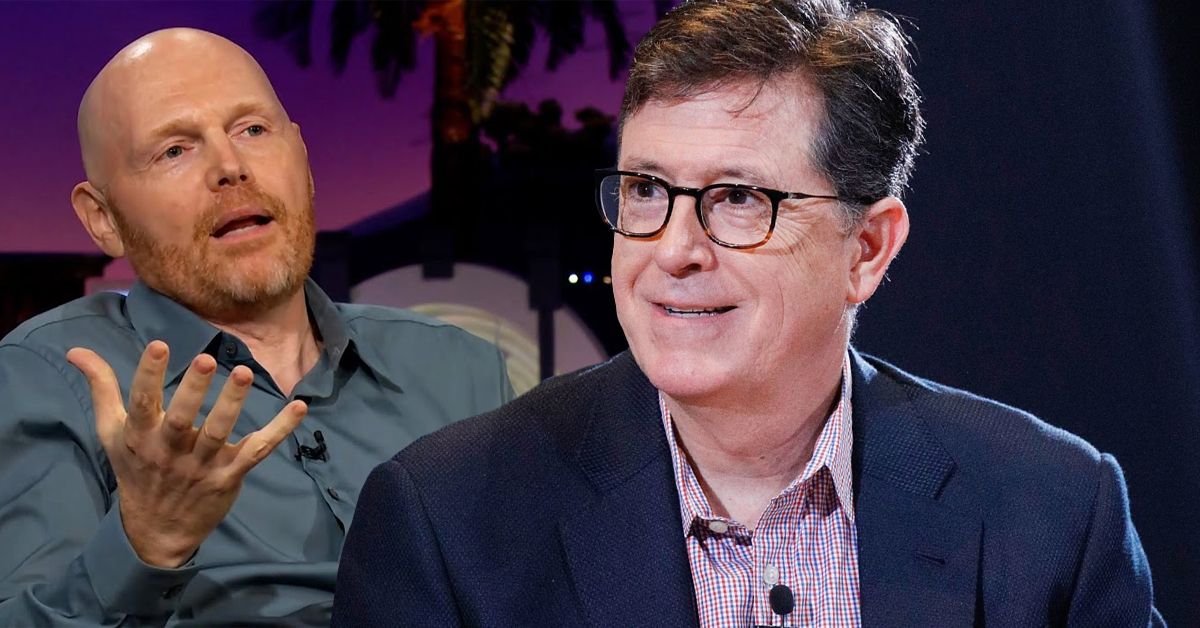
What began as a familiar late-night rhythm on The Late Show with Stephen Colbert quickly transformed into one of the most widely discussed television moments of the year. In an unexpected turn, comedian Bill Burr joined Stephen Colbert for a segment that evolved from humor to a pointed, politically charged dissection of former President Donald J. Trump, prompting immediate reactions from viewers, media analysts, and political actors who were still weighing the fallout the next morning.
The moment that set the shift in motion occurred when Colbert referenced new polling that showed declining public confidence in Trump’s political messaging. Burr followed with an unscripted riff that stunned the studio audience: a defense of his wife after an incident in which she raised her middle finger at Trump during a public appearance. His retelling was both comedic and unflinching, and it drew a visible reaction from Colbert, who used the opening to pivot into a broader critique of Trump’s rhetorical style, emotional volatility, and longstanding reliance on crowd-size narratives.

Audience members appeared caught between laughter and disbelief as Burr recounted online backlash, including comments he described as “performatively outraged,” and Colbert countered with a deadpan reminder of Trump’s recent public focus on polls, shutdown threats, and his claim that his 2015 escalator incident was an act of sabotage rather than a calculated media moment. The interplay between the two performers created an atmosphere that was part comedy and part political commentary, with several lines eliciting extended applause from the audience.
Behind the scenes, according to two people familiar with the production, staff members immediately recognized that the conversation was veering into territory far sharper than the pre-show outline suggested. One producer, who requested anonymity because they were not authorized to speak publicly, described the control room as “alert and unusually attentive,” noting that the comedic rhythm had shifted toward a direct examination of Trump’s online behavior and strategic use of controversy—particularly what Colbert jokingly framed as Trump’s tendency to amplify new disputes when older questions, including those related to the Epstein files, begin resurfacing.
Clips of the exchange spread rapidly across major platforms once the segment aired on the East Coast. Millions viewed short excerpts within hours, and hashtags tied to both Burr and Colbert reached trending status. Analysts noted that the speed of the clip’s circulation underscored the evolving role of late-night television as a political touchpoint. What once existed primarily as entertainment now routinely intersects with public discourse and often influences it.
Reactions broke sharply along political lines. Supporters of the comedians hailed the segment as an unusually candid discussion about political ego, image-making, and the emotional machinery behind Trump’s public persona. Conservative commentators, meanwhile, argued that the moment reflected a continuing alignment between liberal cultural figures and political criticism, framing the exchange as an example of Hollywood’s tendency to “attack” Trump in collaborative fashion. Prominent voices in conservative media questioned whether the segment constituted commentary, satire, or political messaging packaged as humor.
Sources close to Trump, speaking anonymously, said the former president was briefed on the segment shortly after it began circulating. While Trump did not immediately issue a public statement, individuals familiar with the reaction said he was “frustrated” and “surprised by how personal the commentary became.” Several aides reportedly prepared talking points for preferred media outlets, though it remains unclear whether the former president will address the moment directly.
By morning, excerpts of the exchange had appeared across digital news sites, cable programs, and political newsletters. Editorial writers debated whether the episode represented a meaningful cultural moment or merely another instance of political satire intersecting with public frustration during a fraught political season. Still, the reach of the clip suggested significant public interest, particularly in discussions about how Trump’s style continues to shape—and be shaped by—media narratives.
The full video remains widely circulated, attracting ongoing analysis and discussion as observers dissect the dynamic between Colbert, Burr, and the broader political climate. As with many late-night moments in the current era, the long-term significance is uncertain, but the exchange marks yet another example of how quickly entertainment, politics, and public identity can collide in the modern media ecosystem.