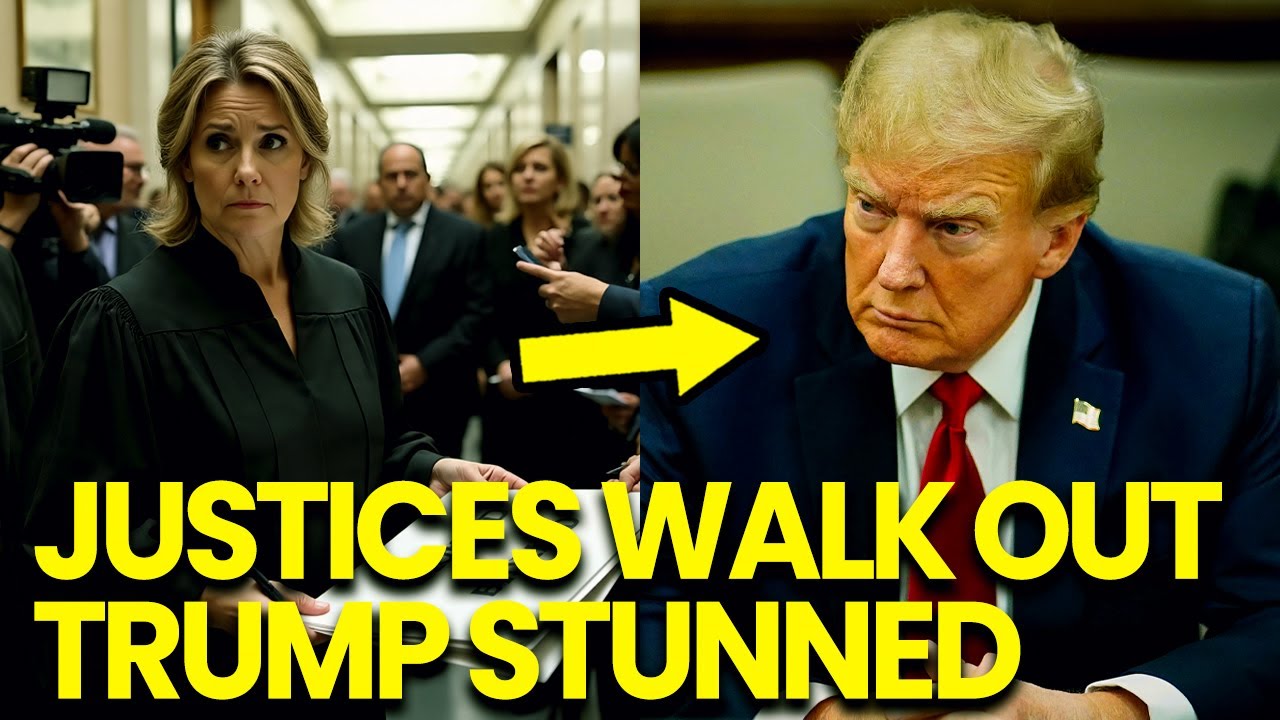
It began, as most political firestorms now do, with a blurry, context-free video uploaded late at night and pushed into virality by accounts chasing outrage. The clip — which claims to show a SUPREME COURT JUSTICE silently standing up and walking out of a Washington legal forum as Donald Trump delivered a fiery speech — spread across social platforms so fast that journalists, researchers, and political strategists were already scrambling to decode it before dawn. Yet by morning, analysts warned that the viral sensation was far murkier than the headlines implied.
The video’s narrator frames the moment as an unprecedented act of judicial protest, suggesting the justice left the room after Trump implied the Constitution and courts “don’t really apply” when they obstruct presidential power. But as fact-checkers quickly noted, the footage does not clearly identify the individual, their intent, or even whether the walk-out occurred during Trump’s remarks. What is real, however, is the reaction — a nationwide eruption of commentary revealing just how combustible the relationship between the former president and America’s judicial institutions has become.
Inside Washington’s legal circles, the rumor ignited a familiar anxiety. For months, court watchers have warned that Trump’s escalating rhetoric toward judges, combined with high-stakes legal battles over tariffs, executive power, and federal immunity, has strained the already fragile boundaries between the presidency and the judiciary. One former federal clerk, speaking anonymously, described the viral clip as “a symbolic nightmare — true or not, the fact that millions instantly believed it shows how deep the distrust now runs.”
By midday, the video had been reposted across major platforms in dozens of edited variations — slowed down, zoomed in, color-corrected, and subtitled with conflicting interpretations. Some users insisted the walk-out was a deliberate rebuke; others argued it was routine movement at a crowded event; still others saw it as evidence of chaos inside the legal establishment. As one misinformation researcher noted, “It doesn’t matter whether the clip is definitive. It matters that people are primed to believe a Supreme Court justice would protest a presidential speech.”
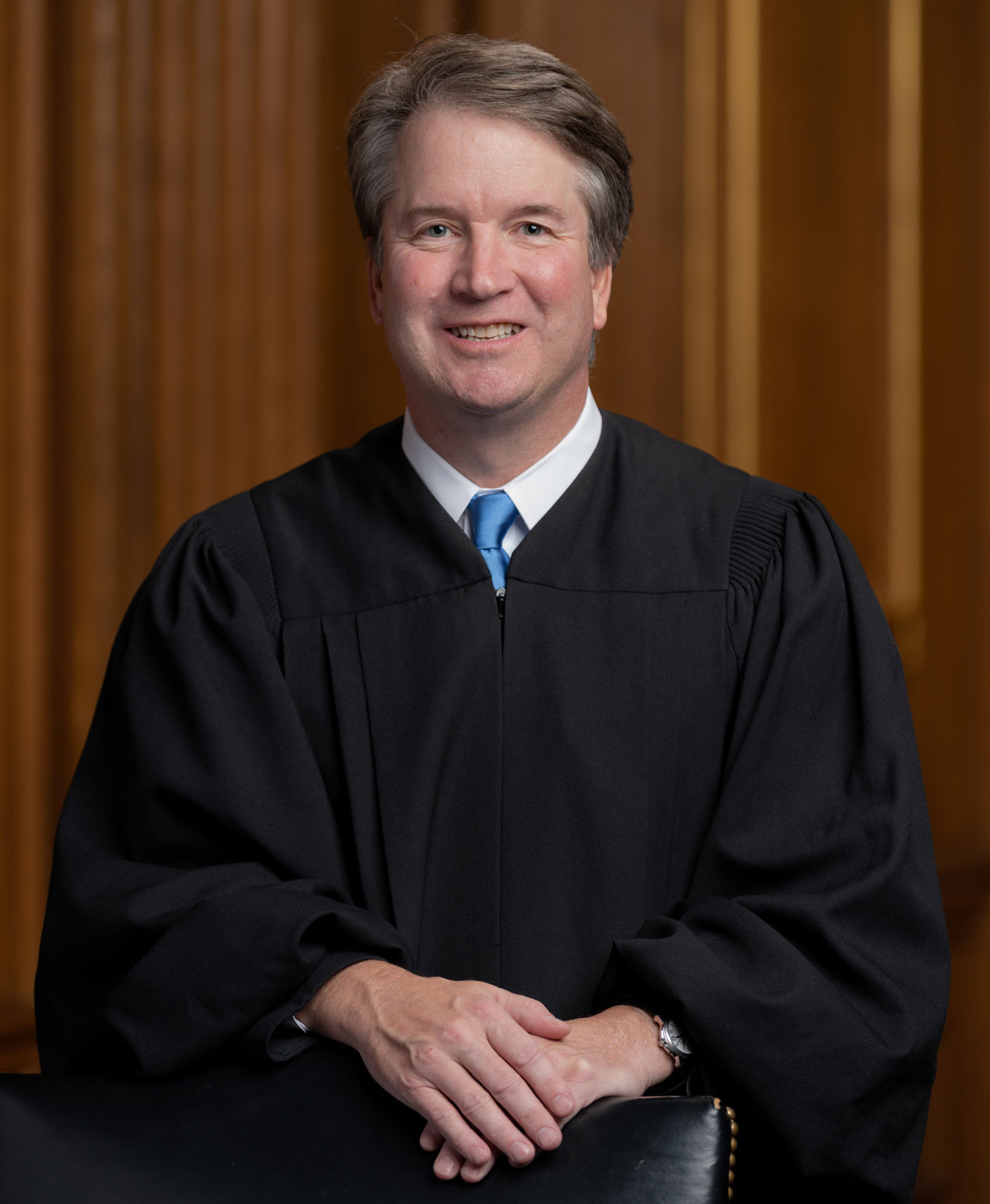
Newsrooms across the country faced their own dilemma. The footage was trending, the claims were escalating, and political commentators were weighing in as though the event had been confirmed. Yet without clear verification, many outlets opted for a cautious middle lane: covering the reaction rather than the alleged incident itself. That cautiousness, however, did little to slow the wildfire. Viewers continued replaying the clip frame by frame, hunting for clues — a gesture, a shadow, a microphone angle — that might validate their preferred narrative.
Behind the scenes, political strategists reportedly saw both danger and opportunity. One GOP adviser dismissed the video as “a TikTok-era fantasy,” while a longtime Democratic strategist argued the controversy reflected “the institutional exhaustion the country has been feeling for years.” Both agreed on one point: the speed with which the clip reshaped the national conversation underscored how volatile the 2026 political climate has become.
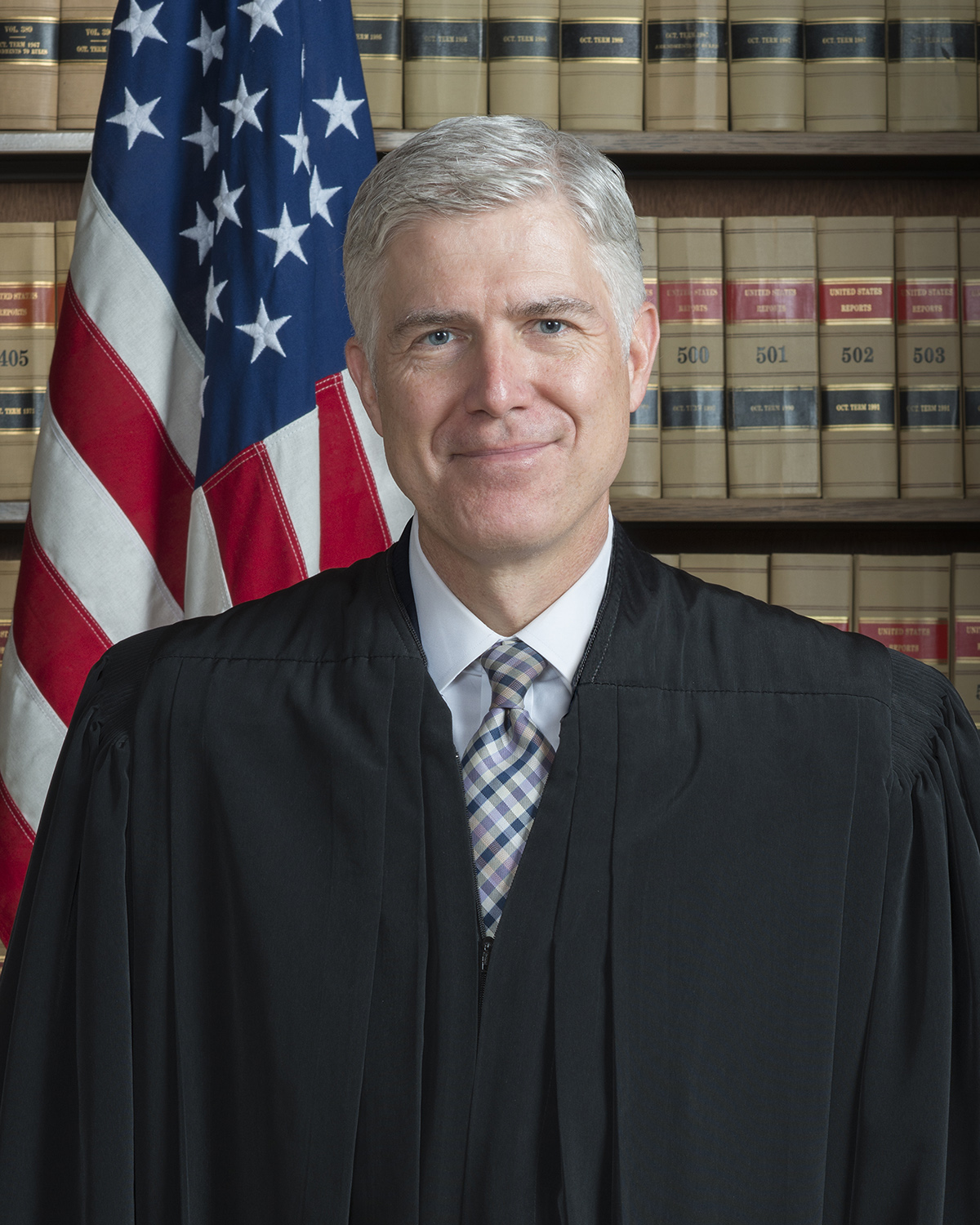
Civil-liberties groups and election watchdogs issued more urgent warnings. The incident, real or not, demonstrated how convincingly a short, ambiguous video can mimic a historic rupture between branches of government. In an era defined by AI-generated hoaxes, partisan editing, and algorithmic acceleration, the viral moment signaled a new vulnerability: the power of political narrative to outpace political fact.
By evening, platform moderators had begun attaching context labels beneath the most explosive posts. But the discourse had already crystallized. Entire threads debated judicial independence, presidential overreach, and the meaning of protest in an era when every gesture becomes a national referendum. Analysts noted that the video’s ambiguity may ultimately prove more influential than a confirmed event — a Rorschach test for a divided electorate.
And so the clip lives on, not as verified history but as a cultural storm signal, exposing the collective tension surrounding the presidency, the courts, and the fragile expectations Americans bring to both.
The full video is still circulating, the interpretations are multiplying, and the internet can’t stop talking — watch the breakdown before the narrative shifts again.