Televised Obama–Trump Exchange Sparks Media Frenzy and Political Messaging War
A televised appearance by former President Barack Obama set off a rapid cascade of political reactions this week after comments he made about public rhetoric and leadership prompted an unusually confrontational response from former President Donald J. Trump. The back-and-forth, though unfolding largely through television clips and social-media posts, quickly escalated into a broader national conversation about fact-checking, political messaging, and the increasingly contentious relationship between public figures and the media platforms that host them.
The moment began during Obama’s scheduled interview on a nationally broadcast late-night program, where he was asked about misinformation, political polarization, and the pressures facing civic institutions in 2024. Obama responded with a characteristically measured, slow-paced answer, emphasizing the importance of honesty in public discourse and warning of what he described as “the long-term consequences of leaders who rely on spectacle rather than substance.” Though he did not mention Trump by name, viewers and commentators immediately noted the similarity to past criticisms he has leveled against the former president.
Televised Obama–Trump Exchange Sparks Media Frenzy and Political Messaging War
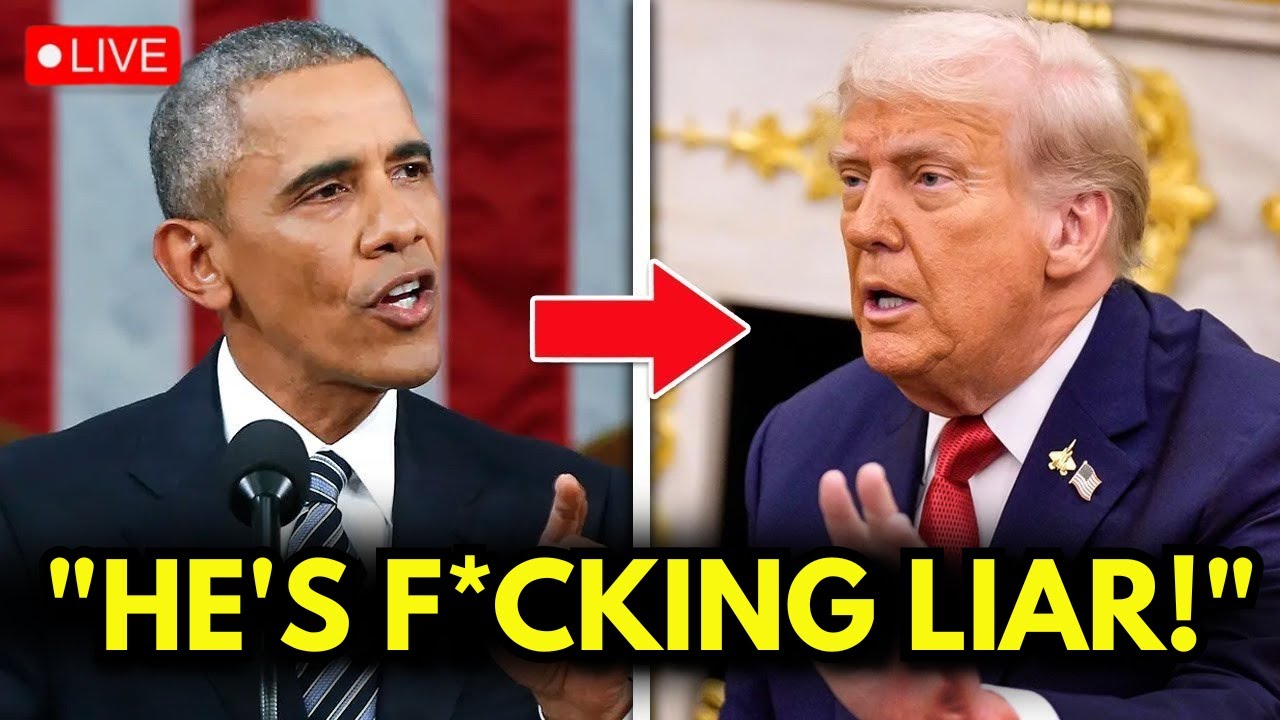
A televised appearance by former President Barack Obama set off a rapid cascade of political reactions this week after comments he made about public rhetoric and leadership prompted an unusually confrontational response from former President Donald J. Trump. The back-and-forth, though unfolding largely through television clips and social-media posts, quickly escalated into a broader national conversation about fact-checking, political messaging, and the increasingly contentious relationship between public figures and the media platforms that host them.
The moment began during Obama’s scheduled interview on a nationally broadcast late-night program, where he was asked about misinformation, political polarization, and the pressures facing civic institutions in 2024. Obama responded with a characteristically measured, slow-paced answer, emphasizing the importance of honesty in public discourse and warning of what he described as “the long-term consequences of leaders who rely on spectacle rather than substance.” Though he did not mention Trump by name, viewers and commentators immediately noted the similarity to past criticisms he has leveled against the former president.
The studio audience reacted strongly, with applause interrupting the segment several times. Clips of the exchange were posted online within minutes, circulating widely across platforms and generating a wave of commentary that blended political analysis with entertainment media reaction.
Trump Responds With Escalating Rhetoric
Trump, who has frequently monitored televised segments featuring Obama, responded almost immediately on his personal social-media platform. In a series of posts, he accused the former president of “spreading misinformation” and “trying to rewrite history.” He also called for the late-night program to “apologize for airing false statements,” though he did not specify which part of the interview he considered inaccurate.
Advisers close to Trump, speaking anonymously, said the former president was “incensed” by the tone of Obama’s remarks and viewed the interview as a direct political provocation. Several allies echoed Trump’s criticism, arguing that mainstream entertainment programs unfairly amplify Obama’s messaging while scrutinizing Trump’s.
Democrats, by contrast, dismissed the reaction as disproportionate and emphasized that Obama’s remarks referenced broader trends rather than individual figures. “He was talking about leadership standards, not revisiting old grievances,” said one senior Democratic strategist.
A Showdown That Played Out on Screens, Not in Person
Though the headline reactions portrayed the moment as a “showdown,” the two former presidents did not share a stage nor directly debate one another. Instead, the confrontation unfolded almost entirely through the fragmented ecosystem of modern political communication: televised interviews, edited clips, influencer commentary, and competing social-media narratives.
Media analysts say this illustrates a defining feature of contemporary political discourse. “What happens now is not dialogue, but dueling broadcasts,” said Dr. Lila Garrison, a professor of media politics at Stanford University. “Obama’s remarks existed in one informational universe, Trump’s responses in another, and the public consumed whichever version aligned with their preferred narrative.”
Garrison noted that the speed of reaction is itself part of the story. “A comment made at 11 p.m. becomes a political flashpoint by 11:07,” she said.
Online Reaction Amplifies the Moment
On TikTok, edited clips emphasizing the studio audience’s reaction went viral, often set to dramatic music. On X, commentators aligned with Trump accused the late-night host of orchestrating a “setup” by presenting Obama’s remarks uncritically. On YouTube, political podcasters and media personalities uploaded lengthy discussions with titles suggesting the moment was either an “exposé,” a “rebuttal,” or a “media hit job.”
What emerged was less a consensus interpretation than a polarized set of parallel narratives—each fueled by different parts of the digital ecosystem.
“People weren’t reacting to the interview,” said Marisa Velasquez, director of a media research group. “They were reacting to each other’s reactions.”
Behind the Scenes: Strategic Framing and Rapid Mobilization
Two individuals with knowledge of Trump’s communications team said staffers were instructed to “push back immediately” once clips began trending. The priority, they said, was to frame Obama’s remarks as misleading before the interview solidified into a dominant storyline online.
Obama’s team, by contrast, declined to comment publicly, consistent with a long-standing strategy of disengaging from Trump’s rhetorical volleys.
Late-night show producers, speaking anonymously, said they were “surprised” by how quickly the segment spiraled into a political confrontation. “It was a standard interview,” one staff member said. “Nothing was designed to provoke a political firestorm.”
A Mirror of the Broader Media Moment
The episode underscores the broader dynamic of the modern media era: political discourse no longer centers on institutions, but on personalities whose remarks can be reframed, amplified or weaponized within minutes.
“What looks like a ‘showdown’ is really a feedback loop,” Garrison said. “Television triggers social media. Social media triggers political response. Political response triggers more television.”
Whether the moment will have any lasting effect on public opinion remains unclear. But the incident once again demonstrates how even a few sentences, delivered in a casual televised setting, can ignite a nationwide debate in a political environment defined by speed, polarization and performative messaging.
For now, the exchange stands as yet another example of how the two former presidents—symbolic opposites in contemporary American politics—continue to shape the national narrative, even without sharing the same room.
The studio audience reacted strongly, with applause interrupting the segment several times. Clips of the exchange were posted online within minutes, circulating widely across platforms and generating a wave of commentary that blended political analysis with entertainment media reaction.
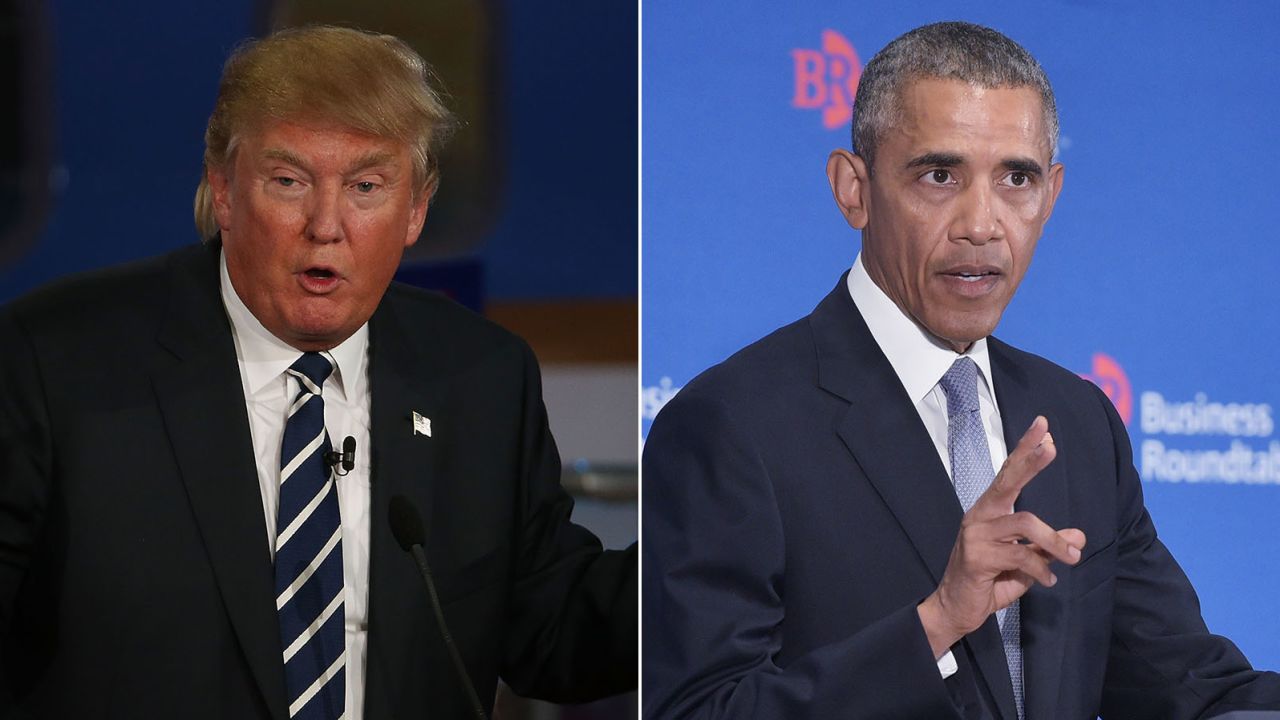
Trump Responds With Escalating Rhetoric
Trump, who has frequently monitored televised segments featuring Obama, responded almost immediately on his personal social-media platform. In a series of posts, he accused the former president of “spreading misinformation” and “trying to rewrite history.” He also called for the late-night program to “apologize for airing false statements,” though he did not specify which part of the interview he considered inaccurate.
Advisers close to Trump, speaking anonymously, said the former president was “incensed” by the tone of Obama’s remarks and viewed the interview as a direct political provocation. Several allies echoed Trump’s criticism, arguing that mainstream entertainment programs unfairly amplify Obama’s messaging while scrutinizing Trump’s.
Democrats, by contrast, dismissed the reaction as disproportionate and emphasized that Obama’s remarks referenced broader trends rather than individual figures. “He was talking about leadership standards, not revisiting old grievances,” said one senior Democratic strategist.
A Showdown That Played Out on Screens, Not in Person
Though the headline reactions portrayed the moment as a “showdown,” the two former presidents did not share a stage nor directly debate one another. Instead, the confrontation unfolded almost entirely through the fragmented ecosystem of modern political communication: televised interviews, edited clips, influencer commentary, and competing social-media narratives.
Media analysts say this illustrates a defining feature of contemporary political discourse. “What happens now is not dialogue, but dueling broadcasts,” said Dr. Lila Garrison, a professor of media politics at Stanford University. “Obama’s remarks existed in one informational universe, Trump’s responses in another, and the public consumed whichever version aligned with their preferred narrative.”
Garrison noted that the speed of reaction is itself part of the story. “A comment made at 11 p.m. becomes a political flashpoint by 11:07,” she said.
Online Reaction Amplifies the Moment
On TikTok, edited clips emphasizing the studio audience’s reaction went viral, often set to dramatic music. On X, commentators aligned with Trump accused the late-night host of orchestrating a “setup” by presenting Obama’s remarks uncritically. On YouTube, political podcasters and media personalities uploaded lengthy discussions with titles suggesting the moment was either an “exposé,” a “rebuttal,” or a “media hit job.”
What emerged was less a consensus interpretation than a polarized set of parallel narratives—each fueled by different parts of the digital ecosystem.
“People weren’t reacting to the interview,” said Marisa Velasquez, director of a media research group. “They were reacting to each other’s reactions.”
Behind the Scenes: Strategic Framing and Rapid Mobilization
Two individuals with knowledge of Trump’s communications team said staffers were instructed to “push back immediately” once clips began trending. The priority, they said, was to frame Obama’s remarks as misleading before the interview solidified into a dominant storyline online.
Obama’s team, by contrast, declined to comment publicly, consistent with a long-standing strategy of disengaging from Trump’s rhetorical volleys.
Late-night show producers, speaking anonymously, said they were “surprised” by how quickly the segment spiraled into a political confrontation. “It was a standard interview,” one staff member said. “Nothing was designed to provoke a political firestorm.”
A Mirror of the Broader Media Moment
The episode underscores the broader dynamic of the modern media era: political discourse no longer centers on institutions, but on personalities whose remarks can be reframed, amplified or weaponized within minutes.
“What looks like a ‘showdown’ is really a feedback loop,” Garrison said. “Television triggers social media. Social media triggers political response. Political response triggers more television.”
Whether the moment will have any lasting effect on public opinion remains unclear. But the incident once again demonstrates how even a few sentences, delivered in a casual televised setting, can ignite a nationwide debate in a political environment defined by speed, polarization and performative messaging.
For now, the exchange stands as yet another example of how the two former presidents—symbolic opposites in contemporary American politics—continue to shape the national narrative, even without sharing the same room.