Kamala Harris’s Potential 2028 Presidential Run: A Strong Campaign in the Making?
On Sunday, Senator Mark Kelly (D-AZ) made headlines by predicting that former Vice President Kamala Harris could mount a “strong” campaign if she chooses to run for president in 2028. His remarks have sparked discussions about Harris’s political future and the potential impact her candidacy could have on the political landscape, particularly in relation to President Donald Trump, who may take precautions in response to such a formidable challenge. As the Democratic Party looks ahead to the next presidential election, Harris’s experience, visibility, and evolving political persona position her as a significant contender, one who could reshape the dynamics of the race.
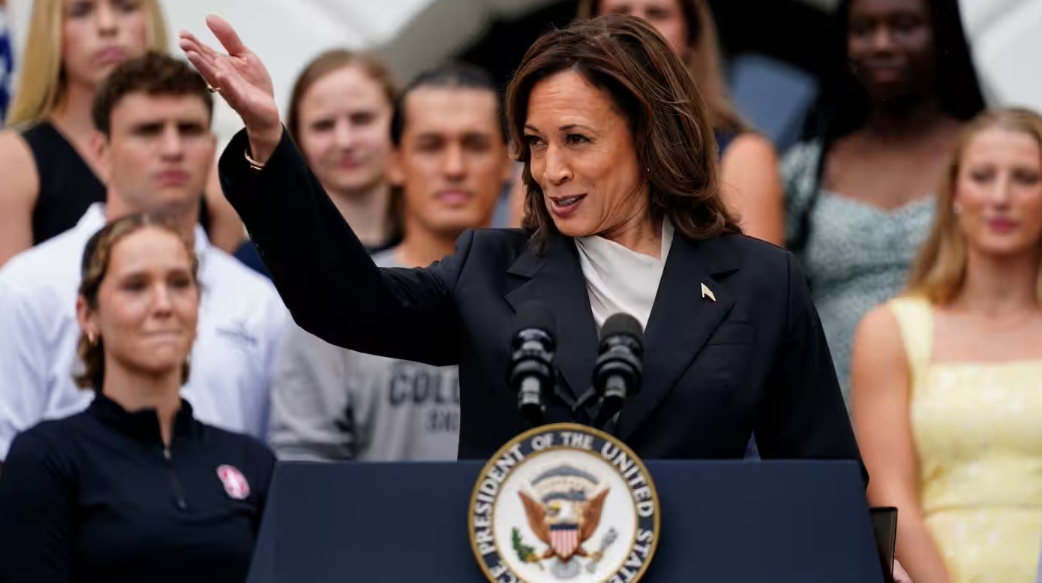
Kamala Harris, who served as Vice President from 2021 to 2025, has been a polarizing yet influential figure in American politics. Her tenure as Vice President, alongside President Joe Biden, gave her a platform to address critical issues such as immigration, voting rights, and criminal justice reform. Despite facing criticism for her handling of certain policy areas, Harris has cultivated a loyal base of supporters who admire her prosecutorial background, her advocacy for progressive causes, and her historic role as the first female, Black, and South Asian Vice President. Senator Kelly’s endorsement of her potential candidacy underscores the belief among some Democrats that Harris remains a viable and compelling leader for the party’s future.
A 2028 presidential run by Harris would build on her extensive political experience. As a former U.S. Senator from California and Attorney General, Harris has demonstrated her ability to navigate complex political environments. Her 2020 presidential campaign, though unsuccessful, provided her with valuable insights into national campaigning. Since then, she has honed her public image, focusing on issues like reproductive rights and economic equity, which resonate with key Democratic constituencies. Senator Kelly’s prediction suggests that Harris could leverage this experience to craft a more effective campaign, potentially appealing to a broader electorate, including moderates and independents.

The prospect of Harris’s candidacy could indeed prompt President Trump to take precautions. Trump, who returned to the White House in 2025, has maintained a strong grip on the Republican Party, but his polarizing style and policy decisions have also galvanized opposition. Harris’s ability to energize the Democratic base, particularly among younger voters, women, and minorities, could pose a significant challenge. Her prosecutorial background equips her to frame debates sharply, potentially putting Trump on the defensive over issues like economic policy, social justice, or foreign affairs. A strong Harris campaign could force Trump or his allies to recalibrate their strategies, focusing on countering her narrative and appealing to swing voters.
Moreover, Harris’s potential candidacy would occur in a rapidly evolving political climate. By 2028, issues such as climate change, artificial intelligence, and global economic stability are likely to dominate the national conversation. Harris’s ability to articulate a forward-looking vision while addressing voters’ immediate concerns could set her apart. Her experience as Vice President gives her insight into navigating complex policy challenges, which could help her craft a platform that resonates with a diverse electorate. Additionally, her ability to connect with younger voters through social media and grassroots organizing could amplify her campaign’s reach.

However, Harris would face challenges in a 2028 run. Critics within the Democratic Party have questioned her ability to unify its progressive and moderate wings, and she would need to overcome lingering skepticism about her electability. The Republican Party, led by Trump or a successor, would likely mount a fierce opposition, leveraging their base’s loyalty and media influence. Harris would need to refine her messaging and build a coalition that transcends ideological divides to secure the nomination and compete effectively in the general election.
Senator Kelly’s prediction highlights the potential for Kamala Harris to emerge as a transformative figure in 2028. Her candidacy could reshape the Democratic primary and challenge President Trump’s political dominance. By focusing on key issues, mobilizing diverse voter groups, and addressing past criticisms, Harris has the opportunity to mount a formidable campaign. Whether she can translate this potential into victory remains to be seen, but her reentry into the presidential race would undoubtedly make waves, prompting both excitement and caution across the political spectrum.