Washington Says It Doesn’t Need Canada. Ottawa Is Acting Like It Knows Better.
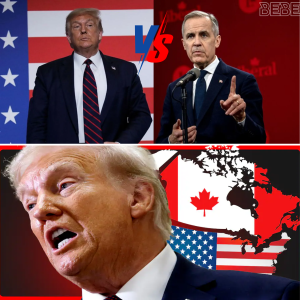
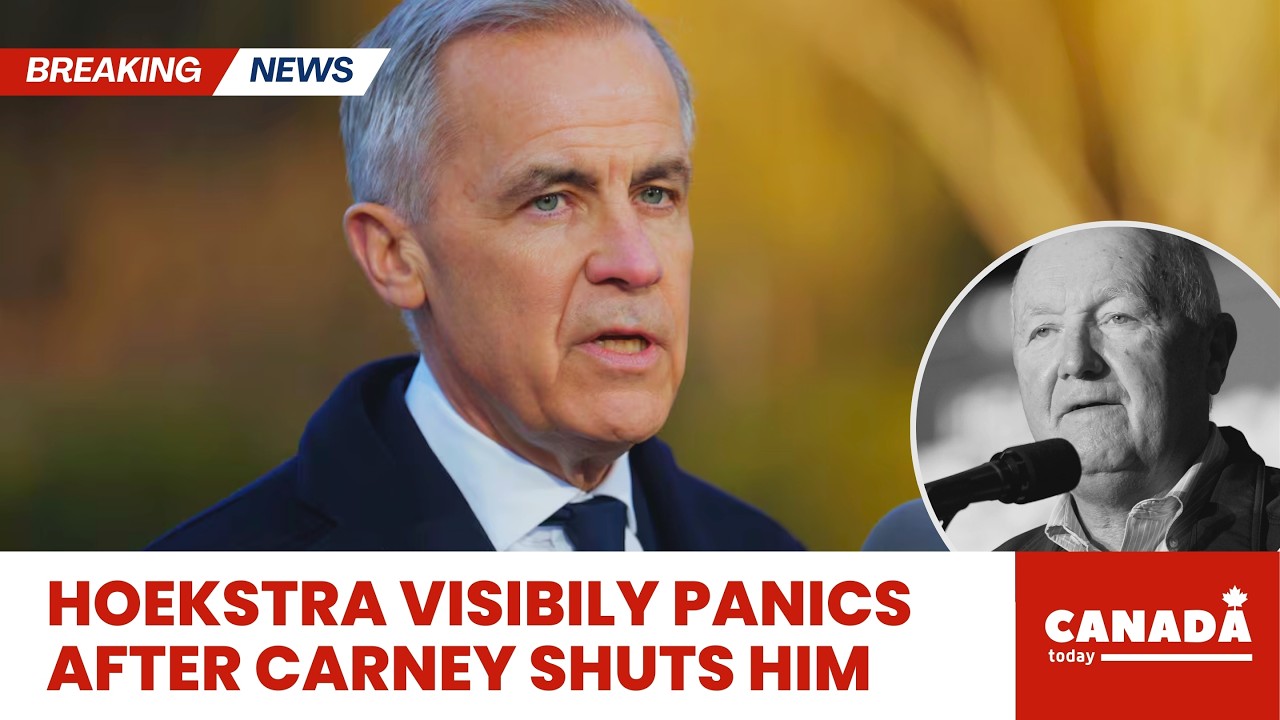
Ottawa — When the United States ambassador to Canada declared this week that Washington “does not need Canada,” the remark landed less as a show of strength than as a signal of anxiety.
The comment, delivered bluntly on Canadian radio by Ambassador Pete Hoekstra, came at an unusually sensitive moment. Canada had just concluded a significant trade reset with China under Prime Minister Mark Carney, loosening electric vehicle tariffs, restoring agricultural access, and reopening channels for long-term industrial cooperation. Almost simultaneously, Carney arrived in Qatar — his next stop in a widening campaign to attract global capital and reduce Canada’s economic exposure to the United States.
The timing mattered. Diplomatic statements rarely occur in isolation, and this one appeared less about policy than about momentum.
A Statement That Raised More Questions Than It Answered
Asked whether the United States needed Canada, Hoekstra did not hedge. He did not qualify. He did not soften the language.
“No, we do not need Canada,” he said.
In isolation, the statement might have sounded like a restatement of American self-sufficiency. But context stripped it of that meaning. The United States and Canada share one of the most integrated economic relationships in the world — spanning autos, energy, agriculture, manufacturing supply chains, and critical minerals. For decades, neither side questioned that interdependence.
That is precisely why the remark resonated. Diplomats do not usually deny reliance unless they feel leverage slipping.
Canada’s Accelerating Pivot
Under Carney, Canada has moved with unusual speed. The agreement with China marked the most substantial thaw in bilateral economic relations in years. Tariffs on Chinese electric vehicles will be phased down, capped initially at 49,000 vehicles annually. In exchange, Beijing has lowered barriers on Canadian canola and other exports, restoring access to a market crucial for Western Canadian farmers.
Just as important, both governments signaled openness to Chinese investment in Canadian EV manufacturing — a step that would shift production, not just trade, and deepen long-term ties.
Yet China was only the first act.
Carney’s arrival in Qatar carried a different strategic weight. While trade agreements move goods, capital investment reshapes national trajectories. Qatar’s sovereign wealth funds, among the largest and most patient in the world, invest on timelines measured in decades. Their interest is not transactional. It is structural.

Why Qatar Matters More Than It Appears
This is the first visit by a sitting Canadian prime minister to Qatar, and it reflects a deliberate calculation. Gulf states are actively searching for stable, rule-of-law jurisdictions where large-scale investments can be deployed without political volatility or legal uncertainty.
Canada fits that profile.
Carney’s pitch in Doha was not about tariffs or quotas. It was about infrastructure, energy, transportation, and long-term national projects — high-speed rail, pipelines, northern development, and strategic energy corridors. These are investments that anchor growth and alter economic gravity.
Once capital flows establish themselves at that scale, they do not reverse easily. And they do not respond to pressure the way trade flows do.
Control, Not Commerce
From Washington’s perspective, this is the unsettling part.
For decades, American leverage over Canada rested on a single assumption: that Canada’s options were limited. Geography, supply chains, and history reinforced the idea that Ottawa ultimately had nowhere else to go.
China disrupted that assumption. Qatar threatens to erase it.
Ambassador Hoekstra’s statement was therefore less about whether the United States could survive without Canadian imports — a theoretical question — and more about a practical loss of influence. When alternatives become credible, pressure stops working. Tariff threats lose their force. Diplomatic coercion loses its audience.
A Pattern, Not an Accident
This moment did not arise suddenly. It is the result of a cumulative erosion of trust that began years ago, as U.S. trade policy grew more volatile and transactional. Repeated threats to withdraw from the USMCA, public disparagement of Canadian industries, and unpredictable tariff announcements forced Ottawa to reassess long-held assumptions.
Carney did not set out to sideline the United States. He responded to an environment in which reliance became a risk.
That distinction matters. Countries rarely abandon foundational partnerships lightly. But they do hedge when reliability fades.
The Carney Factor
Carney’s personal credibility has amplified the impact of these moves. As former governor of both the Bank of Canada and the Bank of England, he is widely recognized in global financial circles as a crisis manager with deep institutional knowledge. His role in stabilizing Britain during the Brexit upheaval still resonates among investors.
When Carney enters a room, he does not need to explain Canada’s seriousness. It is assumed.
That credibility has translated into access — not just meetings, but confidence. China engaged. Qatar opened doors. Global investors are not merely observing; they are positioning.
Washington’s Strategic Blind Spot
The irony is difficult to miss. The United States did not lose influence over Canada because Canada became hostile. It lost influence because unpredictability made diversification rational.
By framing trade as domination rather than partnership, Washington accelerated the very outcome it sought to avoid. Canada began building alternatives not out of defiance, but out of necessity.
Now, when American officials say they do not need Canada, they may be acknowledging a deeper truth: they can no longer assume Canada.
What Happens Next
Canada’s repositioning will not be announced in a single headline or treaty. It will emerge gradually — in investment flows, factory planning, infrastructure financing, and energy contracts signed quietly over time.
These changes are difficult to reverse. Capital, once committed, resists disruption. Trade networks, once diversified, do not easily reconverge.
The central question is no longer whether Canada has options. It does.
The question now is how Washington adapts to a neighbor that no longer waits for permission, no longer assumes alignment, and no longer organizes its future around American certainty.
And that adjustment, for the United States, may prove more challenging than any tariff negotiation.