Trump’s Aircraft Tariff Threat Backfires, Pushing U.S. Business Aviation Toward Chaos
A single social media post was all it took.
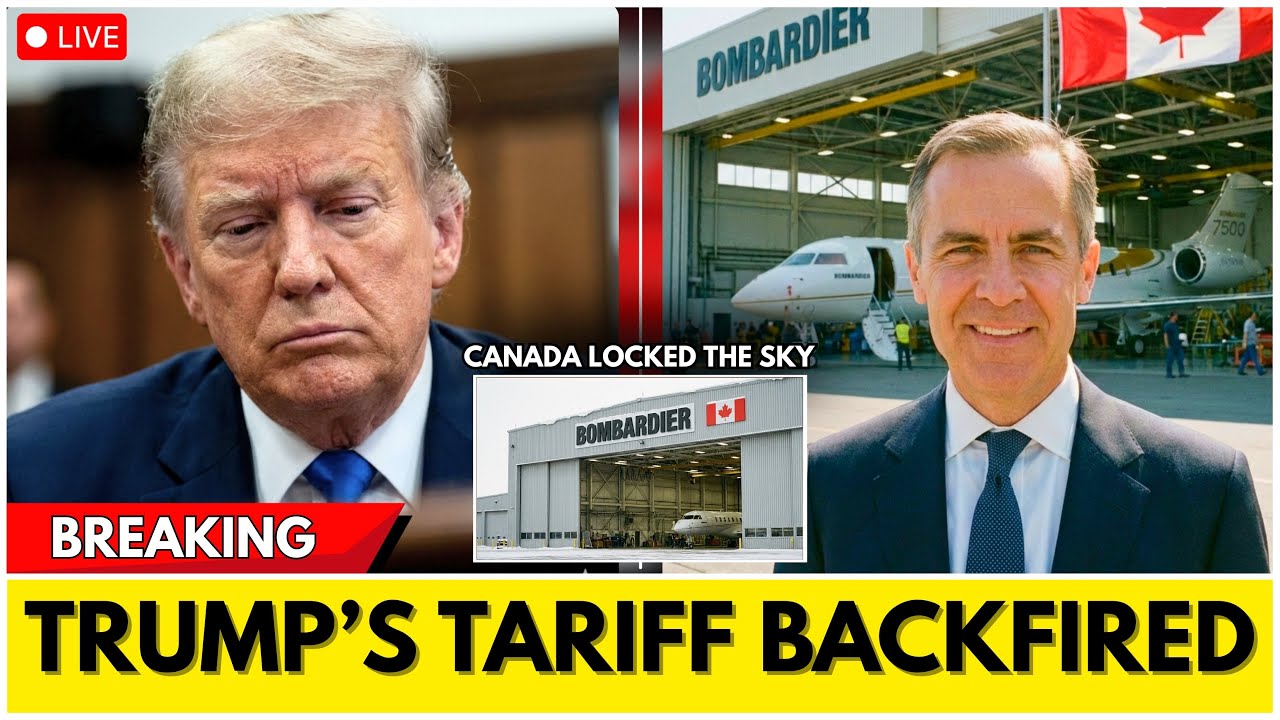
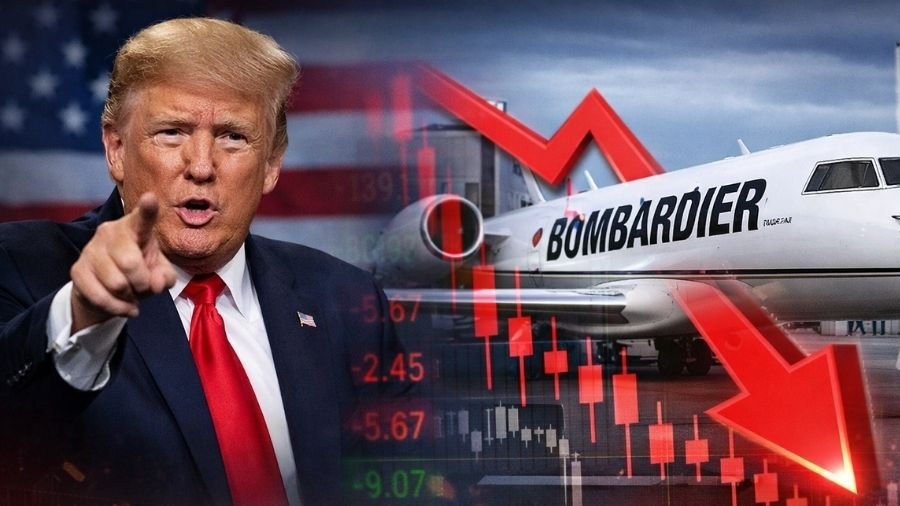
Late Thursday night, former President Donald Trump announced sweeping measures against Canadian-built aircraft: a proposed 50% tariff on all Canadian aircraft sold in the United States and the de-certification of Bombardier Global Express jets and every aircraft manufactured in Canada. The stated reason was Canada’s refusal to fast-track safety certification for Gulfstream’s newest business jets — aircraft that have not yet completed required fuel-icing system tests.
There was no warning. No consultation with regulators. No negotiation with industry.
Within hours, Bombardier’s stock fell sharply. Aviation lawyers began fielding frantic calls from private jet owners. Airlines quietly assessed what grounding Canadian-built aircraft would mean for their regional networks. And across the global aerospace industry, alarm spread over what many saw as an unprecedented politicization of aviation safety.
Trump intended to pressure Canada. Instead, he may have inflicted lasting damage on American business aviation.
A Safety Dispute Turned Into a Trade Weapon
At the center of the dispute are Gulfstream’s G700 and G800 business jets. Transport Canada has not certified the aircraft because their fuel-icing protection systems — redesigned from previous models — have not yet completed mandatory testing. Fuel icing is not a hypothetical concern; it has caused catastrophic accidents in the past. Testing requirements exist precisely to prevent engine flameouts at altitude.
The U.S. Federal Aviation Administration granted Gulfstream a time-limited exemption allowing deliveries while testing continues through 2026. Transport Canada declined to grant a similar exemption, citing its legal obligation to certify aircraft based on completed engineering analysis, not provisional assurances.
That decision is well within Canada’s regulatory authority.
Trump’s response was to threaten the nuclear option: de-certifying all Canadian aircraft operating in the United States unless Canada approves Gulfstream jets that do not yet meet Canadian safety standards.
The precedent is extraordinary. Aviation certification has historically operated on mutual recognition. The FAA certifies U.S. aircraft. Transport Canada certifies Canadian aircraft. European authorities certify Airbus. Each regulator validates the others’ determinations because safety, not politics, governs the process.
Trump shattered that assumption in one post.
The Scale of the Damage Trump Overlooked
More than 5,400 Canadian-manufactured aircraft currently operate in the United States. That includes Bombardier Global business jets, CRJ regional jets flown by American Airlines and Delta Air Lines, De Havilland turboprops, and Airbus A220 aircraft assembled in Canada.
De-certifying them would mean grounding aircraft mid-operation, canceling thousands of flights, and severing air service to dozens of smaller U.S. cities that rely on regional jets. Airlines would face months of disruption — with no immediate replacement aircraft available.
In the private aviation sector, the consequences are even starker. Roughly 150 Bombardier Global Express aircraft are registered in the United States, owned by corporations, charter operators, and high-net-worth individuals. These jets cost between $40 million and $75 million each.
If de-certified, they would instantly lose operational and resale value. Aircraft owners could not fly them, sell them, or use them as collateral. Roughly $15 billion in private aviation assets would be frozen overnight.
That kind of regulatory uncertainty is poison to business aviation.
American Suppliers Would Take the First Hit
Trump framed the threat as pressure on Canada. In reality, the economic pain would land first on American companies.
More than 64% of Bombardier’s sales come from U.S. customers, and over half the value of each Bombardier jet is produced in the United States. The company relies on 2,800 American suppliers across 47 states, providing engines, avionics, systems, and structural components.
Bombardier operates nine facilities in the United States, directly employing around 3,000 American workers and supporting tens of thousands more through its supply chain.
If Bombardier loses access to the U.S. market — or if buyers fear future de-certification — production slows. Orders disappear. American suppliers lose contracts. Layoffs follow.
Trump is threatening a nationwide aerospace supply chain to benefit a single manufacturer: Gulfstream, owned by General Dynamics.
A Competitive Gift to Bombardier
Ironically, the threat may strengthen the very company Trump intended to punish.
Bombardier’s Global 8000, certified by Transport Canada in November and the FAA in December 2025, is the world’s fastest civilian aircraft since Concorde, capable of Mach 0.95. It is fully certified in the United States, Canada, and Europe — without exemptions.
Gulfstream’s competing G700 and G800 require regulatory exemptions and remain uncertified in Canada.
In a market where buyers spend $20 million to $90 million per aircraft, safety credibility matters. Bombardier can now make a simple pitch: we complete testing, meet every requirement, and don’t ask politicians to pressure regulators on our behalf.
Gulfstream, by contrast, appears dependent on political leverage to bridge certification gaps.
That is not the reputation ultra-high-net-worth buyers seek.
Why Aviation Authorities Are Alarmed
Industry experts reacted with near unanimity. Richard Aboulafia, managing director at AeroDynamic Advisory, warned that mixing safety certification with political grievances is “an incredibly bad idea.”
The reason is structural.
International aviation depends on trust. If the United States uses de-certification as a trade weapon, every other country gains justification to do the same. China could challenge Boeing certifications over diplomatic disputes. Europe could retaliate against U.S. helicopters. Brazil could target American business jets.
The United States exports far more aircraft than it imports. Weaponizing certification harms American manufacturers more than foreign competitors.
Trump’s threat does not project strength. It undermines the regulatory credibility on which U.S. aerospace dominance depends.
Canada’s Position Is Not Negotiable
Transport Canada cannot legally grant safety exemptions under political coercion. Doing so would compromise its regulatory integrity and expose the agency to liability if safety issues later emerge.
Canadian officials understand that once safety becomes negotiable, it stays negotiable. Future manufacturers would demand similar treatment. Courts would scrutinize every certification decision. Public trust would erode.
Canada’s silence following Trump’s post was strategic. It will not negotiate aviation safety via social media.
If Gulfstream completes the required testing, certification will follow. Until then, no amount of tariff threats changes the engineering reality.
All Roads Lead to U.S. Self-Inflicted Damage
Trump’s threat leaves four possible outcomes — and none favor American aviation.
If he follows through, U.S. airlines, private jet owners, and suppliers absorb massive losses. If he backs down, his leverage evaporates. If he imposes tariffs without de-certification, market uncertainty persists and buyers look elsewhere. If Canada caves, global certification credibility collapses.
What Trump intended as leverage has become self-sabotage.
Bombardier emerges with a stronger safety narrative. European and Asian manufacturers gain an opening. American suppliers face uncertainty. And the global aviation system absorbs another shock driven not by engineering, but by politics.
In an industry built on trust, that damage will not be easily repaired.