When Donald Trump returned to the language of threats, deadlines, and disruption, CUSMA became his latest pressure point. The trade agreement linking the United States, Canada, and Mexico was not framed as a shared economic framework, but as a lever—something to be shaken hard enough to force compliance far beyond trade. Publicly, the tone was aggressive and theatrical. Privately, the assumption was clear: fear would do the negotiating. July 2026, the agreement’s scheduled review under its sunset clause, was cast as a moment of maximum American leverage, a deadline meant to concentrate anxiety in Ottawa and Mexico City.
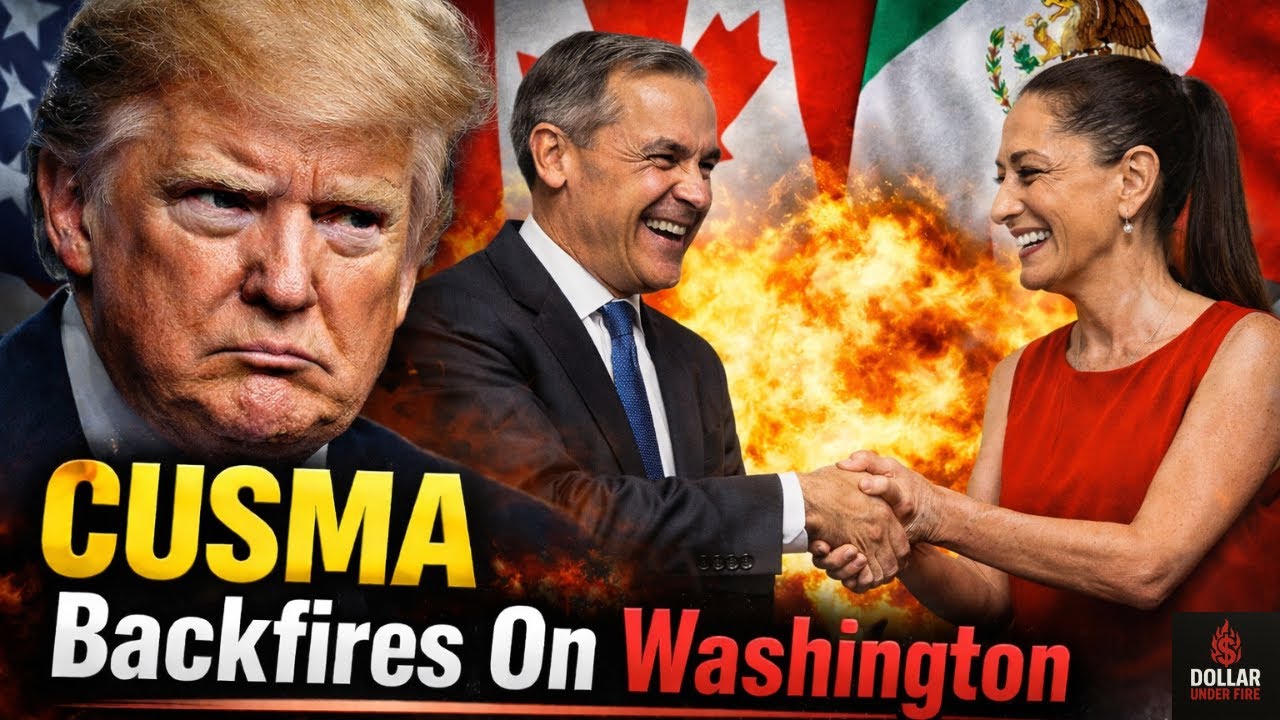
But what unfolded instead exposed a very different reality. While Washington amplified threats of withdrawal, fragmentation, and punitive tariffs, Canada and Mexico avoided public escalation. There were no dramatic rebuttals, no retaliatory speeches, no visible panic. That silence, often mistaken for weakness in Trump’s political universe, masked something else entirely—preparation. Rather than treating the sunset clause as a ticking bomb, both governments treated it as a calendar. Time was not an enemy to be feared, but a resource to be used.
At the center of Trump’s strategy was division. Break the trilateral structure. Replace it with bilateral confrontations where U.S. economic weight could be applied more efficiently. Different labor rules, different industries, different political pressures—each difference presented as justification for separate deals. At the same time, trade was deliberately entangled with unrelated demands: border enforcement, immigration policy, defense spending, control over critical minerals, and alignment on China. The message, though rarely stated outright, was unmistakable—compliance would be rewarded with access, resistance with uncertainty.
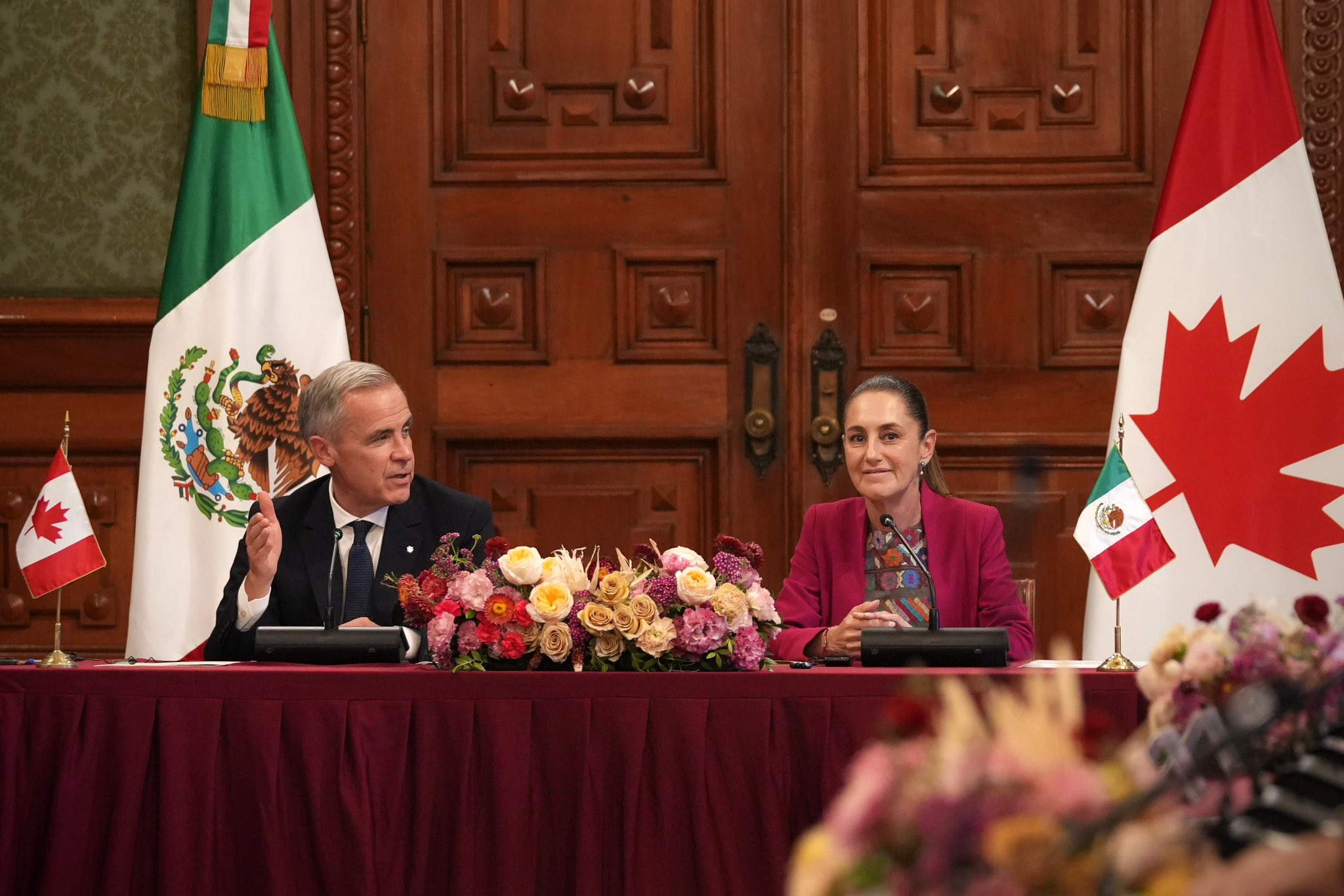
That calculation depended on a single assumption: that Canada and Mexico would face the threat alone. They did not. Long before the rhetoric reached its peak, officials, industry planners, and trade strategists on both sides of the southern and northern borders were already coordinating. Not through public announcements, but through logistics, supply chains, and long-term commercial planning that treated American unpredictability as structural, not temporary. The question quietly shifted from “How do we save CUSMA?” to “How do we function if American pressure becomes permanent?”
By late 2025, that shift became tangible. Canada and Mexico accelerated work on alternative trade routes, deeper bilateral integration, and expanded access to markets beyond the United States. Mexican manufacturing interests examined Canadian Pacific ports as gateways to Asia. Canadian firms looked to Mexico not just as a U.S.-adjacent manufacturing base, but as a bridge to Latin America and the Pacific. These were not symbolic gestures. They were practical moves designed to reduce vulnerability before negotiations even began.

This quiet restructuring triggered an unexpected reaction where Trump least wanted it—inside the United States. As trade consultations unfolded, American manufacturers, agricultural producers, energy firms, and technology companies voiced growing alarm. Their concern was not ideological, but operational. Decades of tightly integrated North American supply chains could not be unraveled without serious cost. Components crossing borders multiple times, energy flows stabilizing prices, and just-in-time manufacturing systems all depended on predictability. Uncertainty alone, they warned, was enough to freeze investment and raise prices.
The emerging picture challenged the core narrative of unilateral leverage. While Canada and Mexico certainly depend on access to the U.S. market, American industry is no less dependent on stable integration with its neighbors. Disruption would not land neatly on foreign governments. It would surface in inflation data, production delays, and corporate balance sheets at home. In that context, the sunset clause began to look less like a weapon and more like a mirror—reflecting how exposed the United States itself might be.
Crucially, failure to extend CUSMA does not trigger an immediate collapse. Instead, it initiates annual reviews, stretching uncertainty over years rather than weeks. For Washington, that prolonged ambiguity risks compounding domestic pressure. For Canada and Mexico, it creates breathing room—time to deepen diversification, solidify alternative partnerships, and further reduce reliance on American goodwill. Each passing year weakens the psychological force of threats built on urgency.
The deeper issue revealed by this standoff is not trade mechanics, but power perception. Trump’s approach assumes control over access still guarantees obedience. Yet in a global economy defined by redundancy and adaptation, power increasingly flows from options, not ultimatums. By preparing early and coordinating quietly, Canada and Mexico signaled that they were no longer negotiating from fear. Whether CUSMA ultimately survives intact or evolves into something new, the leverage landscape has already shifted.
What was meant to be a detonator has become a stress test—one that may expose not foreign dependence, but American vulnerability. And in that reversal lies the real story behind the stalled threat: a deadline designed to intimidate now raises uncomfortable questions about who truly needs stability more, and how much power loud pressure still holds when alternatives are already in motion.