In Nebraska, a Political Reckoning Takes Shape
For years, Nebraska occupied a familiar place in the American political imagination: a reliably Republican state, culturally conservative, agriculturally grounded, and largely immune to the partisan turbulence that roiled the coasts. But over the past year, subtle but unmistakable signs suggest that this image is beginning to fracture — and with it, the political coalition that Donald J. Trump has long counted on in the Midwest.
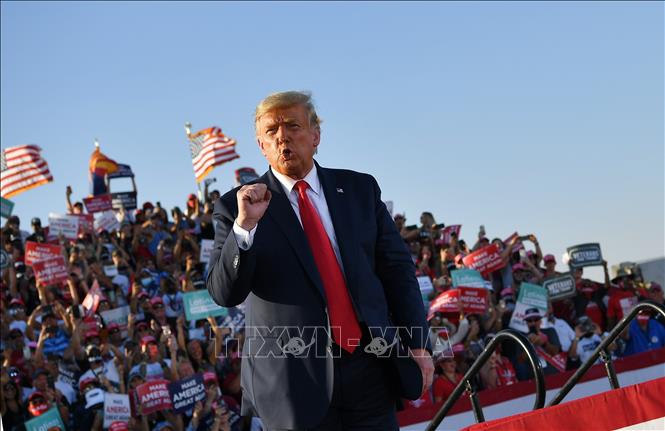
The shift did not begin with a national election, but with a local one. In May, voters in Omaha elected John Ewing Jr., a Democrat, defeating the longest-serving Republican mayor in the country. The result drew little national attention at the time, but in retrospect it appears increasingly symbolic. Mr. Ewing ran on a narrow but potent message: affordability, cost of living, and the everyday economic pressures facing working families. He avoided the culture-war language that has dominated Republican messaging in recent years, instead focusing on pragmatic concerns. His victory foreshadowed something larger.
Across Nebraska, economic stress is becoming harder to ignore. Farmers, long a core Republican constituency, describe a sense of betrayal. At recent meetings of the Nebraska Farmers Union, participants spoke openly about what they called the worst agricultural downturn since the 1980s. Many said that policies associated with the Trump administration — particularly trade disruptions and consolidation in agribusiness — have left them more vulnerable, not less.
“We voted because he was going to help the farmers,” one attendee said, “and now it’s just hurting us like crazy.” The frustration is not ideological so much as practical. Agriculture remains the backbone of Nebraska’s economy, and when it falters, the effects ripple outward — to equipment dealers, transport companies, grocery stores, and small towns already struggling to retain population.
At the same time, health care costs are emerging as a flashpoint. More than 136,000 Nebraskans rely on the Affordable Care Act marketplace for insurance, a record number. With enhanced premium tax credits set to expire at the end of 2025, many residents are now confronting the prospect of dramatic price increases. State reporting has documented cases in which monthly premiums could jump from a few hundred dollars to well over a thousand — figures that would be unsustainable for middle-income families.
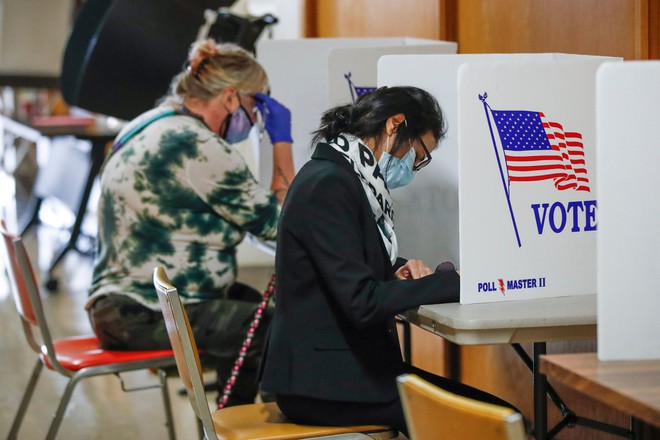
The anxiety is widespread and bipartisan. Health care advocates warn that unless Congress acts, Nebraska could see a sharp increase in uninsured residents. Yet among many voters, there is a growing perception that national Republican leaders are disengaged from these consequences, more focused on ideological battles than on policy outcomes.
Even within the Republican Party, dissent is becoming more visible. Representative Don Bacon, one of the state’s most moderate Republicans, recently announced that he would not seek another term. In unusually candid remarks, Mr. Bacon criticized President Trump’s conduct and rhetoric, calling for “decency,” “self-control,” and “moral clarity.” His comments reflected a discomfort shared quietly by other Nebraska Republicans, though few have expressed it so openly.
Economic consolidation has become another rallying issue. The announcement by Tyson Foods that it would close its meatpacking plant in Lexington, Nebraska — eliminating roughly 3,200 jobs in a town of about 11,000 people — intensified scrutiny of corporate power in the state. The closure, announced just before Thanksgiving, underscored how vulnerable rural communities are to decisions made far from their borders.
Dan Osborn, an independent candidate running for the U.S. Senate, has made consolidation the central theme of his campaign. A military veteran with a background in labor advocacy, Mr. Osborn argues that monopolistic practices in agriculture, food processing, rail transport, and even information services have eroded competition and raised prices for consumers. He has also criticized campaign finance laws, contending that corporate money distorts policy priorities.
His opponent, Senator Pete Ricketts, a former governor and heir to a wealthy family, represents a contrasting political model: well-funded, deeply connected, and firmly aligned with the national Republican agenda. To Mr. Osborn and his supporters, that alignment has come at the expense of local interests.
What is striking about the current moment in Nebraska is not a sudden ideological conversion, but a quieter erosion of trust. Many voters still resist partisan labels, expressing fatigue with both parties. What they appear to be seeking instead is competence, stability, and a sense that their leaders are attentive to the material conditions of daily life.
Whether this discontent translates into lasting political change remains uncertain. Nebraska is not about to become a Democratic stronghold. But the combination of economic pressure, health care anxiety, and moral unease is reshaping the state’s political conversation. For Mr. Trump and the movement he leads, Nebraska offers an early warning: even in places long taken for granted, loyalty is not immune to reality.