Inside the Bubble: How Filtered Economic Data Is Shaping Trump’s View of Reality
WASHINGTON — For months, President Donald Trump has insisted that prices are “coming down tremendously,” that affordability concerns are exaggerated, even invented, and that the American economy is performing at an “A++” level. Polls, grocery receipts, and voter sentiment suggest otherwise. What has been less clear — until now — is whether this disconnect is driven by deliberate deception, willful denial, or something more structurally troubling: a president increasingly insulated from the full picture of the economy by his own advisers.
That possibility moved into sharper focus this weekend after an unusually revealing television appearance by Kevin Hassett, one of Mr. Trump’s top economic advisers. Pressed on Face the Nation to explain what data the president is citing when he claims prices are falling, Mr. Hassett did not dispute the widely accepted numbers. Inflation, by all standard measures, remains positive. Prices continue to rise, albeit more slowly than during the post-pandemic surge. Instead, Mr. Hassett described a narrower lens — one in which the president is shown only select categories where prices have dipped: prescription drugs down a fraction of a percent, gasoline off recent peaks, eggs cheaper than during avian flu disruptions.
In isolation, each data point is accurate. Taken together, they form a misleading portrait.
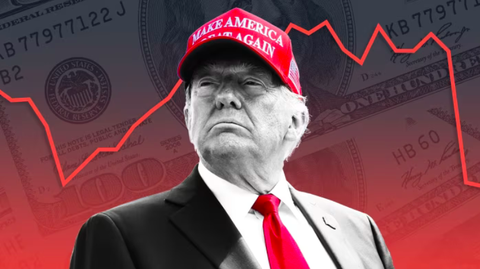
Economists across the political spectrum are clear about the math. Inflation falling from 9 percent to around 3 percent does not mean prices are declining; it means they are rising more slowly. The cumulative increase in costs over several years remains embedded in household budgets. For voters, especially those without savings buffers, the pain is not theoretical. It is persistent.
Yet Mr. Trump’s rhetoric suggests a leader convinced that the problem has already been solved — or never existed. According to people familiar with internal White House dynamics, this is not accidental. Advisers, having learned from experience, reportedly filter briefings to avoid provoking anger or dismissal. The incentive structure is blunt: deliver good news and survive; deliver bad news and risk being pushed aside.
This pattern has precedent. During Mr. Trump’s first term, intelligence officials acknowledged that the President’s Daily Briefing was dramatically shortened to hold his attention, eventually reduced to a single page heavy on graphics and light on nuance. Other reports described aides printing out flattering social media posts and news clips to keep the president engaged. Substance, over time, gave way to affirmation.
The consequences of such insulation are no longer confined to internal governance. They are increasingly visible at the ballot box. Over the past year, Republicans have underperformed in races they once considered safe. Democrats flipped the mayor’s office in Miami, a city Republicans had controlled for decades. Gubernatorial races in Virginia and New Jersey swung decisively. State legislative seats in Georgia followed a similar pattern. Suburban voters have drifted away. Latino support, once seen by some Republicans as a potential growth area, has shown signs of erosion.
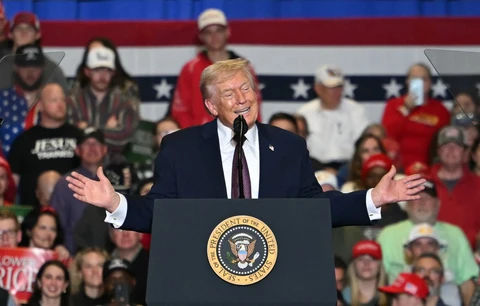
Mr. Trump’s response has been deflection, sometimes contradiction. In recent speeches, affordability has been described simultaneously as a “scam,” a “con job,” and a genuine problem — blamed, invariably, on President Joe Biden. When asked directly by Politico’s Dasha Burns to grade his economic performance, Mr. Trump replied “A++,” prompting laughter even among seasoned reporters.
Privately, Republican lawmakers are less amused. Several, according to aides, are considering retirement rather than facing another election cycle tied closely to Mr. Trump’s approval ratings, which hover in the mid-30s in many polls. Others are attempting a quieter strategy: minimizing their proximity to the White House and hoping voter frustration is diffused before it reaches them.
The deeper danger, analysts warn, is not simply political miscalculation but strategic paralysis. A president who does not believe there is a problem has little reason to adjust course. Course correction requires acknowledgment, and acknowledgment requires exposure to uncomfortable facts.
Some Republicans argue that this trajectory is not inevitable. In theory, congressional leaders could confront the White House collectively, making it harder for the president to retaliate against any single messenger. They could present unified evidence that constituents are struggling and that continued denial risks a broader collapse in 2026. In practice, fear has proven more powerful than coordination.
What remains is a feedback loop: filtered information reinforces misplaced confidence, which in turn deepens voter alienation, producing electoral setbacks that are blamed on everyone but the president himself. It is a system that protects egos while eroding trust.
Whether Mr. Trump genuinely believes his own claims about the economy, or simply finds them politically convenient, may ultimately matter less than the outcome. An administration that sees only good news is ill-equipped to respond to bad realities. And as history suggests, reality has a way of asserting itself — usually at the polls.