U.S. Senate Rebukes Trump on War Powers as Greenland Proposal and ICE Killing Ignite New Political Firestorm
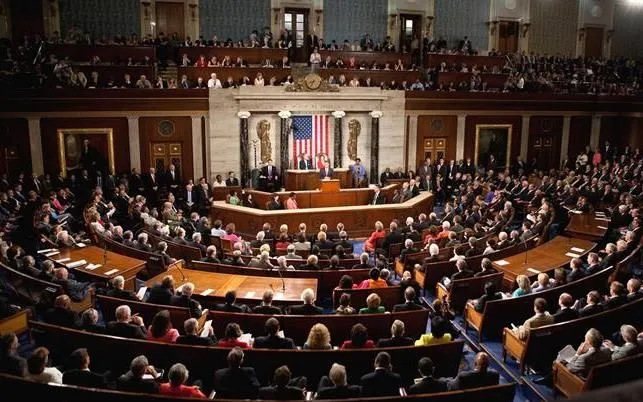
The United States Senate voted 52–47 on Thursday to advance a War Powers Resolution aimed at restricting President Donald Trump’s ability to conduct further military operations in Venezuela without explicit congressional authorization, marking one of the most significant bipartisan rebukes of Trump’s foreign policy authority during his current term.
The vote, which passed with the support of five Republican senators—Lisa Murkowski of Alaska, Todd Young of Indiana, Rand Paul of Kentucky, Susan Collins of Maine, and Josh Hawley of Missouri—sends the joint resolution forward despite the president’s threat to veto it.
The measure reflects growing unease in Congress over what lawmakers from both parties describe as an increasingly unilateral approach to military decision-making by the White House, particularly in the Western Hemisphere.
“This is about Congress reasserting its constitutional role,” said one senior Democratic aide familiar with the negotiations. “The concern is not theoretical anymore. It’s operational.”
Trump Claims Expansive Executive Authority
Following the vote, President Trump reiterated his position that he holds broad, near-absolute authority to deploy U.S. military forces abroad, particularly in the Americas, a stance legal scholars say conflicts with the intent of the War Powers Resolution of 1973.
The White House has characterized the Senate action as symbolic, emphasizing that Trump would veto the measure if it reaches his desk. Even so, the vote itself underscores mounting institutional resistance to the administration’s foreign policy posture.
That resistance intensified further as Reuters reported that senior administration officials are considering a plan to offer direct payments to residents of Greenland—ranging from $10,000 to $100,000 per person—to encourage support for secession from Denmark and eventual U.S. affiliation.
Greenland Proposal Raises International Alarm
According to Reuters, the proposal is part of a broader internal White House discussion that includes economic inducements and, in more extreme scenarios, potential military options if Greenland rejects U.S. overtures.
The idea has triggered alarm among European governments. Officials in Denmark, France, and Germany have reportedly begun contingency discussions in response, viewing the proposal as a challenge to national sovereignty and international norms.
“This is not standard diplomacy,” said a European defense official quoted by The Guardian. “Economic coercion of this kind raises serious legal and security questions.”
The administration has not formally confirmed the plan, but Trump has long expressed interest in acquiring Greenland, citing its strategic location and natural resources.
Domestic Spending Priorities Under Scrutiny

The Greenland reports have drawn sharp criticism domestically, particularly as the administration simultaneously pursues reductions in social spending and health care programs.
Critics note that the White House has proposed a military budget increase to as much as $1.5 trillion, up from roughly $900 billion, while also supporting large-scale subsidies for energy interests abroad, including in Venezuela and Argentina.
“Americans are being told resources are scarce,” said an economist quoted by Axios, “yet we are seeing extraordinary sums discussed for geopolitical ventures.”
ICE Killing in Minneapolis Sparks National Outrage
At the same time, a fatal shooting by a U.S. Immigration and Customs Enforcement (ICE) officer in Minneapolis has ignited nationwide protests and intensified scrutiny of federal law enforcement practices.
The woman killed, Renee Nicole Mlin Good, was a 37-year-old U.S. citizen, a mother of three, and a poet who had recently moved to Minnesota, according to reporting by NPR News.
Video footage shared widely on social media appears to show an ICE officer approaching her vehicle and firing a shot at close range. Federal officials have stated that the officer believed his life was in danger, asserting that the vehicle was used as a weapon—claims disputed by family members, witnesses, and local officials.
Federal Investigation and Jurisdiction Dispute
The Department of Homeland Security, led by Secretary Kristi Noem, has announced that the investigation will remain under federal control, rejecting requests from Minnesota state authorities to participate.
“No state jurisdiction exists here,” Noem said during a press briefing, a position that has further inflamed tensions between federal and local officials.
Civil rights organizations and several members of Congress have called for an independent investigation, citing concerns over transparency and accountability.
Protests and Political Fallout
Protests erupted in South Minneapolis following the shooting, with demonstrators confronting federal agents and demanding justice for Mlin Good. Independent outlets such as Status Coup documented on-the-ground scenes of residents appealing directly to ICE personnel to stand down.
The incident has become a flashpoint in the broader debate over immigration enforcement, federal policing authority, and the use of force against civilians.
Meanwhile, statements from some Republican lawmakers defending the officer’s actions have drawn backlash, with critics arguing that the rhetoric risks normalizing excessive force.
A Presidency Under Intensifying Pressure
Taken together—the Senate’s war powers vote, the Greenland proposal, and the Minneapolis killing—these developments paint a picture of a presidency facing escalating resistance both at home and abroad.
Legal experts note that while Trump retains significant executive authority, institutional checks are becoming more assertive as concerns grow over unilateral action.
“This is a stress test for American democracy,” said a constitutional scholar quoted by CNN. “The question is whether guardrails hold.”
As the War Powers Resolution moves forward and investigations into the ICE shooting continue, the coming weeks are likely to determine whether these moments represent isolated clashes—or a deeper recalibration of power between the presidency, Congress, and the public.