Trump’s War With the Federal Reserve Is Accelerating a Political Unraveling
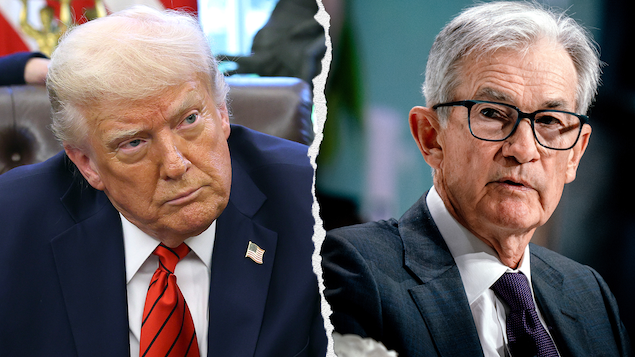
Washington — President Donald Trump’s long-running hostility toward the Federal Reserve has entered a new and more volatile phase, one that is now openly fracturing Republican unity in the Senate and raising fresh alarms about the independence of America’s economic institutions.
The immediate trigger was a reported criminal investigation involving Federal Reserve Chair Jerome Powell, centered on the multi-year renovation of the Fed’s headquarters in Washington. While the White House has offered shifting explanations, the episode has ignited bipartisan concern that the Justice Department is being used as a political weapon — and that the consequences could extend far beyond Powell himself.
For the first time since Trump returned to office, a sitting Republican senator has pledged concrete procedural resistance. Senator Thom Tillis of North Carolina announced he would block the confirmation of any Federal Reserve nominees, including a future chair, until the legal matter involving Powell is fully resolved.
“If there were any remaining doubt that advisers within the Trump administration are actively pushing to end the independence of the Federal Reserve, there should now be none,” Tillis wrote on X. “It is now the independence and credibility of the DOJ that are in question.”
A Senate Turning Restive
Tillis’s statement reflects a broader unease that has been quietly growing inside the Republican conference. According to reporting by Politico and Axios, multiple GOP senators have expressed concern in private that Trump’s escalating attacks on Powell risk destabilizing financial markets at a moment when the economy is already under strain from tariffs, geopolitical conflict, and volatile energy prices.
Several Republicans have also broken with the White House in recent weeks on foreign policy and domestic spending. Votes opposing Trump’s Venezuela strategy and defections on health-care legislation have signaled that the president’s once-iron grip on congressional Republicans is loosening.
Democrats, for their part, have been far more explicit. Senator Mark Warner of Virginia warned in a televised interview that even the perception of political interference with the Fed could damage the dollar’s global standing.
“The stability of our economy — and the stability of the dollar — rests on the independence of the Federal Reserve,” Warner said. “If markets believe interest rates are being set based on political whims rather than facts, the damage could be severe.”
Markets, Power, and Retaliation

Trump has criticized Powell for years, accusing him of keeping interest rates too high, too long — and, at other moments, lowering them at politically convenient times. On social media and at rallies, Trump has portrayed Powell as incompetent and politically biased, recently suggesting the possibility of a lawsuit for “gross incompetence” tied to the Fed’s renovation costs.
Economists across the ideological spectrum have dismissed the claim as weak, noting that large federal construction projects routinely exceed initial estimates and that no evidence has emerged of criminal wrongdoing.
Still, the move has rattled investors. Financial analysts interviewed by The Wall Street Journal and Bloomberg warned that any attempt to prosecute or remove the Fed chair could trigger sharp market reactions, capital flight, and higher borrowing costs.
That risk, several former Trump advisers have acknowledged anonymously, is likely the main reason Powell has not been fired outright. As one former Treasury official put it, “Trump understands markets just enough to know where the land mines are.”
A Pattern of Institutional Pressure
Critics argue that the Powell episode fits a broader pattern. Since returning to office, Trump has repeatedly targeted individuals and institutions he views as disloyal: prosecutors, inspectors general, judges, political rivals, and now the Federal Reserve.
Democrats have labeled this approach “retribution governance,” while some legal scholars have gone further, warning that the United States is drifting toward what they describe as a “personalized state,” where loyalty to the president outweighs institutional norms.
Representative Jasmine Crockett of Texas echoed that framing during a recent House hearing, broadening the conversation to corruption and selective enforcement. She highlighted allegations involving figures close to the administration, including unresolved investigations that were reportedly dropped after Trump’s return to power.
“If we want to talk about fraud,” Crockett said, “we should talk about fraud at the highest levels — the kind that enriches powerful people while everyday Americans pay the price.”
Lame Duck Signals — Early and Loud
The political backdrop makes the confrontation especially consequential. Republicans are facing increasingly difficult midterm prospects, according to polling averages cited by FiveThirtyEight and The Cook Political Report. Resignations in the House have narrowed the GOP majority, while Senate Republicans are defending seats in increasingly hostile territory.
Several analysts note that Trump’s aggressive posture may be accelerating a “lame duck” dynamic — not because his term is ending, but because his political leverage is eroding faster than expected.
“Presidents lose power when allies stop fearing them,” said a veteran Republican strategist quoted by CNN. “And fear only works as long as people believe you can protect them.”
The Stakes Ahead
The Powell investigation remains unresolved, but its implications are already clear. By testing the boundaries of Federal Reserve independence, Trump has forced lawmakers — including Republicans — to confront a fundamental question: whether economic governance in the United States can remain insulated from partisan retaliation.
For now, Powell has said little publicly, adhering to the Fed’s tradition of restraint. But markets, lawmakers, and foreign governments are watching closely.
As one former central banker told The New York Times, “Once the idea takes hold that the Fed chair can be criminally investigated for doing his job, the damage doesn’t end with one administration.”
Whether Trump presses forward — or whether institutional resistance hardens — may determine not only the fate of Jerome Powell, but the credibility of American economic governance in a deeply polarized era.