Mexico Is Quietly Winning the Visa War With the United States
Why real power isn’t about controlling borders anymore — and how Mexico is changing the game
There’s an old saying in geopolitics: real power isn’t about who controls the door. It’s about who can afford to walk away from it.
Right now, that truth is unfolding in a deeply ironic way between the United States and Mexico — and most coverage is missing the real story. This isn’t just about visas, paperwork, or border procedures. It’s about control, dependency, and what happens when a country slowly stops needing another country’s permission to function.
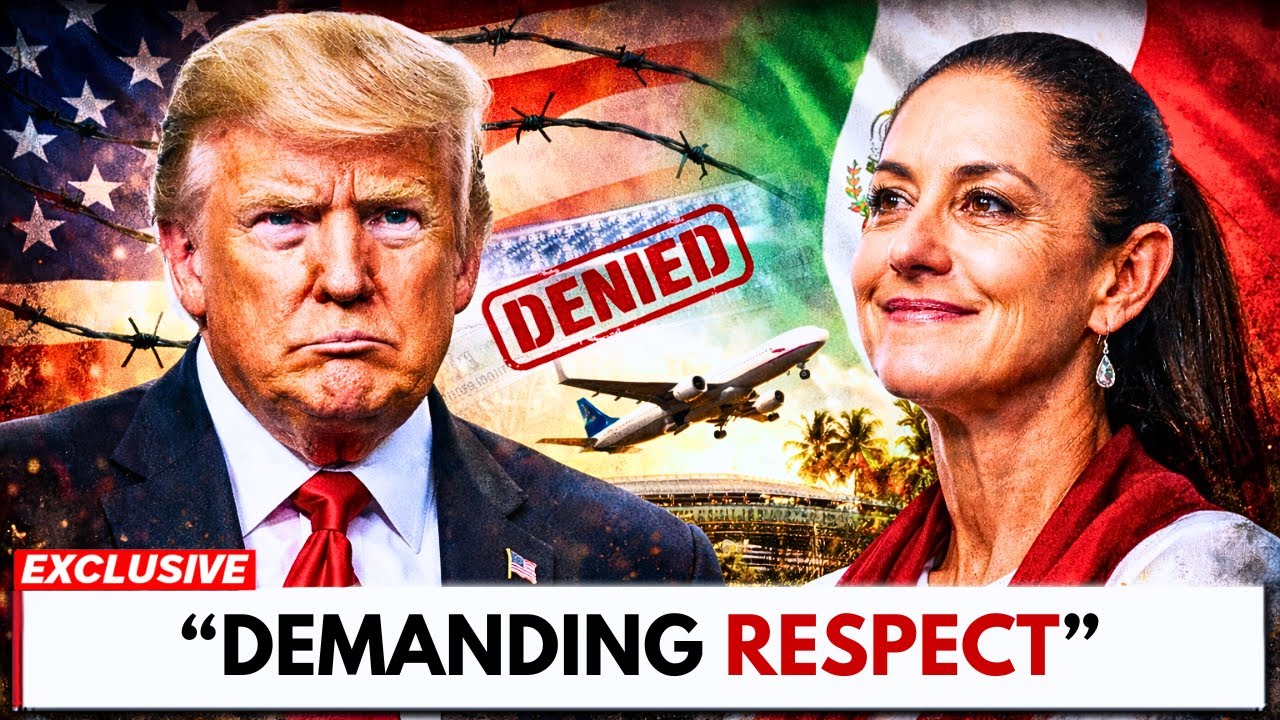
For years, Donald Trump turned visas into a weapon. Not a neutral process. Not routine border control. A weapon.
Under Trump’s approach, every visa appointment felt like a trial. Every interview felt like an interrogation. Long waits. Cold answers. Sudden revocations. Unexplained denials. Hovering over all of it was a clear psychological message: I decide if you enter. I decide if you stay. I decide when the door closes.
And for a long time, that strategy worked — because when someone controls something you depend on, their power doesn’t need to be shouted. It’s implied.

Visa Control as a Tool of Dominance
A decade ago, Mexico would have been cornered by this kind of pressure. When a country depends heavily on a single partner, that partner controls the tone. It raises tariffs. It threatens restrictions. It says, “Do this, or I shut that.”
Trump thrived in that dynamic. He embraced the role of gatekeeper. Dominance through permission was central to his worldview.
So when Washington escalated again recently, it initially looked like more of the same. Reports emerged that more than 100,000 visas had been revoked since Trump’s return — student visas, skilled worker visas, individuals with no political role, suddenly caught in a climate of pressure.
Then came the most sensitive move of all: the quiet but deliberate cancellation of visas held by Mexican politicians and officials. Some cases became public because they couldn’t be hidden. High-profile figures confirmed it themselves.
The message was unmistakable: Access to the United States can be opened or closed at will.
Historically, this is where retaliation would follow. Angry speeches. Symbolic revenge. A matching crackdown. But Mexico didn’t respond that way.
Because Mexico in 2026 is no longer playing the small game.
Mexico’s Strategic Shift: Reducing Dependency
Instead of reacting loudly, Mexico is doing something far more dangerous to a country that relies on dominance. Mexico is reducing its need for the United States.
And when someone stops needing you, your power shrinks quietly. No war. No shouting. No dramatic announcement. The board simply changes — and one day, you realize your threats don’t land the same way they used to.
While Trump tightens visa policies, Mexico is experiencing one of the strongest tourism surges in its recent history. Tourism may sound soft, but at scale, it becomes one of the hardest economic forces to block without inflicting serious self-damage.
Tourism doesn’t just generate revenue. It generates leverage.
For decades, the tourism relationship between the U.S. and Mexico was both comfortable and dangerous. Comfortable because American tourists were nearby. Dangerous because over-reliance created a leash. The United States was the dominant emitter. Mexico was the convenient destination.
Mexico learned a lesson many countries learn too late: if someone can tighten the rope, it’s because you handed them the rope.
So Mexico began shifting — quietly.
No revenge narrative. No press conference theatrics. Just long-term strategy.
Building Independence Through Tourism Strategy
Mexico diversified markets. Expanded routes. Pulled in Europe. Increased exposure in Asia. Focused on higher-value visitors instead of raw volume. Strengthened cultural destinations beyond the usual tourist hubs.
It sounds technical. It sounds boring. But this is how real independence is built.
The goal was never to eliminate U.S. tourism overnight. The United States remains Mexico’s largest source of visitors. That dependency still exists — and that’s exactly why this moment matters.
Because while U.S. tourism remains significant, other markets are growing faster.
Mexico is pushing the door outward so it can’t be slammed shut from the outside.
One of the clearest signals came in Europe, where Mexico positioned itself as a partner country at major tourism fairs serving European and Spanish-speaking markets. To casual observers, that looks like a photo opportunity. To people who understand economics, it’s infrastructure.
That’s where airline routes are negotiated. Travel packages are designed. Operator agreements are signed. Multi-year campaigns are born.
Mexico entered those spaces with a clear objective: stop being reduced to just Cancun in the global imagination.
When a country is known for only two or three destinations, its brand is fragile. But when the image expands — gastronomy, culture, eco-tourism, experiences across all 32 states — the country stops begging for attention. It buys it with strategy.
The U.S. Moves in the Opposite Direction
At the same time, the United States is moving in the opposite direction: more friction, more scrutiny, more bottlenecks, more in-person requirements. A growing sense that visitors are being examined rather than welcomed.
And when friction rises, travel decisions change.
Most people don’t want to visit a country where they feel like a suspect by default. What policymakers label “security,” the world often experiences as hostility.
That hostility doesn’t just deter migration. It deters tourists, students, conferences, shoppers, families, and business travelers. The damage doesn’t appear overnight. It shows up quietly: fewer bookings, less enthusiasm, weaker word-of-mouth.
Meanwhile, alternative destinations capitalize.
The World Cup Factor and Soft Power
This shift becomes even more significant ahead of the 2026 FIFA World Cup. Mexico City, Guadalajara, and Monterrey will be global stages — millions of visitors, billions in spending, exposure no traditional advertising campaign could buy.
The tournament won’t just be about soccer. It will be about narrative and first impressions.
Here’s the quiet irony that undermines Trump’s entire framing: millions of Americans will want to cross into the very country he spent years portraying as a threat.
They’ll stay in Mexican hotels. Eat Mexican food. Fly Mexican airlines. Experience Mexican hospitality.
And Mexico doesn’t need to humiliate anyone to win.
Hospitality is power — soft power, but real. Money flows toward places where people feel welcome. When a country turns tourism into stable prosperity, it builds something nearly impossible to sanction: a global web of shared interests.
When Europeans, Asians, and Latin Americans develop their own relationship with Mexico — a favorite city, a favorite dish, a personal connection — Mexico stops being “America’s neighbor” and becomes a global destination.
That’s why Mexico isn’t just pushing more tourism. It’s pushing better tourism: cultural roots, gastronomy, eco-tourism, community experiences, regions previously invisible on international maps.
This spreads wealth beyond traditional hubs, creates jobs, and builds resilience against political shocks.
Who’s Really Winning?
Connectivity matters too. A new flight route isn’t just transportation — it’s freedom. It’s a flow that doesn’t depend on a politician’s mood, only on demand and economics. Multiply routes, and you multiply options.
And real power isn’t controlling the door. It’s having alternate paths.
Trump thrives on symbols of dominance: I allow you in. I cancel you. But when Mexico becomes so attractive that even its critics vacation there, that story collapses.
So who’s winning this silent war?
The answer isn’t shouted. It’s measured in routes, bookings, experiences, and global perception. In which country opens — and which complicates.
Trump tried to dominate through permission. Mexico responded with strategy.
Every time visas become a threat, Mexico expands elsewhere. Every time pressure rises, Mexico trains itself to need the United States less.
That’s the exact moment power flips.
Because when someone no longer needs your approval to succeed, dominance stops working — quietly, irreversibly.