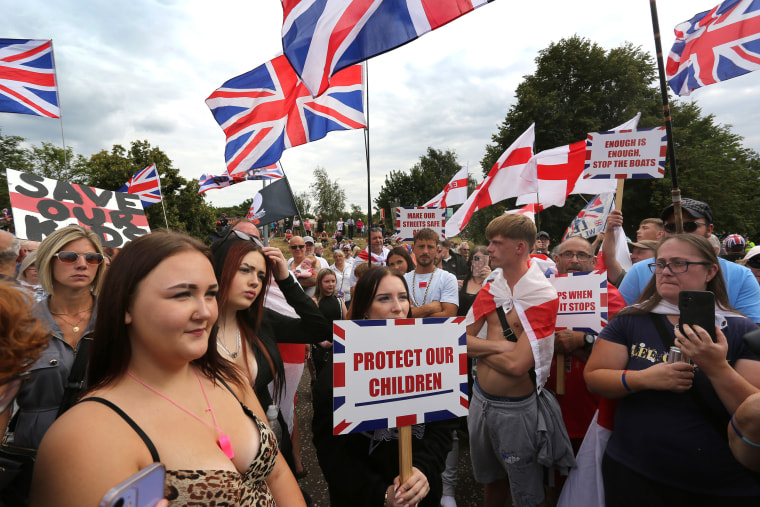
Manchester — A substantial public demonstration in central Manchester saw thousands of participants call for significant changes to UK immigration policy, including what organisers described as “remigration” of certain migrant populations. The event, which featured widespread display of national flags and repeated chants focused on border sovereignty, drew a smaller opposing group and resulted in sporadic physical clashes that required extensive police intervention.

Participants assembled under banners advocating an end to what they characterised as open-border approaches and a return to stricter controls on residency and citizenship. Many expressed frustration with levels of net migration, pressures on housing and public services, and what they perceived as insufficient integration outcomes. Police estimates placed attendance in the low thousands for the main march, with numbers fluctuating as the afternoon progressed.
A counter-presence, reportedly numbering in the low hundreds, positioned itself along the route, leading to verbal exchanges that at points escalated into pushing, projectiles, and brief physical altercations. Video footage circulating online captured moments of individual confrontations, crowd surges, and police lines attempting to maintain separation between the groups. Officers deployed shields, formed cordons, and made several arrests related to public order offences, including assault and affray. No serious injuries were officially reported, though minor medical treatment was provided at the scene.
Greater Manchester Police issued statements during and after the event emphasising that resources were allocated proportionately to assessed risk and that officers acted to protect all members of the public irrespective of viewpoint. The force noted pre-event liaison with organisers and the designation of agreed assembly points to minimise disruption. Some participants and online commentators nevertheless alleged differential treatment, claiming police appeared more forceful toward one side than the other—a recurring contention in recent public-order incidents that senior officers have consistently rejected as inconsistent with operational guidance.
The demonstration occurs amid sustained national debate on immigration numbers and management. Official figures show net migration remaining elevated in recent years, prompting successive governments to introduce tightened visa rules, asylum processing changes, and returns agreements. The current administration has prioritised reducing irregular arrivals via small-boat crossings while maintaining legal migration pathways for skilled workers and family reunification. Opposition parties and independent voices continue to press for more ambitious reductions and faster removals of individuals without legal status.
Public attitudes, as captured in polling, reflect a spectrum of views: consistent majorities express concern over overall migration levels, while support for humanitarian routes and economic contributions from migrants also registers strongly in many surveys. Events such as the Manchester march illustrate how these broader attitudes can manifest in organised public action, particularly in urban centres with diverse populations and visible service pressures.
Local authorities in Greater Manchester have long experience managing large assemblies across political and cultural spectrums. Planning for such events typically involves multi-agency coordination, traffic management, and community outreach to reduce the likelihood of disorder. The scale and intensity of Saturday’s incident have nevertheless prompted renewed calls—from councillors, MPs, and civic leaders—for enhanced dialogue mechanisms and clearer communication of policing decisions to maintain public confidence.
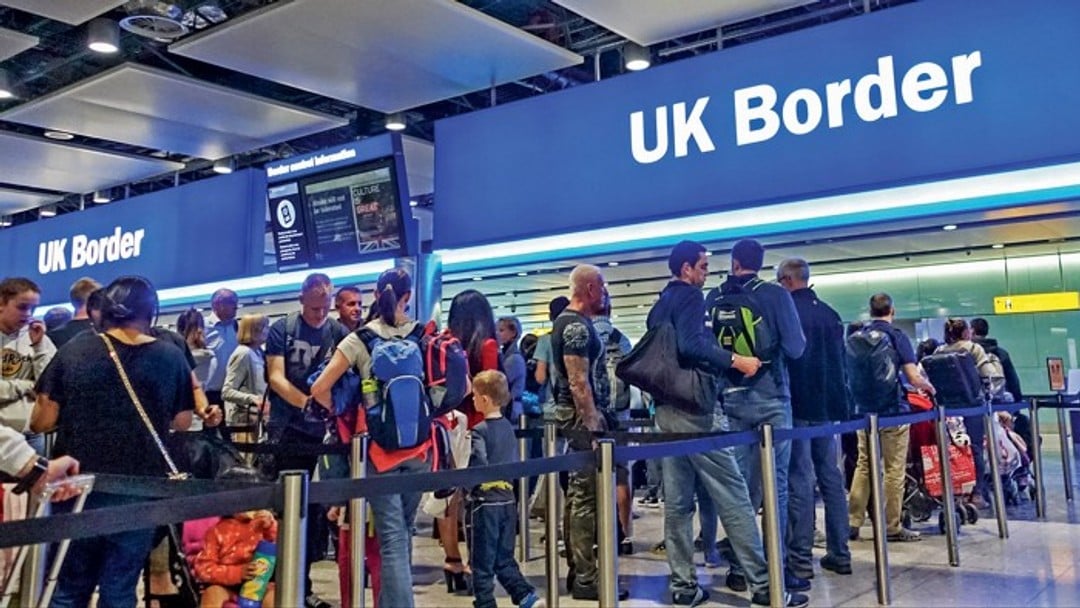
The Home Office has indicated that immigration policy reforms remain on track, with forthcoming legislation expected to address deportation thresholds, detention capacity, and bilateral returns arrangements. Whether street-level expressions of discontent accelerate or complicate that legislative pathway remains a subject of analysis in political circles.
No official inquiry into the specific conduct of Saturday’s policing operation has been announced, though routine post-event reviews are standard practice. Community organisations in the city have called for calm and constructive engagement, stressing that public safety and mutual respect should guide future discussions on these sensitive issues.
The Manchester event adds another reference point to the ongoing national conversation about balancing border control, social cohesion, and the rule of law in a pluralistic society. As policy development continues, attention will remain on how authorities respond to both organised advocacy and spontaneous public sentiment.