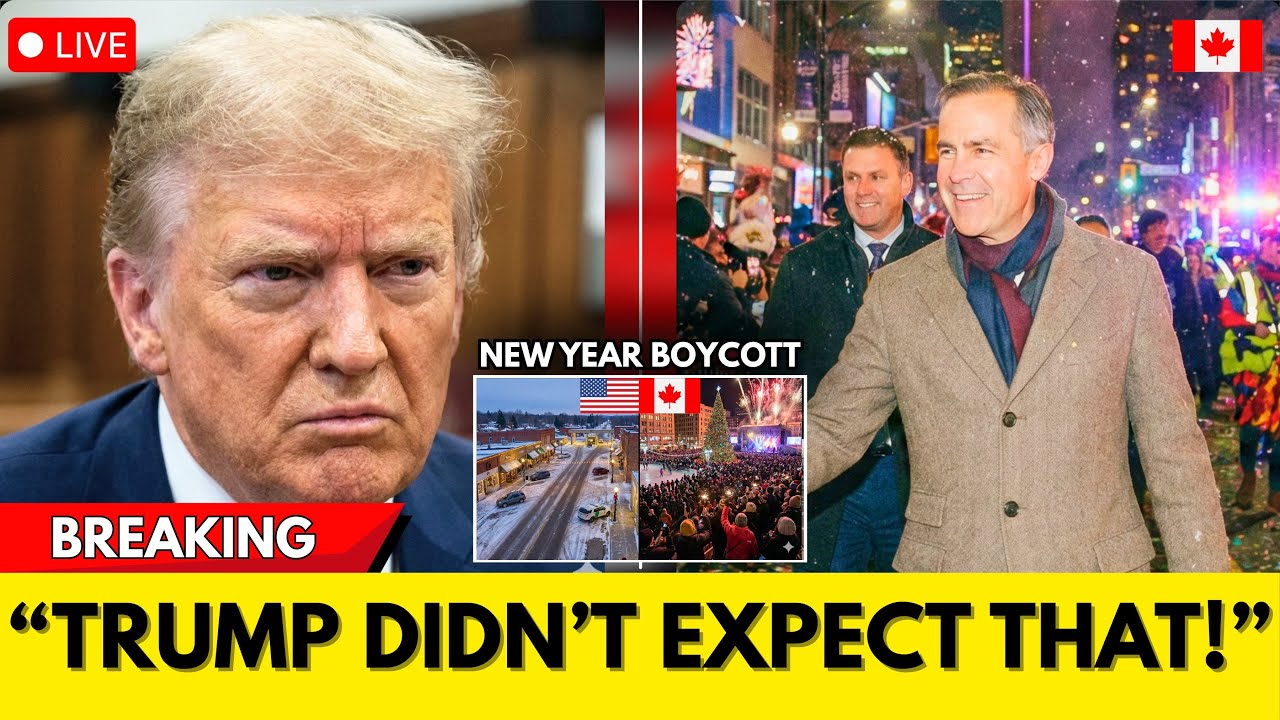
What began as rhetorical bravado from Donald Trump has evolved into a costly political and economic standoff, one now openly unsettling lawmakers in Washington. After months of confrontational language toward Canada — including repeated suggestions that the country should be treated as a subordinate partner — the backlash has arrived not through formal retaliation, but through absence. Canadian tourists, long the single largest international visitor group to the United States, have increasingly chosen not to cross the border. The result is a widening tourism gap that Congress appears unwilling to defend, let alone escalate.
Behind closed doors on Capitol Hill, resistance has grown. Members of United States Congress from both parties have signaled discomfort with a posture that carries heavy domestic costs while offering no clear strategic return. Hearings, internal briefings, and committee-level discussions have increasingly focused on downstream economic damage rather than geopolitical theatrics. What was once framed by the White House as leverage now reads, to many lawmakers, as self-inflicted harm.
The scale of the disruption is difficult to ignore. Canadians account for more than a quarter of all international visitors to the United States in a typical year, supporting hotels, restaurants, retail outlets, ski resorts, and border economies that depend on predictable seasonal flows. Data referenced by industry groups and lawmakers suggests that in 2025 those flows weakened sharply, with declines in both air and land travel from Canada. Border crossings fell by double digits in several months, while regional tourism boards across northern states reported abrupt cancellations and empty inventory.
According to Statistics Canada, return trips by Canadians to the United States dropped markedly compared with the previous year, particularly for land travel — a critical category for border communities. At the same time, United States Travel Association warned lawmakers that even modest reductions in Canadian travel translate into billions of dollars in lost spending and tens of thousands of jobs placed at risk. These assessments, while not framed as definitive causal judgments, have been widely circulated on Capitol Hill as indicators of mounting vulnerability.

The reaction from affected regions has been increasingly urgent. In states like Montana, Maine, New Hampshire, and Vermont, business owners who rely on Canadian visitors have described an atmosphere of quiet shock. Summer weekends that typically sell out have left rooms empty. Campgrounds have reported steep drops in reservations. Duty-free shops near border crossings have reduced staff and operating hours. In Florida, where Canadian “snowbirds” are a core part of the winter economy, real estate agents and hospitality operators have noted a visible slowdown in both tourism and seasonal property activity.
Lawmakers have taken note. Several senators, particularly those representing border states, have privately expressed concern that the administration’s tone toward Canada is eroding one of the United States’ most reliable economic relationships. A small delegation even traveled to Ottawa to discuss the situation with Canadian officials, an unusual move that underscored the seriousness with which Congress views the fallout. While no formal apology was issued, the visit itself was widely interpreted as an effort to contain damage rather than advance confrontation.
Public opinion data in Canada adds another layer of complexity. Multiple surveys have indicated that a significant share of Canadians feel less welcome in the United States than in previous years, citing political rhetoric and trade tensions as contributing factors. For many, the decision to avoid U.S. travel has been framed not as protest but as personal choice — redirecting vacation spending to domestic destinations or to countries perceived as more stable and respectful. That shift, analysts warn, may prove difficult to reverse even if political conditions change.
What makes the moment particularly sensitive in Washington is the institutional signal it sends. Congress has not formally repudiated the White House’s stance, but its reluctance to support further escalation — combined with its focus on mitigating losses — reflects a quiet rebalancing of power. The episode has become a case study in how symbolic dominance plays can backfire when they collide with consumer behavior and regional economics.
The broader implications remain unresolved. Tourism patterns, once altered, do not automatically snap back. Travelers establish new habits, discover alternatives, and build loyalty elsewhere. For lawmakers watching revenue decline in their districts, the concern is not only about the current season but about long-term erosion of goodwill. Trump’s Canada gambit, once framed as assertive positioning, is increasingly viewed in Washington as a cautionary example of how political rhetoric can carry consequences measured not in headlines, but in empty rooms, lost jobs, and a relationship left visibly strained.