By XAMXAM
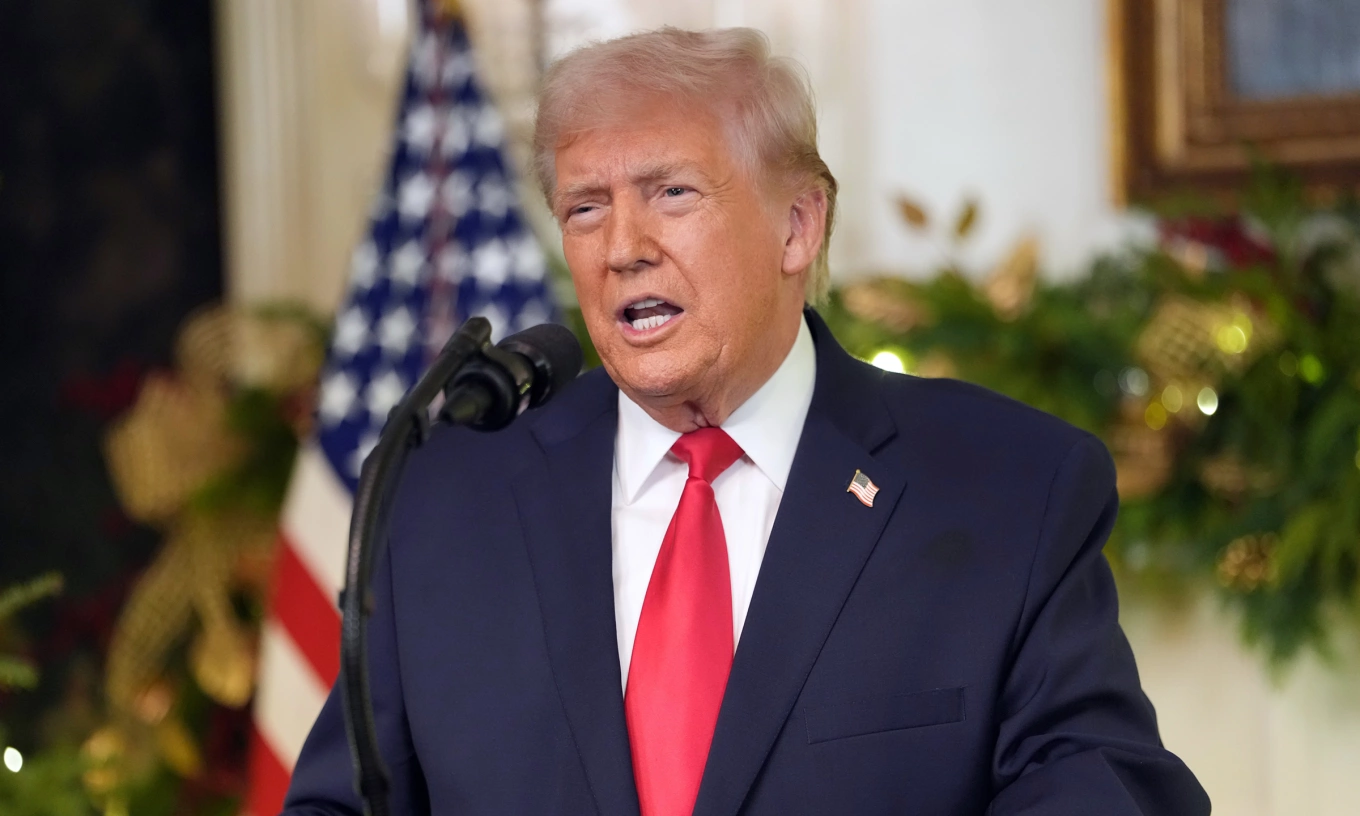
At a White House roundtable, T.r.u.m.p offered a familiar prescription for a familiar American ache: tariffs. If Canada supplies something the United States needs, raise the border wall of costs high enough, he suggested, and domestic production will rush in to replace it. In this case, the target was potash, a key ingredient in fertilizer and a quiet pillar of modern farming. “Very severe tariffs,” he said, would “bolster” American production. The implication was simple: squeeze Canada, and U.S. agriculture wins.

Within hours, the people who actually plant America’s food started calculating the bill.
Potash is not a boutique commodity. It is one of the three essential nutrients that keep yields high and fields productive: nitrogen, phosphate, and potassium. Potash supplies the potassium that helps crops retain moisture, resist disease and translate good weather into a profitable harvest. Without it, corn in Iowa, wheat in Kansas and potatoes in Idaho do not merely become less efficient. They become less viable. There is no neat substitute waiting on a shelf. In farm economics, potash is closer to oxygen than to a negotiable input.
That is why tariff threats on potash do not land like tough talk. They land like an announcement of higher operating costs, lower yields or both. American agriculture is a thin-margin business that depends on predictability — not just rain and sun, but prices for seed, fuel and fertilizer. When Washington adds volatility to the inputs that farmers cannot avoid, it is not “pressure” on a trading partner. It is a tax on a domestic industry.
The numbers underscore the dependence. The United States uses roughly 5 million tons of potash annually, while producing only a small fraction of that at home. Imports fill the gap, and Canada supplies the overwhelming share of those imports, largely from Saskatchewan, which sits atop some of the world’s richest deposits. That geology is not a policy choice. It is a fact of the continent. And it is precisely what makes the tariff logic so precarious: you cannot tariff your way into new mineral deposits.
T.r.u.m.p’s argument rests on a belief that prices, if forced high enough, will conjure self-sufficiency. But potash mining does not respond on election cycles. Building a new mine is measured in years of surveying, permitting, construction and infrastructure — often a decade or more, even under friendly regulatory conditions. The timeline for “make your own fertilizer very soon” collides with the timeline for “planting season begins in a few months.” Farmers do not get to pause the calendar while Washington tries to bend geology.
This is why the episode feels less like a negotiation tactic and more like a governing philosophy: treat interdependence as weakness, then legislate against it. Yet interdependence is the operating system of North American agriculture. The U.S. exports crops and processed food. Canada exports fertilizer inputs and energy. Each side benefits from specialization that lowers costs and raises reliability. When that system is disrupted, the costs do not remain politely at the border. They move through rail lines, grain elevators, food processors and grocery stores.
The most immediate consequence of severe tariffs would be price shock. Fertilizer markets react quickly to fear because farmers have narrow windows to buy and apply nutrients. If the cost of potash spikes, farmers face harsh choices: pay up and hope crop prices rise enough to compensate; apply less and accept lower yields; or shift acreage and crop mix in ways that ripple across supply chains. None of those choices are free. Each one is a pressure point that eventually reaches consumers, often in the form of higher food prices.
The longer-term consequence may be strategic, and it is the kind Washington tends to notice only after it becomes irreversible. Canadian producers are not captive suppliers. They sell to the United States because the relationship has been stable and the logistics are convenient. But global demand for fertilizer inputs is large, and alternative buyers exist — in Europe, in Asia, in Latin America. When an importing country threatens to make a market unprofitable, suppliers do what suppliers always do: they diversify. Contracts shift. Shipping routes adjust. New relationships become habit. And once those relationships harden into infrastructure and long-term agreements, they do not automatically unwind when a tariff threat recedes.
This is the paradox of using tariffs on essential inputs: you can end up teaching your supplier how to live without you faster than you learn how to live without them.
There is also a geopolitical irony baked into the potash story. The world’s major potash exporters are concentrated. If the United States were to reduce Canadian supply through tariffs, the remaining alternatives are not simply “other friendly countries.” They include exporters whose alignment with U.S. interests is, at best, uncertain and, at worst, openly adversarial. In practice, forcing a shift away from Canada risks trading a dependable democratic partner for a narrower, more fragile supply chain — one that could amplify global prices and concentrate leverage elsewhere.
In Washington, none of this needs to be framed as sympathy for Canada. It is a straightforward point about how agriculture works. Tariffs can punish foreign competitors when domestic substitutes exist or can be scaled quickly. Potash is different. It is a constrained resource with long lead times and few reliable alternatives. Treat it as a bargaining chip, and you are effectively bargaining with your own farmers’ input costs — and with the price of food.
T.r.u.m.p has often responded to trade-war fallout with subsidies, presenting aid packages as proof that farmers are being protected. But subsidies do not make fertilizer cheaper; they merely reimburse a portion of the damage after the fact. They are political, temporary and contingent. A stable supply of affordable inputs is structural. A check from Washington is a patch.
What the potash episode exposes is not just a vulnerability in American agriculture, but a misunderstanding about leverage. If you rely on a neighbor for the bulk of a critical input, threatening that input does not display strength. It reveals dependence — and it turns the act of farming into collateral in a contest that farmers did not choose.
If the goal is to make American agriculture more resilient, the path runs through supply-chain security, strategic stockpiles, domestic capacity where feasible and predictable cross-border rules where it is not. It does not run through “very severe tariffs” that spike costs, scramble markets and invite the very outcome the policy claims to avoid: American farmers paying the price for a fight they can’t afford to win.