Why Canada Suddenly Spent Billions on Defense: A Nation Racing Against Time

Canada is undergoing a historic transformation—one so abrupt and far-reaching that few inside or outside the country saw it coming. For decades, Canada was defined by cautious defense planning, deferred modernization, and a political culture that treated military spending as something that could always wait. But over the past few months, that identity has been upended. Almost without warning, Canada has unlocked billions of dollars and launched the most aggressive defense rebuild in its modern history.
The pivot was not triggered by a traditional budget cycle nor a sweeping political mandate. Instead, it grew out of an urgent realization: the world has changed faster than Canada has been willing to acknowledge.
The moment came quietly, delivered in a single sentence. Canada would spend an additional $8.7 billion on defense—not over several years, but before March. What sounded procedural ignited shockwaves across the defense industry. Executives and analysts who had spent decades hearing vague pledges immediately recognized that something fundamental had shifted. This was not rhetoric. It was a deadline.
Almost overnight, defense manufacturers long starved of investment were thrust into a new environment defined by urgency rather than stagnation. Firms producing satellites, armored vehicles, and virtual-reality training systems began expanding their facilities. Some restarted assembly lines that had been idle for years. For an industry used to navigating uncertainty, this was a rare moment of clarity: Ottawa finally meant business.
But the spending announcement was only the beginning. The government declared that Canada would reach NATO’s 2 percent of GDP defense target—a benchmark many had deemed politically impossible—five years early. Allies who had quietly questioned Canada’s commitment were now watching with surprise, and a degree of skepticism.
Behind the scenes, the motivation was sobering. Canada’s military was not simply underfunded; insiders described it as an aging institution in structural decline. The nation needed new submarines, new warships, new fighter aircraft, new coastal defense systems, and a modernized Arctic surveillance network—all at once. Personnel shortages added a deeper strain, with as many as 14,000 positions unfilled, creating operational gaps and long training bottlenecks that drained morale.
For nearly 30 years, successive governments postponed major repairs, trusting geography, diplomacy, and U.S. protection to make up for the gaps. That comfort zone has collapsed. Pressure now comes from every direction: from Russian and Chinese activity in the Arctic, from a global arms race driving up costs, and from the United States—particularly during the Trump era—insisting that allies who fail to meet commitments will face consequences.
Canada’s reliance on American suppliers—responsible for 75 percent of its defense capital spending—became more than an economic weakness. It was a strategic liability. The new policy aims to reverse that imbalance by rebuilding Canada’s domestic defense industry, giving it the capacity to produce satellites, sensors, aircraft components, and specialized military systems at home.
Yet ambition runs headlong into bureaucracy. Canada’s procurement system is notorious for slow processes, layers of approvals, and timelines that can stretch a decade. Even as billions become available, spending them effectively remains a daunting challenge. The newly created Defense Procurement Agency hopes to break the bottleneck, but it faces its own structural paradox: to hire the people who will speed up procurement, it must first hire people who can hire others.
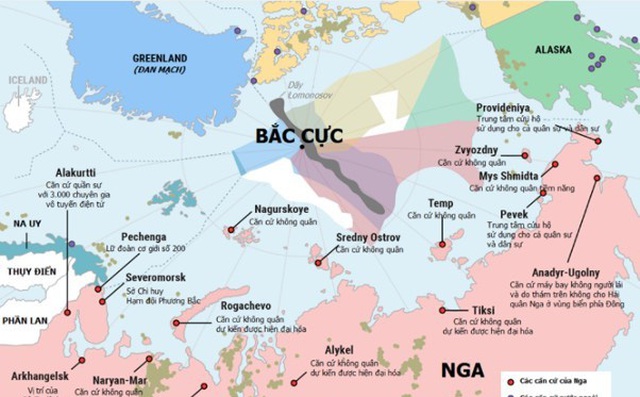
The Arctic—Canada’s most vulnerable frontier—adds urgency. While Moscow reopens Cold War bases and Beijing inserts itself into northern waters, northern communities face the consequences of political promises that never arrived. An unfinished port from 2007 stands as a silent monument to the country’s inaction. For residents living in the region, sovereignty is not an abstract policy idea; it is a daily reality.
Canada’s challenge is not simply spending more—it is defining what kind of military it wants. Peacekeeping once shaped the nation’s global identity. Afghanistan pushed Canada into combat roles. Wildfires and natural disasters turned the military into a domestic emergency force. Now, as tensions rise in the Arctic and beyond, Canada must reconcile these identities into a coherent long-term strategy.
The window for hesitation has closed. Billions are flowing, factories are expanding, and policymakers insist that Canada will no longer lag behind. But the ultimate test is whether the country can convert urgency into durable capability. Funding alone cannot repair decades of drift. Speed alone cannot shape strategy.
Canada has finally chosen to act. The question now is whether it can move fast enough—before the world decides that its awakening came too late.