Federal Judge Orders Trump Administration to Account for Due Process of 137 Men Sent Abroad
Washington — A federal judge has ordered the Trump administration to submit, within days, a concrete plan explaining how it intends to provide constitutionally required due process to 137 men whom the government transferred out of U.S. custody and ultimately sent to Venezuela, following earlier removals to El Salvador. The ruling underscores an escalating judicial confrontation over executive power, immigration enforcement, and the limits of national security authority.
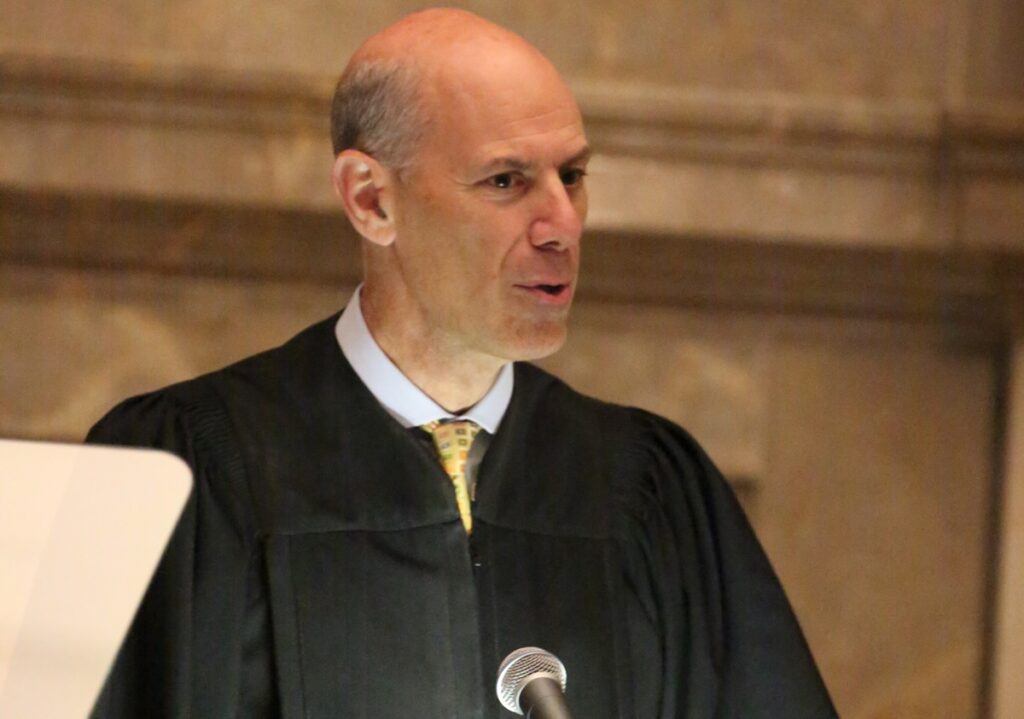
Chief Judge James E. Boasberg of the U.S. District Court for the District of Columbia granted the administration a short extension but set a firm deadline of January 12 for the government to explain how it will either return the men to the United States or provide legally sufficient hearings abroad. The order follows months of litigation brought by the American Civil Liberties Union, which represents the men as a certified class.
At the center of the case is the Trump administration’s use of the Alien Enemies Act — a rarely invoked wartime statute — to justify the rapid removal of noncitizens without individualized hearings. The plaintiffs argue that the government violated their Fifth Amendment rights by denying access to courts, legal counsel, and habeas corpus review.
Judge Boasberg has now agreed.
A Case Years in the Making
The lawsuit, J.G. v. Trump, has been pending since March, when civil-rights lawyers challenged the administration’s decision to place dozens of detainees on aircraft bound for El Salvador, where they were confined at the Centro de Confinamiento del Terrorismo, or CECOT, a maximum-security prison that human-rights organizations have repeatedly described as abusive and opaque.
Court records show that Judge Boasberg attempted to halt the transfers, issuing orders directing the government to keep the detainees within U.S. jurisdiction. Those orders were not followed. Planes departed anyway.
In April, Judge Boasberg found probable cause that federal officials had engaged in criminal contempt by defying his rulings. That inquiry has since become entangled in appellate proceedings, but the judge has continued to press forward on the underlying constitutional questions.
In December, he ruled on summary judgment that the government had violated the detainees’ due process rights and ordered federal agencies to propose a remedy.
That proposal was due January 5.
It did not arrive.
Venezuela as a Legal Escape Hatch?
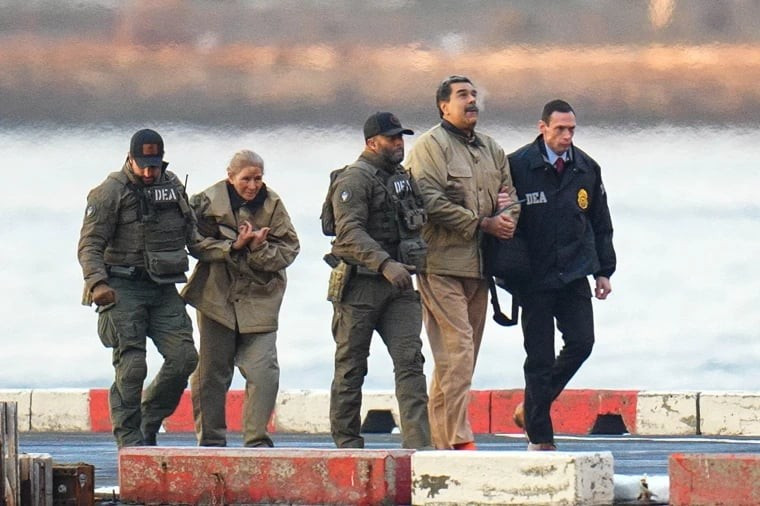
Instead, the Department of Justice asked for more time, citing “substantial changes on the ground in Venezuela” following what the government described as the apprehension of Nicolás Maduro. In a filing signed by senior DOJ attorneys, the administration argued that the situation was “fluid” and required additional time to determine what remedies might be feasible.
The explanation was met with skepticism by both the plaintiffs and the court.
“The government cannot create chaos and then point to that chaos as an excuse to avoid constitutional obligations,” one civil-rights attorney involved in the case said in a statement shared widely on legal commentary platforms and social media.
Judge Boasberg appeared to agree. While granting a limited extension, he made clear that uncertainty abroad does not relieve the executive branch of its duties under U.S. law.
“The government shall submit its proposal either to facilitate the return of the plaintiffs to the United States or to otherwise provide them with a hearing that satisfies the requirements of due process,” the judge wrote in a minute order entered January 5.
Habeas Corpus and the Limits of Power
Legal scholars say the case may become one of the most significant separation-of-powers disputes of the Trump presidency.
“This is not really about immigration enforcement,” said a former federal prosecutor interviewed on a widely viewed legal analysis channel. “It’s about whether the executive can physically remove people beyond the reach of the courts and then claim the Constitution no longer applies.”
The Supreme Court has long held that noncitizens physically removed from U.S. territory may still retain certain constitutional protections when the government exercises control over their detention. Judge Boasberg’s ruling relies heavily on that precedent.
If the administration fails to comply, it could face renewed contempt proceedings — a prospect that has alarmed some conservative legal commentators and energized civil-rights advocates.
Political Pressure and Judicial Independence
Judge Boasberg has become a frequent target of political attacks from administration allies, who have accused him — without evidence — of ideological bias. Yet his background complicates that narrative.
A Republican appointee with longstanding ties across ideological lines, Boasberg is widely regarded within the legal community as a cautious institutionalist. He has served under both Democratic and Republican administrations and is known personally to several conservative Supreme Court justices.
That has not insulated him from criticism.
“This judge is enforcing the law as written,” said a constitutional law professor quoted in recent national commentary. “The backlash tells you more about the stakes than about the judge.”
What Comes Next
By January 12, the administration must present a detailed plan. Options could include arranging transportation back to the United States, conducting remote hearings, or negotiating access for U.S. courts to review detentions abroad.
Each option presents logistical and political challenges — but the judge has made clear that delay is no longer acceptable.
For the 137 men at the center of the case, the ruling offers a rare glimmer of accountability in a process that has thus far operated largely beyond public view.
For the broader legal system, the case may define whether constitutional protections can be effectively nullified by geography — or whether courts will insist that due process follows government power wherever it goes.
As one widely shared legal analyst put it this week, “If the government can evade the Constitution by putting someone on a plane, then the Constitution is optional. And that is exactly what the courts exist to prevent.”