A Quiet Revolt Inside the Republican Party Tests the Limits of Presidential Power

Washington — Late-night phone calls, hurried text messages, and whispered conversations in Capitol Hill corridors rarely signal a turning point in American governance. More often, they presage another fleeting controversy, destined to dissolve under partisan pressure. But what unfolded in Washington over the past week has felt different, even to lawmakers accustomed to political brinkmanship.
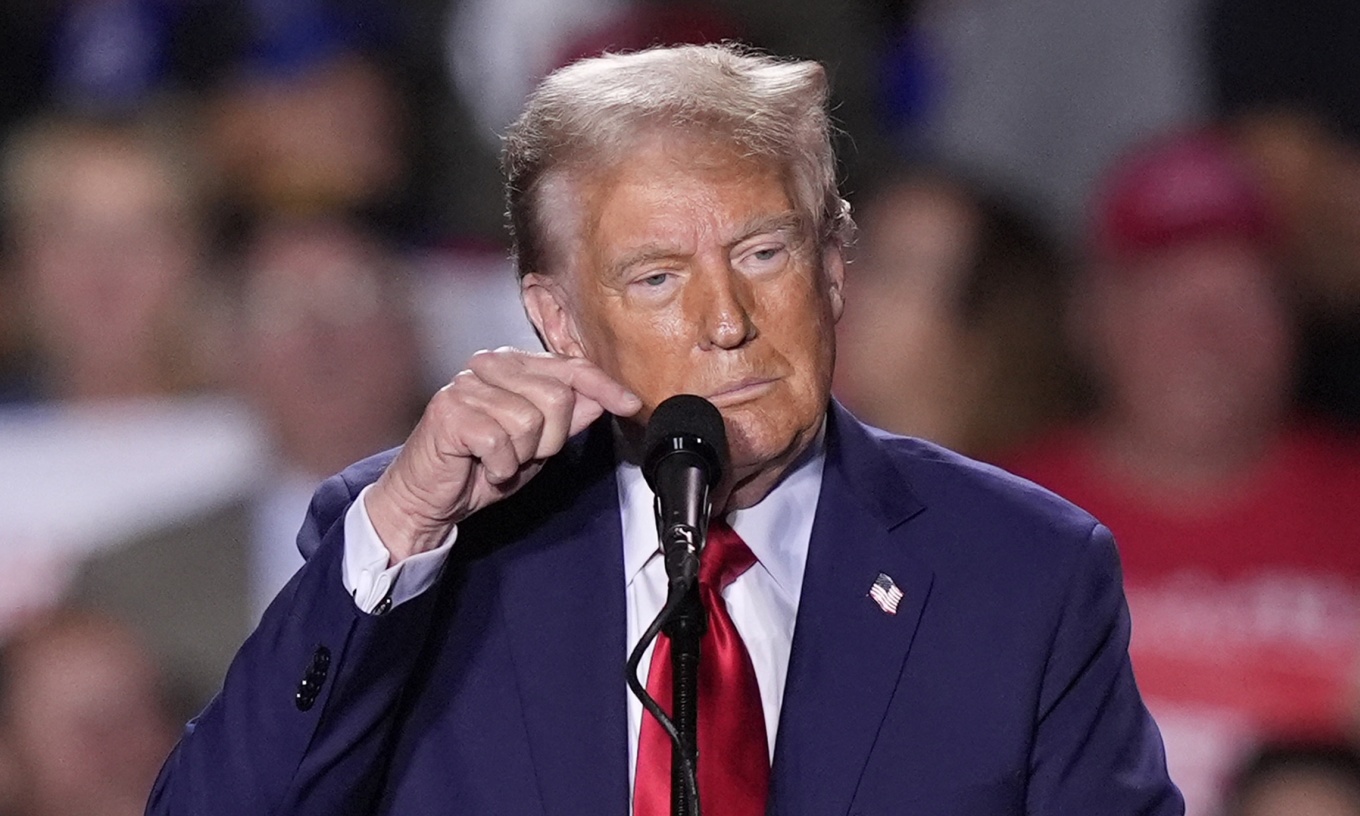
According to multiple accounts circulating among congressional staff and widely discussed across U.S. political media, President Donald Trump placed an angry call to Senator Susan Collins of Maine, a Republican, berating her with profanity after she voted to advance a resolution limiting his authority to initiate military action without congressional approval. The target was not a Democrat, not a journalist, not a longtime adversary. It was a member of his own party.
That detail matters. Because behind that call lies a broader, quieter development: a small but significant group of Republican lawmakers has begun organizing — deliberately and legislatively — to constrain the president’s power on the most consequential question the Constitution assigns to Congress: war.
A Break From Years of Deference
For much of Trump’s political career, resistance within the Republican Party has been more performative than substantive. Expressions of “concern” would surface briefly, only to be followed by party-line votes and public unity. This time, however, Republicans joined Democrats to advance a war powers resolution — a formal legislative mechanism designed to restrict the president’s ability to use military force without congressional authorization.
Such resolutions are rare. Successful ones are rarer still. They are typically viewed as symbolic gestures, unlikely to survive presidential vetoes or political backlash. Yet the move itself signals something new: members of the president’s own party concluded that legal guardrails were necessary to prevent potentially irreversible actions.
As one senior aide put it in private conversations later amplified across political social media, this was “not a policy disagreement — it was an intervention.”
Greenland and the Alarm Bell
The immediate trigger for the revolt was not a single speech or executive order, but rhetoric that many lawmakers found profoundly destabilizing. President Trump has repeatedly floated the idea of using military force to acquire Greenland, an autonomous territory belonging to Denmark, a NATO ally.
The suggestion initially struck many observers as rhetorical excess or provocation. But repeated references, paired with the administration’s broader posture toward emergency powers, forced lawmakers to confront a sobering possibility: that the president was serious.
Senator Chris Murphy of Connecticut articulated the concern plainly in remarks that circulated widely online. Under NATO’s Article 5, an attack on one member state is considered an attack on all. Greenland is Danish territory. Military action there would not merely provoke Denmark; it would place the United States in direct conflict with the alliance it helped build and lead for more than seven decades.
For Republicans who have spent years emphasizing national security credentials and alliance stability, that prospect was not theoretical. Many have sat through classified briefings and understand how quickly rhetoric can become operational reality.
Power as Personal Authority
The president’s reaction to resistance only intensified those concerns. Rather than negotiating or attempting to persuade dissenting senators, Trump reportedly lashed out. His call to Senator Collins, as described by people familiar with the exchange and echoed in political reporting online, was not an attempt at reconciliation. It was an act of intimidation.
To many lawmakers, the episode revealed how the president views constraints on his authority — not as constitutional design, but as personal betrayal. When limits provoke rage rather than debate, critics argue, they expose a belief that power belongs to the individual rather than the office.
That perception is what has unsettled Republicans who might otherwise tolerate aggressive executive action. In their view, the issue is no longer Trump’s personality but the precedent being set.
Emergency Powers and the Pattern of Control
The war powers dispute unfolded alongside another controversial move: the declaration of a national emergency tied to Venezuelan oil assets. Framed publicly as an energy security measure, the declaration drew scrutiny for its timing and scope. Analysts noted that any tangible benefit from those assets would take years to materialize and would primarily benefit large energy corporations rather than consumers.
What the declaration did accomplish immediately was a familiar one: it shifted authority away from Congress and toward the executive branch.
Emergency declarations are meant for imminent crises. Over time, they have become tools presidents use to bypass oversight. Lawmakers across party lines recognize the pattern. As scrutiny increases, new emergencies emerge. Accountability is postponed. Attention shifts.
Senator Sheldon Whitehouse of Rhode Island has focused on the procedural consequences of this pattern, pressing the administration on delayed document releases, missed statutory deadlines, and stalled inspector general reviews. These inquiries, while less dramatic than speeches or votes, strike at something administrations often fear more: paper trails.
Records do not fade with the news cycle. They accumulate.
Thinking Beyond One Presidency
For Republican senators now pushing back, the concern extends beyond Trump himself. Constitutional precedents, once set, rarely revert. Powers claimed by one president become available to the next.
If emergency declarations can routinely substitute for legislation, Congress weakens. If threats of military action against allies go unchecked, alliances fray. If oversight is treated as sabotage, accountability erodes.
As one longtime Republican lawmaker privately acknowledged in comments later paraphrased across political media, “If we normalize this now, we won’t be able to control it later — even when we want to.”
This calculus explains why the revolt, though limited in size, is structurally significant. It is driven less by ideology than by institutional self-preservation.
What to Watch Next
Whether this moment becomes a lasting shift or a brief deviation remains uncertain. Several indicators will matter.
First, the fate of the war powers resolution itself. If it gathers enough support to withstand a veto, it would mark a rare reassertion of congressional authority.
Second, the progress of oversight efforts. Inspector general reviews, document demands, and compliance with statutory deadlines will reveal whether institutional mechanisms continue to function under pressure.
Third, the political consequences for dissenters. If Republicans who voted against the president retain their committee positions and survive primary challenges, resistance becomes viable. If they are punished, it may fade.
Finally, the president’s rhetoric bears watching. Historically, increased pressure has produced escalation — more emergencies, sharper language, stricter loyalty tests.
A Test of the System

This story is not ultimately about one man. It is about whether American governance can constrain a leader who resists being constrained. Democracies face such tests periodically. Some bend and recover. Others bend until they break.
For now, the system is responding — imperfectly, unevenly, but visibly. Republicans are crossing party lines. Oversight questions are being asked. Votes once considered unthinkable are taking place.
None of this guarantees an outcome. But it underscores a central truth of democratic government: rules matter only when people choose to enforce them.
In that sense, the quiet revolt within the Republican Party is less a rebellion than a reminder — that power in the United States is meant to be shared, limited, and accountable, even when doing so is politically costly.