Canada’s Quiet Rail Investment Is Redrawing the Map of North American Trade
For more than a century, Canada’s economic geography followed a simple rule: if goods were headed to global markets, they almost always passed through the United States first. Grain from the Prairies, potash from Saskatchewan, minerals from the North—all flowed south through American railways and ports, generating fees, delays and, crucially, leverage.
That assumption is now being challenged by a decision that arrived without emergency summits or dramatic press conferences. In late 2025, the Canadian federal government and the province of Manitoba committed $262 million to upgrading the Hudson Bay Railway, transforming a long-dismissed Arctic route into a Class One freight corridor capable of carrying heavy unit trains at scale.
The implications extend far beyond northern Manitoba. The investment signals a strategic shift in how Canada thinks about trade, sovereignty and risk—and it may quietly weaken a form of American economic leverage that has long been taken for granted.
A Railway Once Written Off
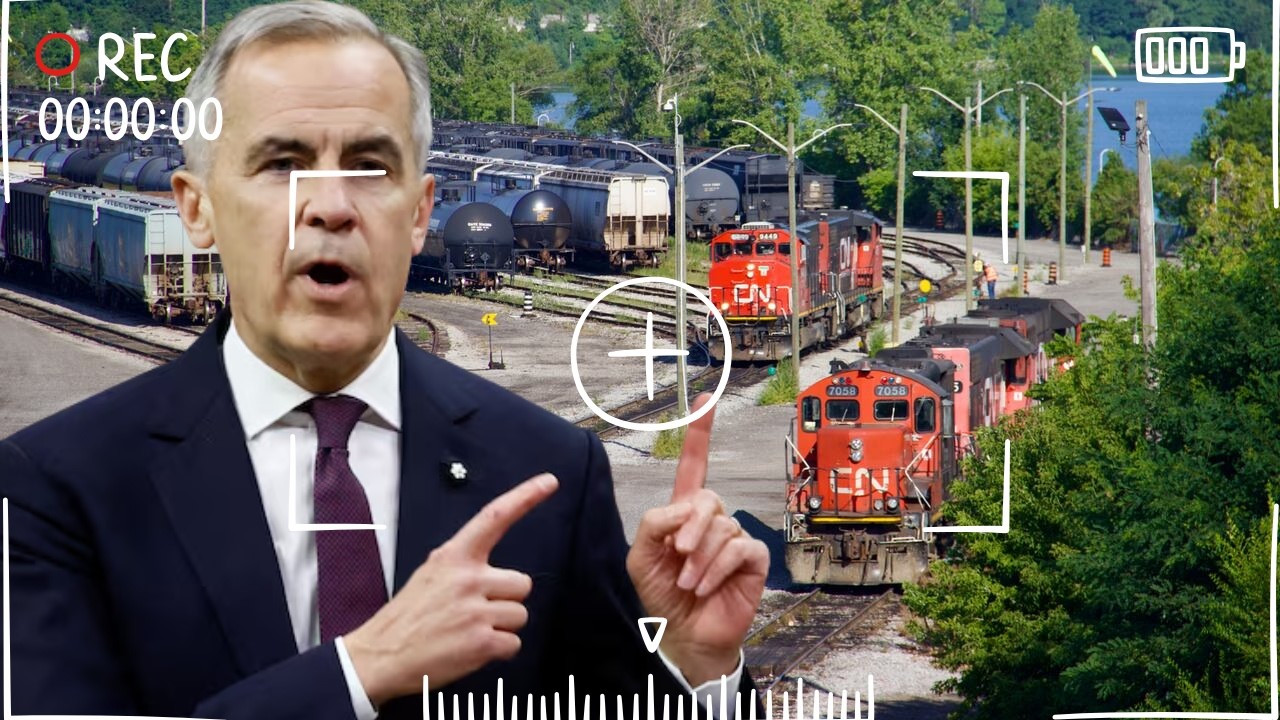
The Hudson Bay Railway stretches roughly 1,300 kilometers from the Prairie heartland to the Arctic port of Churchill, Manitoba. Built in the early 20th century, its purpose was straightforward: provide Western Canada with a direct route to Europe that bypassed U.S. infrastructure.
The idea proved ahead of its time. Permafrost, muskeg, flooding and extreme cold made maintenance costly and reliability elusive. By the 1990s, Ottawa sold the line for a symbolic $1. After catastrophic flooding in 2017 severed the track, the railway was widely declared obsolete.
When a consortium representing 41 First Nations communities acquired the line in 2018, many analysts viewed the move as symbolic rather than commercial. The railway, they argued, belonged to history.
That judgment no longer holds.
From Symbol to Strategic Asset
The 2025 funding package is not a patchwork repair. It is a comprehensive rebuild designed to meet Class One standards, the highest freight designation in North America. The upgrades include reinforced roadbeds engineered for permafrost stability, heavier rail and ties rated for unit trains, rebuilt bridges and culverts, and advanced monitoring systems using ground-penetrating radar, drones and predictive analytics.
Class One status matters because it signals permanence. It tells exporters, investors and insurers that the corridor can handle sustained, large-scale commercial traffic—not just seasonal or experimental shipments.
And traffic is already moving. The Port of Churchill has completed multiple seasons of mineral exports to Europe, and agreements are in place to route grain and fertilizer through the Arctic gateway.

Why This Matters Now
On paper, the Hudson Bay route is not new. What has changed is the strategic context.
Over the past decade, trade policy uncertainty—especially during Donald Trump’s first presidency—exposed how dependent Canada remained on U.S. infrastructure even when formal trade agreements were intact. Tariffs did not need to be permanent to cause damage. The threat alone distorted investment decisions and chilled long-term planning.
The new railway does not replace southern routes through Vancouver or U.S. ports. Instead, it does something more subtle: it removes monopoly dependence.
Grain from Saskatchewan and Manitoba can now reach European markets via a shorter distance. Potash—of which Canada is the world’s largest exporter—can move without passing through American logistics networks. Critical minerals used in electric vehicles and defense systems can ship directly to European refineries.
In each case, the United States loses not all traffic, but something more valuable: guaranteed necessity.
The Economics of Optionality
Trade leverage is strongest when alternatives are scarce. For decades, American ports and railways benefited from structural dependence rather than pure efficiency. Canadian exporters paid fees not because routes were optimal, but because they were unavoidable.
The Hudson Bay Railway introduces optionality. Exporters can now choose routes based on cost, distance and reliability rather than political risk. Once that choice exists, leverage erodes—even if traffic does not immediately shift en masse.
This is why the investment is difficult to counter. It violates no trade rules, triggers no disputes and imposes no tariffs. It is simply Canada investing in Canadian infrastructure to move Canadian goods through Canadian territory.
There is no mechanism in Washington to stop it.
Climate, Technology and Timing
Ironically, forces that once undermined the railway are now strengthening it. Advances in materials science and predictive maintenance have made permafrost management far more reliable than in the 20th century. Climate change, while catastrophic in many respects, has lengthened the shipping season in Hudson Bay from roughly four months toward five or six, with icebreaker support making further extensions plausible.
What was marginally viable decades ago is now economically competitive.

Strategic, Not Ideological
This shift should not be misread as Canada “choosing” Europe over the United States or engaging in ideological realignment. Southern routes will remain essential for Pacific trade and time-sensitive shipments.
The change is strategic, not symbolic. Canada is reducing exposure to policy volatility by building redundancy into its supply chains. Sovereignty, in this sense, is no longer just a legal concept. It is operational.
As Chris Avery, chief executive of the Arctic Gateway Group, which operates the railway and port, put it, the goal is to “diversify export markets” and serve the Canadian national interest—not to provoke confrontation.
A Broader Signal
Other middle-sized economies are watching closely. The lesson is not that every country should build Arctic railways, but that dependence on a single trade corridor carries political risk. In a fragmented global economy shaped by pandemics, wars and sanctions, diversification is increasingly viewed as prudence rather than disloyalty.
For the United States, the development is less a threat than a warning. Alliances remain strong, but credibility and predictability matter. When partners quietly invest in alternatives, it is rarely an act of hostility. It is insurance.
The Hudson Bay Railway will not dominate North American trade overnight. But it does something more enduring. It redraws the map of what is possible.
And once alternatives exist—once steel, concrete and capital are in place—leverage does not return simply because threats are repeated more loudly.
Canada’s northbound railway is not just a transportation project. It is a statement, delivered quietly, that in modern trade, power belongs less to those who demand dependence than to those who build options.