Canada’s Quiet Leverage as Trump’s Trade Threats Put North American Stability at Risk
The warning signs are becoming harder to ignore. From fertilizer to fighter jets, from diplomatic decorum to auto assembly lines, the Canada–U.S. relationship is entering one of its most strained periods in decades. At the center of the turbulence stands President Donald Trump, once again wielding tariffs, threats and public pressure as instruments of leverage. But this time, the consequences may extend far beyond a single sector or negotiation cycle.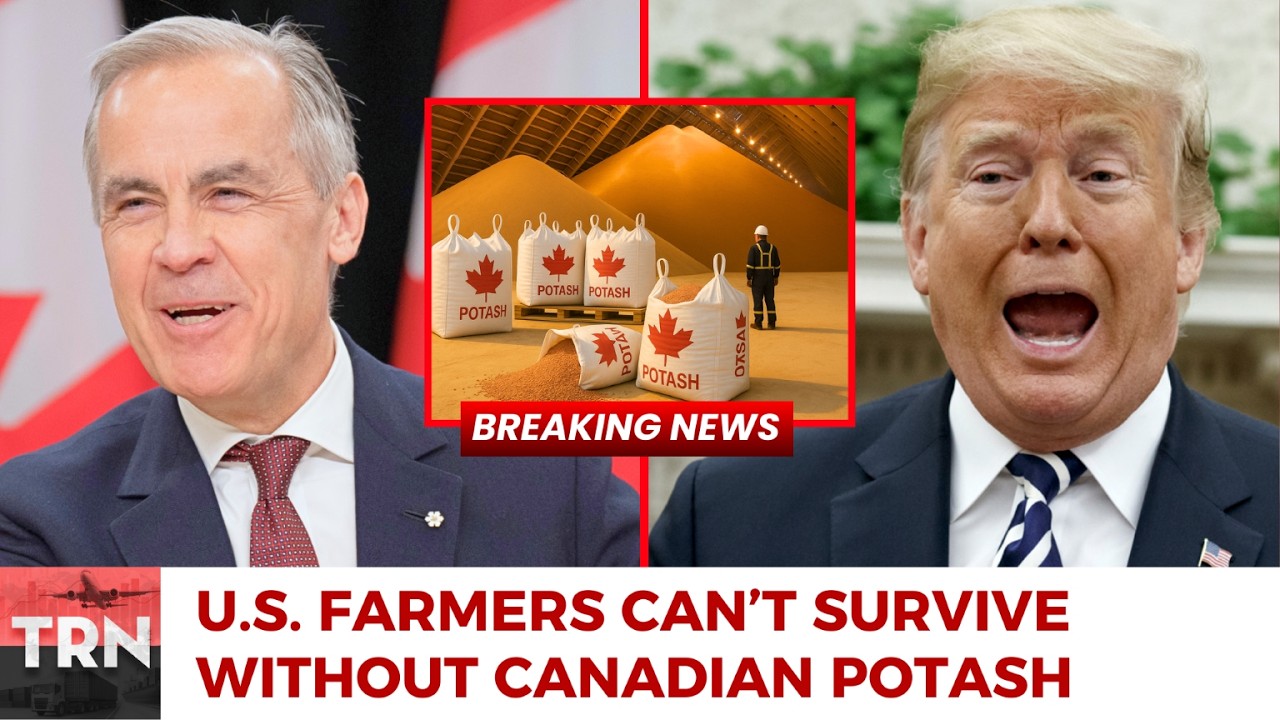
The latest flashpoint is potash, a mineral essential to global food production and indispensable to American agriculture. In 2024, potash was Canada’s top mineral export to the United States, valued at $4.2 billion, most of it sourced from Saskatchewan. The U.S. imports nearly 90 percent of its potash, about 80 percent from Canada. There is no realistic domestic substitute. Yet Trump has floated the idea of imposing steep tariffs on Canadian fertilizer, reviving a tactic that analysts say could backfire catastrophically.
The memory of 2018 looms large. Trump’s tariffs on China triggered retaliatory measures that devastated U.S. soybean farmers and forced Washington to issue tens of billions of dollars in emergency bailouts. Potash, however, is not soybeans. When exports collapse, markets shift. When fertilizer prices spike, crops fail. Farm groups across the Midwest have warned that targeting potash risks pushing farmers toward insolvency and driving food prices higher nationwide.
Canada, notably, has not escalated. Saskatchewan Premier Scott Moe urged calm, reminding observers to take Trump “seriously, not literally.” Ottawa’s restraint reflects confidence in structural reality: American farmers depend on Canadian supply more than Canada depends on American goodwill. Meanwhile, Canadian producers like Nutrien are diversifying export routes, signing long-term deals with Europe and Asia, insulating themselves from U.S. volatility.

Trade friction is now bleeding into diplomacy. Sweden’s deputy prime minister, Ebba Busch, made headlines during a visit to Canada by declaring, “You need to choose your friends wisely — and Sweden is choosing Canada.” Her remark, delivered alongside Sweden’s king and senior defense and industry officials, was widely interpreted as a pointed contrast to Washington’s increasingly transactional tone. Sweden openly pitched its Gripen fighter jet as an alternative to the U.S.-made F-35, offering domestic production and technology transfer — a partnership model sharply different from American pressure tactics.
That pressure was on full display at a recent gala in Ottawa, where U.S. Ambassador Pete Hoekstra reportedly berated Ontario’s trade representative using profane language. The incident, witnessed by diplomats and business leaders, sparked calls for a formal diplomatic rebuke. For many Canadians, it symbolized a deeper erosion of norms: cooperation replaced by coercion, respect by intimidation.
Economic stakes continue to rise. At a Toronto trade conference, U.S. Commerce Secretary Howard Lutnick declared there would be “no free trade without tariffs,” signaling Washington’s intent to dominate North American auto manufacturing. Ontario Premier Doug Ford responded bluntly, warning that Canada could restrict access to critical minerals and electricity exports if its auto and steel sectors are targeted. Canada supplies the U.S. with nickel, aluminum, cobalt and energy inputs vital to defense manufacturing, electric vehicles and grid stability. It is also one of the largest markets for U.S.-built cars.
The irony is striking. Tariffs designed to protect American industry are already raising costs for U.S. automakers and slowing manufacturing output. Supply chains that cross the border multiple times are uniquely vulnerable to political disruption. Analysts note that every tariff imposed on Canada effectively rebounds on American factories and consumers.
Under Prime Minister Mark Carney, Canada’s response has been what advisers call “quiet firmness.” Rather than public confrontation, Ottawa is diversifying alliances, deepening ties with Europe and Asia, and reinforcing its role as a stable middle power. Sweden’s overt alignment, growing cooperation with South Korea and Japan, and Canada’s expanding critical minerals strategy all point to a recalibration of global partnerships.
Trump’s approach is loud, immediate and volatile. Canada’s is measured, strategic and patient. As the 2026 review of the Canada–U.S.–Mexico Agreement approaches, the contrast matters. Power in modern trade is not only about tariffs and threats. It is about interdependence, credibility and the ability to remain calm when pressure mounts.
In this moment, Canada’s restraint may be its strongest asset — and Washington’s aggression its greatest liability.