Nokia’s Ottawa Expansion Signals Canada’s Rising Role in Global 6G Development Amid Shifting North American Tech Landscape
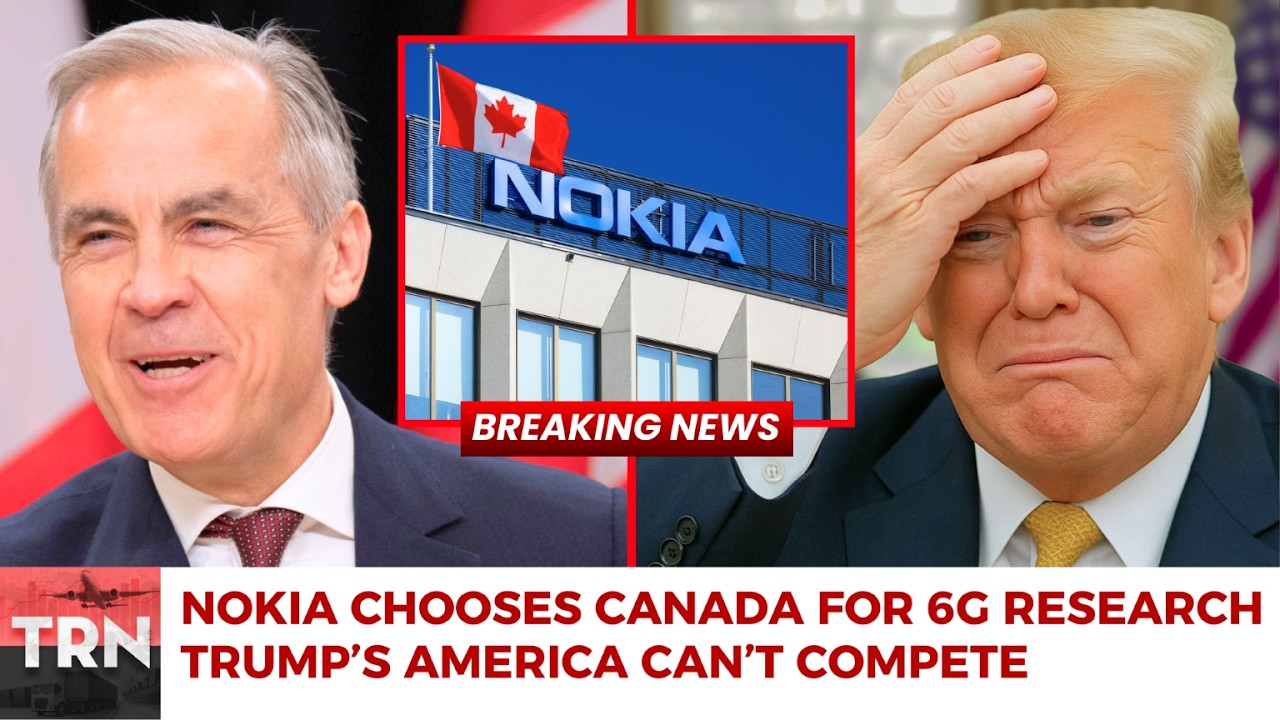
Ottawa — Nokia’s decision to expand its advanced research operations in Ottawa rather than in the United States has added new momentum to a growing technological and economic shift across North America. The move, announced quietly through internal planning documents reviewed by officials in both countries, positions Canada as a central hub in the emerging race toward 6G wireless networks — and raises questions about the United States’ long-term competitiveness as global firms reassess investment strategies.
The Finnish telecommunications giant plans to increase its presence in the National Capital Region significantly over the next three years, concentrating on next-generation network architectures, quantum-resistant cybersecurity, and advanced semiconductor integration. Senior executives familiar with the move said the company selected Canada because of its “stable policy environment,” strong research universities, and access to specialized engineering talent.
U.S. officials, speaking on background, acknowledged that the decision reflects a broader trend that has become increasingly difficult to ignore: multinational technology firms are diversifying away from the United States amid regulatory uncertainty, volatile trade policies, and concerns over long-term federal support for cutting-edge research.
A Strategic Bet on Canada’s Innovation Ecosystem
Nokia already operates one of its largest North American research clusters in Ottawa, but the new expansion is expected to elevate the city into one of the company’s top three global centers for next-generation telecom development. According to Canadian government officials, the project includes investments in secure testing facilities, AI-assisted network design, and climate-resilient infrastructure — components considered essential for 6G’s broader commercial rollout in the 2030s.
Ottawa has spent years cultivating a telecommunications corridor anchored by homegrown companies, academic partnerships, and cooperative government-industry projects. Federal programs designed to attract global R&D investment have also provided grants, tax incentives and long-term contracts aimed at stabilizing the research environment.
“The decision reflects confidence in Canada’s long-term commitment to technological leadership,” said Élodie Marchand, a senior fellow at the Centre for Global Telecommunications Policy. “It may also reflect concerns that the United States is not projecting the same level of predictability right now.”
A Difficult Moment for U.S. Tech Competitiveness
Nokia’s decision comes at a sensitive moment for the United States. Industry leaders have long warned that inconsistent federal policy — particularly on trade, immigration and research funding — threatens to erode the country’s historic advantage in high-tech sectors. Some of the most consequential concerns stem from shifting tariff frameworks, which have complicated supply chains for semiconductor inputs, networking components, and advanced materials.
Executives at several major global firms have privately expressed concern that rapid policy changes have made long-term planning more difficult. One senior executive at a European semiconductor firm described the U.S. environment as “high-risk and increasingly unpredictable,” adding that companies “cannot align billion-dollar research plans to political cycles.”
American universities remain world leaders in wireless technology research, but professors at several prominent engineering schools say they are already seeing early signs of a talent shift. Canada’s streamlined immigration pathways for researchers have made it easier for tech companies to recruit globally, and Ottawa’s stable funding for basic research has created opportunities that some U.S. institutions cannot currently match.
A Larger Pattern of Investment Movement

Nokia’s expansion is part of a pattern that has gained strength in recent years. Japanese, Korean, and European companies have increased their R&D presence in Canada, citing access to international trade frameworks, collaborative government policies, and relative insulation from geopolitical tensions.
Canadian officials say this is not about displacing the United States but about ensuring the country can remain a credible partner in global technology competition. “Our goal is stability and strategic positioning,” said a senior Canadian innovation official. “We don’t benefit from volatility anywhere in North America — but we do benefit from being a reliable anchor.”
Still, U.S. lawmakers and industry leaders have expressed concern that the country could fall behind in the 6G race, a competition that will shape not only telecommunications but also defense systems, artificial intelligence, autonomous vehicles, and critical infrastructure for decades.
Global Allies Watching Closely
Allied nations have taken note. European and Asian officials monitoring the development of secure 6G ecosystems say they view Canada as increasingly central to cooperative R&D — particularly in areas requiring strict intellectual-property protections and cybersecurity protocols.
The United States is not being pushed out of the conversation, analysts stress, but multinational firms and allied governments appear to be diversifying rather than concentrating their technological bets.
“This is not a sprint — it’s a 15-year marathon,” said Anil Deol, a telecommunications specialist at the London School of Economics. “But early decisions matter. If Canada becomes home to a disproportionate share of 6G foundational research, that will have downstream effects on supply chains, workforce development, and global standards.”
A Turning Point for North American Technology Policy
For now, Nokia’s Ottawa expansion is modest in physical footprint but large in strategic significance. It underscores the shifting center of gravity in North American technology investment and highlights the growing gap between countries offering long-term policy stability and those increasingly shaped by political turbulence.
Whether the United States regains its footing in the coming years will depend on decisions now under debate in Washington — on trade, immigration, research funding, and industrial strategy.
As one senior Canadian official put it, “Innovation follows stability. Companies are sending a message. The question is who is listening.”