When the United States trade representative suggested this week that Canada should be prepared to accept higher tariffs as a condition for any new agreement, the remark was framed in Washington as a matter of practical negotiation. If Ottawa wanted improved access, the logic went, it would need to concede something measurable. But in Canada, the comment landed differently — less as leverage, more as a reminder of a strategy set in motion years earlier.
Seven years ago, in 2018, the Canadian government published a document with a plainspoken premise: reduce overreliance on a single trading partner. The Export Diversification Strategy, as it was formally titled, pledged $1.1 billion over six years to expand non-U.S. exports by 50 percent. It was written during the turbulence of the first Trump administration, when tariffs on steel and aluminum rattled assumptions about the permanence of North American trade stability. At the time, the strategy drew modest attention. Today, it reads less like a white paper and more like a blueprint.
The document’s language was bureaucratic but direct. Canadian workers and businesses, it argued, should not be “disproportionately affected by disruptions in any single trading relationship.” To achieve that goal, Ottawa did more than publish analysis. It created a cabinet portfolio explicitly devoted to trade diversification and embedded export expansion targets into departmental mandates. The effort spanned political administrations and outlasted electoral cycles — a rare instance of continuity in a country often accused of incrementalism.
Infrastructure followed rhetoric. The Comprehensive Economic and Trade Agreement with the European Union provisionally entered into force in 2017, eliminating most tariffs across a market of roughly 450 million people. The Comprehensive and Progressive Agreement for Trans-Pacific Partnership came into effect the following year, linking Canada to 10 other Pacific economies, including Japan and Australia. Together, the agreements provided preferential access to markets far larger than Canada’s domestic economy.
Yet the United States remained dominant. Roughly 75 percent of Canadian merchandise exports still flow south of the border. Integrated supply chains in autos, agriculture and energy cannot be rewired overnight. Critics of the diversification strategy argue that the numbers have not shifted dramatically enough to change the underlying reality. Trade gravity, they say, still points to Washington.
But diversification is not solely about volume; it is about leverage. Even modest expansion in alternative markets can alter negotiating psychology. When Ottawa released its Indo-Pacific Strategy in 2022 — backed by an additional $2.3 billion in funding — it signaled that diversification was no longer defensive but structural. Trade missions multiplied. Investment frameworks deepened in the Gulf states and Asia. European procurement opportunities widened in defense and green technology.
Recent announcements have given the strategy renewed relevance. China moved to suspend certain agricultural tariffs on Canadian products. The United Arab Emirates signaled large-scale investment interest in Canadian infrastructure and critical minerals. While none of these developments displace the American market, they suggest that Ottawa’s long-term planning is yielding tangible pathways.
From Washington’s perspective, the calculus is more complex. Tariff threats are intended to extract concessions in protected sectors such as dairy and supply management. Historically, Canada has negotiated adjustments under pressure. But if Ottawa believes it possesses credible alternatives — even partial ones — the urgency to yield diminishes. Leverage is most potent when time is short and options are narrow. A diversification architecture, however gradual its payoff, lengthens the timeline.
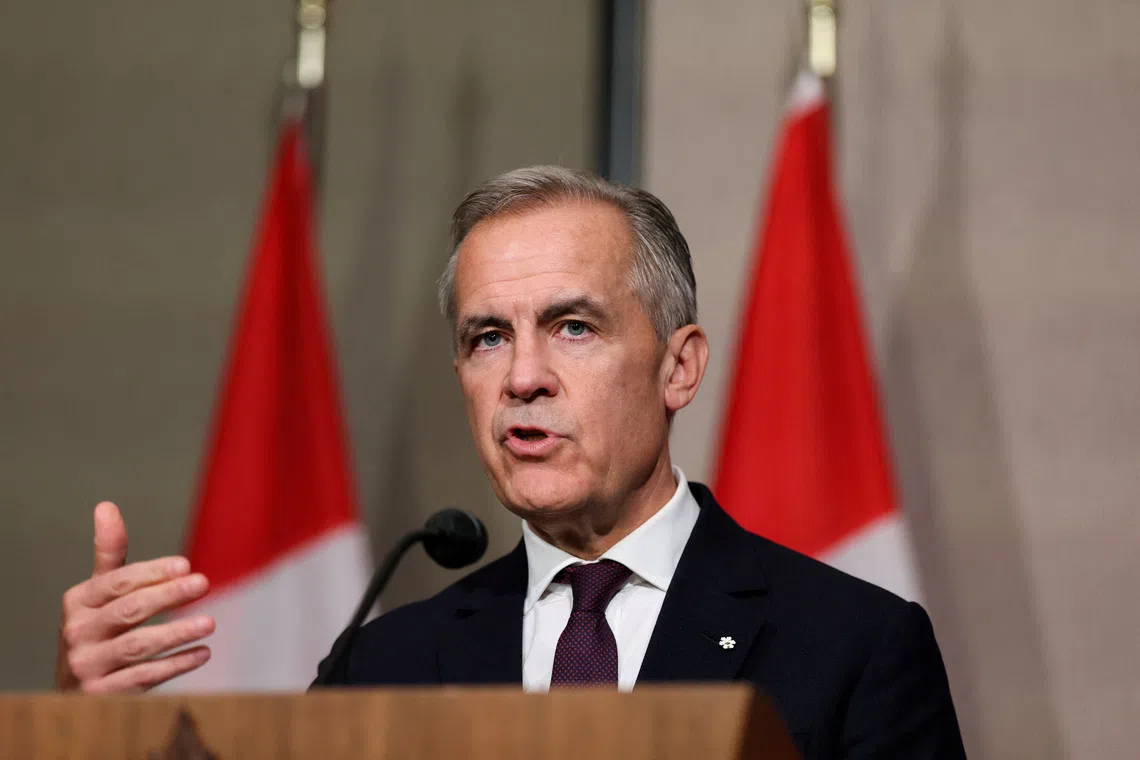
Prime Minister Mark Carney did not author the 2018 strategy, but he has inherited its framework. His government’s emphasis on resilience rather than retaliation reflects that continuity. Rather than counterthreatening tariffs of its own, Ottawa has underscored export targets, market access agreements and strategic partnerships already in place. It is a quieter response than public confrontation, yet potentially more durable.
None of this suggests a rupture in the North American relationship. The United States and Canada remain deeply intertwined, economically and institutionally. Geography alone ensures proximity. But the episode illustrates a subtle shift. When Washington presents tariff acceptance as a prerequisite for negotiation, Ottawa can now point to a seven-year-old document and say, in effect, that the negotiation landscape is broader than it once was.
Trade disputes often unfold in cycles of escalation and accommodation. What distinguishes this moment is the degree to which Canada’s response was prewritten. The strategy did not predict specific tariff ultimatums. It anticipated volatility. By investing in alternative channels years in advance, Ottawa sought not to sever its American ties, but to soften the impact of strain.
Whether the diversification effort ultimately reduces the United States’ share of Canadian exports by two or three percentage points, as some analysts predict, remains to be seen. Structural change is slow. Yet in diplomacy as in economics, preparation shapes posture. When pressure arrives, the side with options negotiates differently. Canada’s answer to tariff demands may not be a counterthreat or a headline-grabbing speech. It may simply be the quiet continuation of a plan set in motion long before the latest ultimatum was delivered.