By XAMXAM
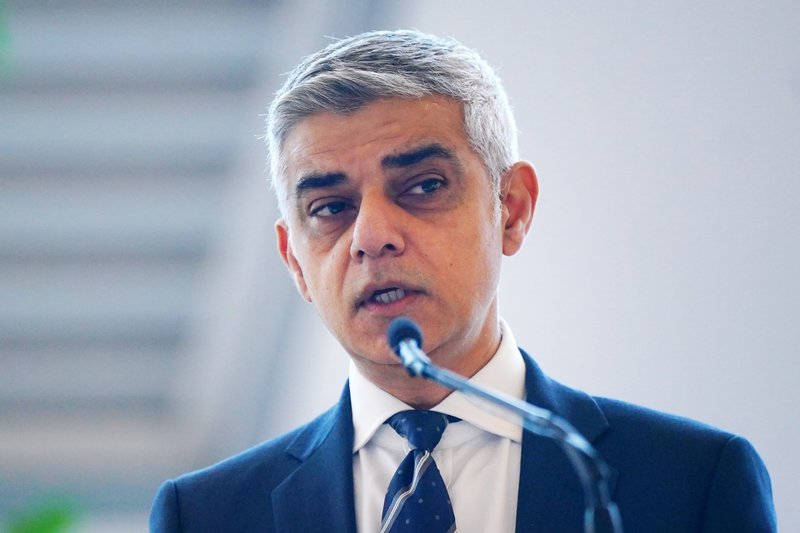
In the London Assembly, political confrontations are rarely explosive. They unfold through procedure, repetition, and the careful choreography of parliamentary exchange. Yet during a recent session, a single question — asked again and again — turned a routine debate into a revealing portrait of modern governance. At the center of it stood Sadiq Khan, pressed by Neil Garratt with an insistence that stripped the moment of rhetoric and left only priorities.

The question was disarmingly simple. Should London prioritize repairing and expanding its aging transport infrastructure, or continue funding the costly Erasmus Programme, an international student exchange scheme Khan has publicly championed? Garratt framed the dilemma not in abstract terms, but in concrete comparisons. One year of Erasmus funding, he said, could repair the Hammersmith Bridge three times over. Less than a year’s cost could deliver the West London Orbital rail line. Two years could extend the Docklands Light Railway. Five years could fund the long-promised Bakerloo Line extension.
“Life’s about choices,” Garratt repeated, asking not for an explanation of systems or funding mechanisms, but for a judgment: which would Londoners choose?
What followed was not an answer, but a sustained exercise in deflection. Khan spoke at length about ownership structures, the responsibilities of local councils, and the complexities of capital funding. He invoked central government, “innovative financing,” and borrowing against future receipts. He revisited familiar arguments about Brexit, citing the £350 million-per-week promise that never materialized, and presented Erasmus as a corrective — a long-term investment in youth mobility, economic connectivity, and Britain’s relationship with Europe.
Each response expanded outward, but never landed on the narrow ground Garratt had marked. The choice itself — Erasmus or infrastructure — remained untouched.
The exchange became tense not because of raised voices, but because of repetition. Garratt did not shout or posture. He simply recalculated, offering new comparisons and restating the same question in different forms. Would Londoners prefer one year of Erasmus or the West London Orbital? Two years or a DLR extension? Five years or a fully rebuilt Bakerloo Line? Each time, Khan spoke — and each time, the decision dissolved into broader narrative.
For supporters of the mayor, the performance reflected realism. Infrastructure funding, they argue, is never a binary choice. Major transport projects rely on layered financing, long-term borrowing, and cooperation with central government. Erasmus, in this view, is not competing with bridges or railways but serving a different purpose altogether, one tied to education, opportunity, and Britain’s post-Brexit repositioning.

Yet the criticism resonated precisely because Garratt’s framing cut through that complexity. By insisting on a hypothetical choice, he exposed a gap between explanation and accountability. Viewers were not asked to evaluate the technical feasibility of funding streams. They were asked to imagine priorities — and to notice when an elected leader declined to articulate one.
This, the video’s commentators argued, is where political trust erodes. Not through anger, but through avoidance. Not through disagreement, but through the sense that decisions are being made without admitting trade-offs. Londoners, they said, were repeatedly invoked as beneficiaries — but never consulted as choosers.
The setting matters. The London Assembly exists precisely to scrutinize the mayor’s decisions. Its power lies less in legislation than in exposure. When an exchange like this circulates beyond the chamber, stripped of procedural noise and reduced to a single unanswered question, its impact multiplies.
Khan eventually returned to a broader vision: long-term prosperity, European alignment, and opportunities for future generations. It was a familiar argument, and one that resonates with many. But the refusal to rank that vision against tangible, local needs — bridges that remain closed, rail lines that remain unbuilt — became the story itself.
The video’s conclusion was stark. Politics, it argued, does not collapse because leaders argue too fiercely, but because they refuse to engage directly with hard choices. Anger can be debated, even forgiven. Evasion lingers.
Whether one agrees with Garratt’s framing or Khan’s priorities, the exchange illuminated a deeper tension in democratic politics. Voters increasingly demand clarity, even when answers are uncomfortable. They may accept unpopular decisions, but they bristle at the sense that choices are being made without being named.
In the end, the confrontation was not about Europe, Brexit, or even Erasmus. It was about the moment when a question becomes unavoidable — and what it means when the answer never arrives.